MeetThingsWhitewater
Kumsheen Rafting Resort · Lytton, British Columbia
The man who named the Jaws of Death
In 1973 Bernie Fandrich strapped a rubber raft to a Volkswagen van and put a sign up beside the Trans-Canada. Fifty-four seasons and more than 300,000 passengers later, his family is still taking people down the Thompson River.
- Founded
- 1973, beside the highway
- Where
- Lytton, British Columbia
- River
- The Thompson
- Run by
- The Fandrich family
- Season
- April to mid-October
One raft, one van
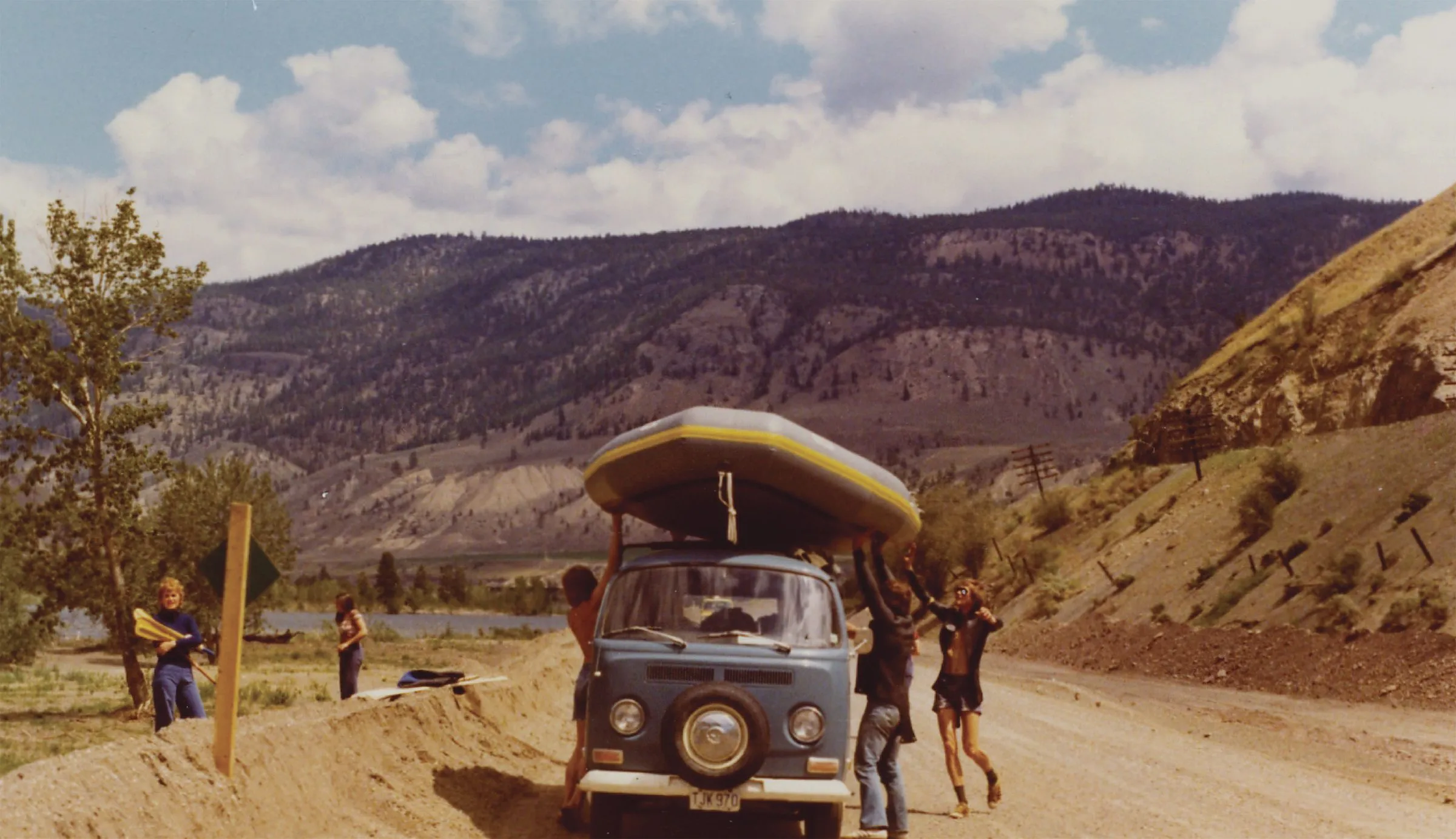
Bernie Fandrich grew up in Vernon, went to the University of British Columbia and taught at a university back east. By 1973 he was home in B.C. and out of work, with a rubber raft he had bought in Vancouver and a strong opinion about the Thompson River.
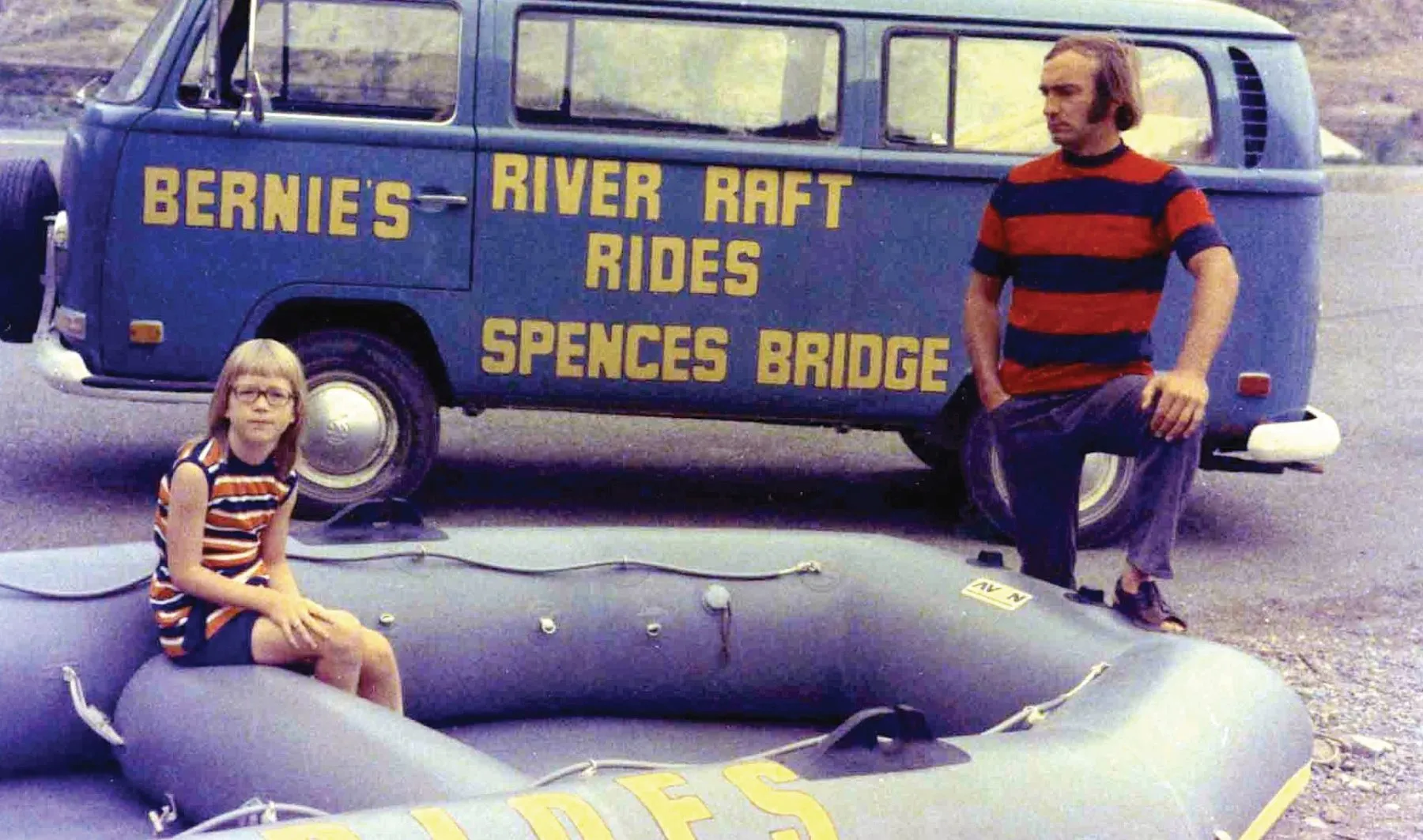
Nobody was taking paying passengers down it. So he strapped the raft to the roof of a Volkswagen van, lettered a name on the side and put a sign up beside the Trans-Canada Highway. The name was Bernie’s Raft Rides. Fewer than 120 people took him up on it that first summer.
It grew anyway. In 1975 he taught what is described as Canada’s first river-running course, at Langara College in Vancouver. In 1977 he bought a Quonset hut in downtown Lytton for a headquarters. In 1978 a guide named Lorna Spencer joined the crew, and the following February they were married.
By then the company had a better name. Kumsheen is the old Nlaka’pamux name for the place where the Thompson meets the Fraser. It is usually translated as rivers meeting, or the great fork.
He named the rapids
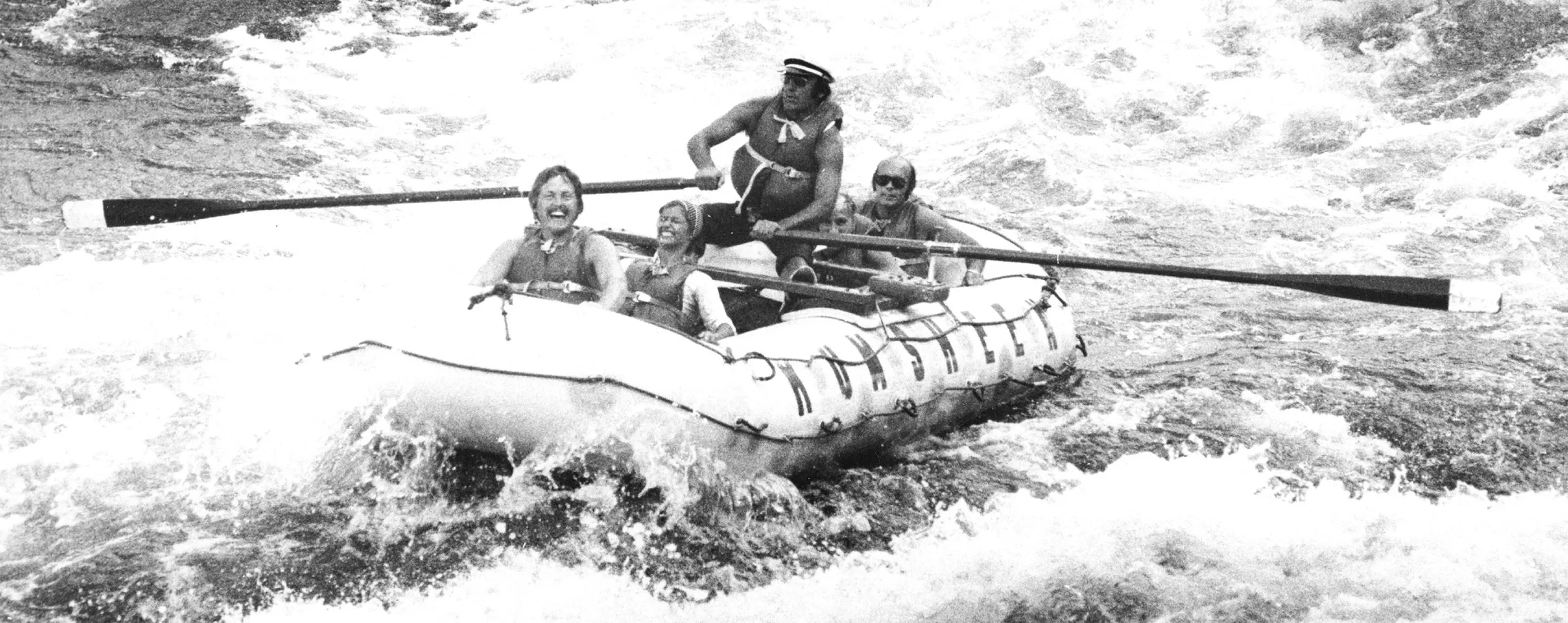
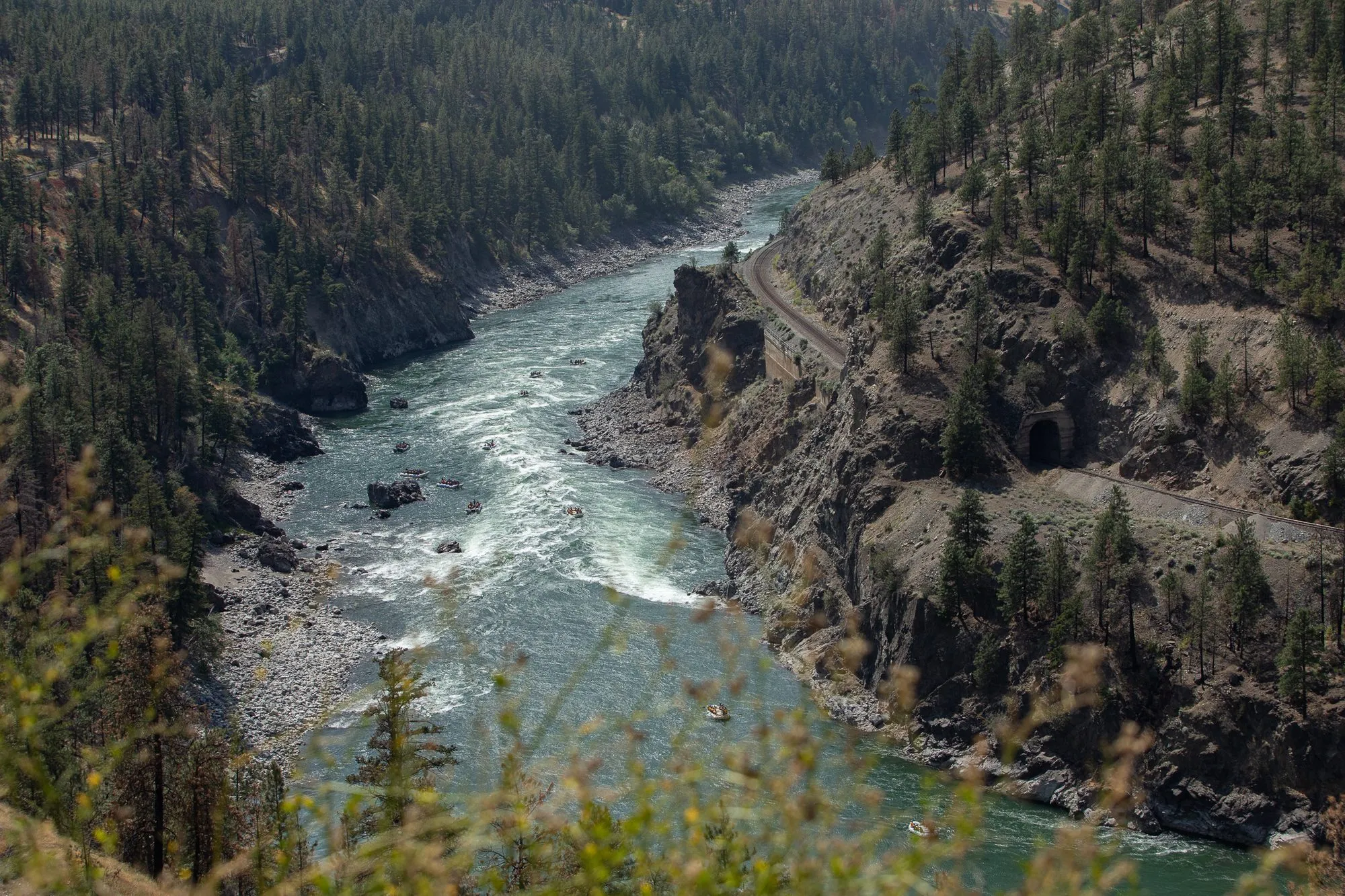
A river that nobody runs for money has no names for its difficult parts. Fandrich is credited with supplying them. The Frog. The Devil’s Kitchen. The Washing Machine. The Witch’s Cauldron. The Jaws of Death, which is the one people have heard of.
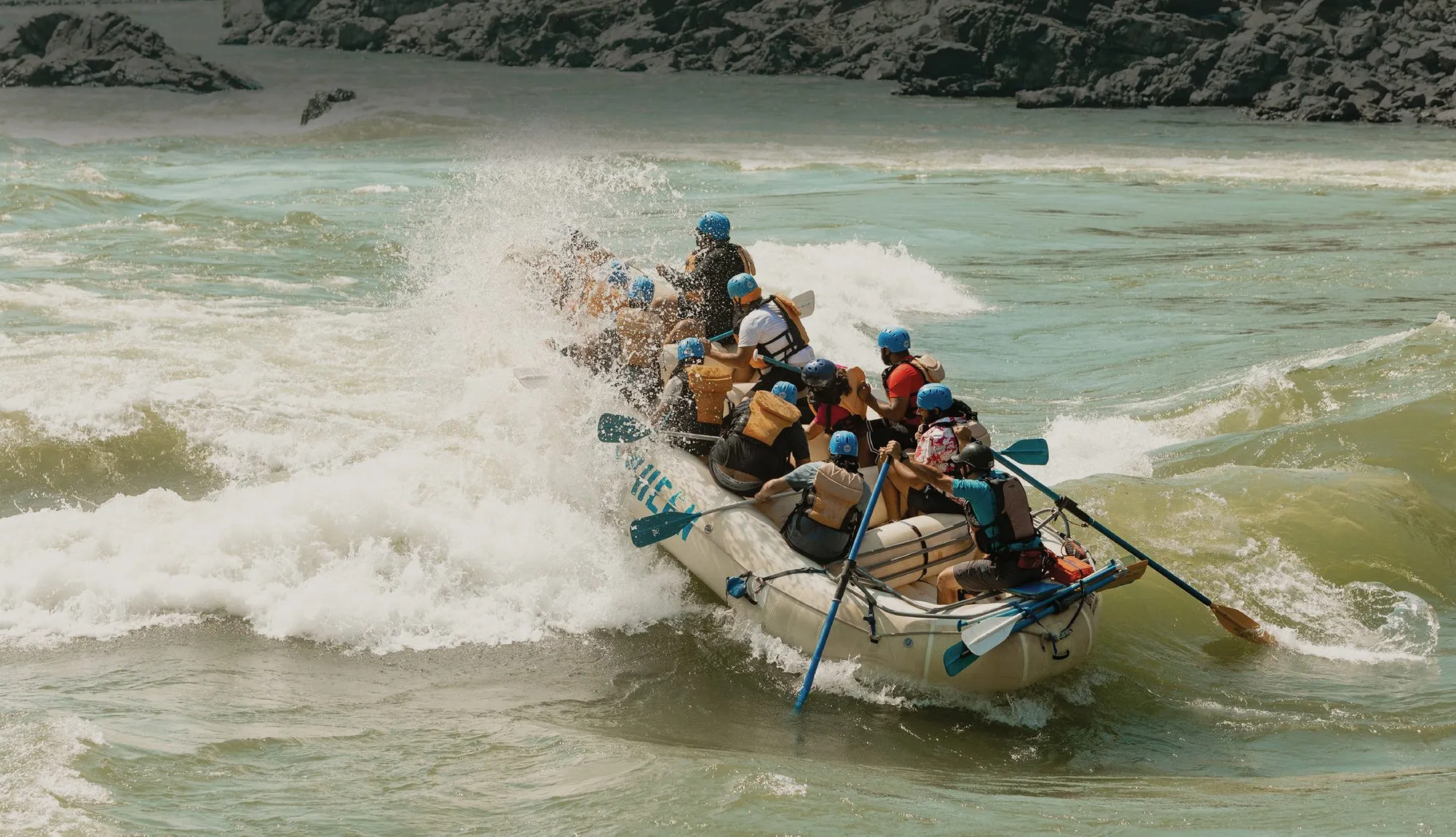
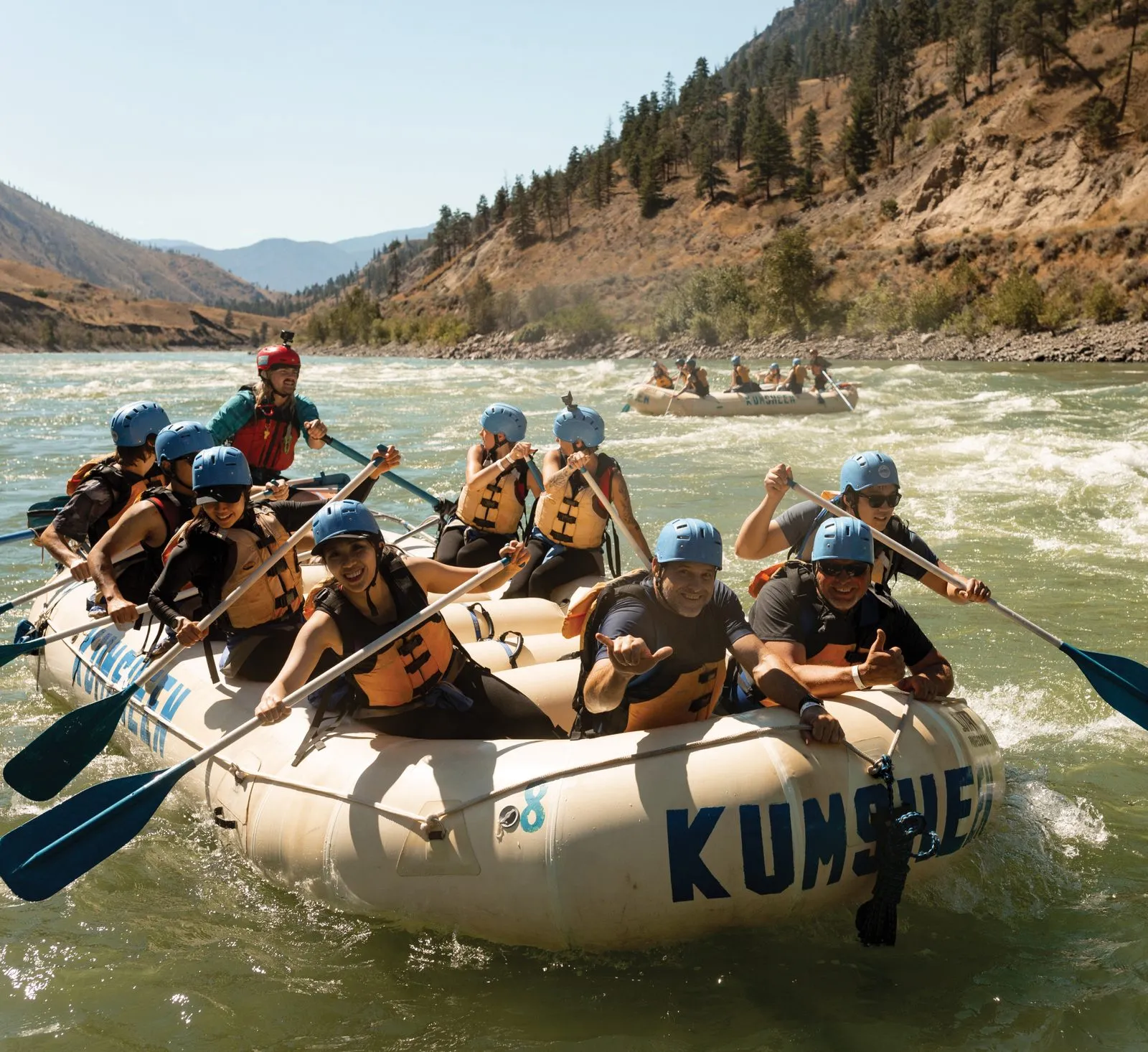
There are two ways through them. A power raft has a motor, seats sixteen to twenty and asks only that you hold on. Kumsheen recommends it for non-swimmers, and lists seniors among the people it suits. We pass this along without comment. A paddle raft seats eight to twelve, and you are the engine. For that one you have to be at least twelve, weigh 41 kilograms and know how to swim, because paddlers are the ones who occasionally leave the raft.
Either way you will get wet. The river is about 12 degrees in spring and over 20 by late July. The wetsuit, the splash jacket, the helmet and the life jacket are theirs. The water is highest from May to the middle of July, which is when the waves are biggest.
In 2013 Fandrich wrote the river down. British Columbia’s Majestic Thompson River covers the rapids and the history from Savona to Lytton, and carries an endorsement from Rick Mercer.
A paddle raft seats eight to twelve, and you are the engine.
A resort above the tracks
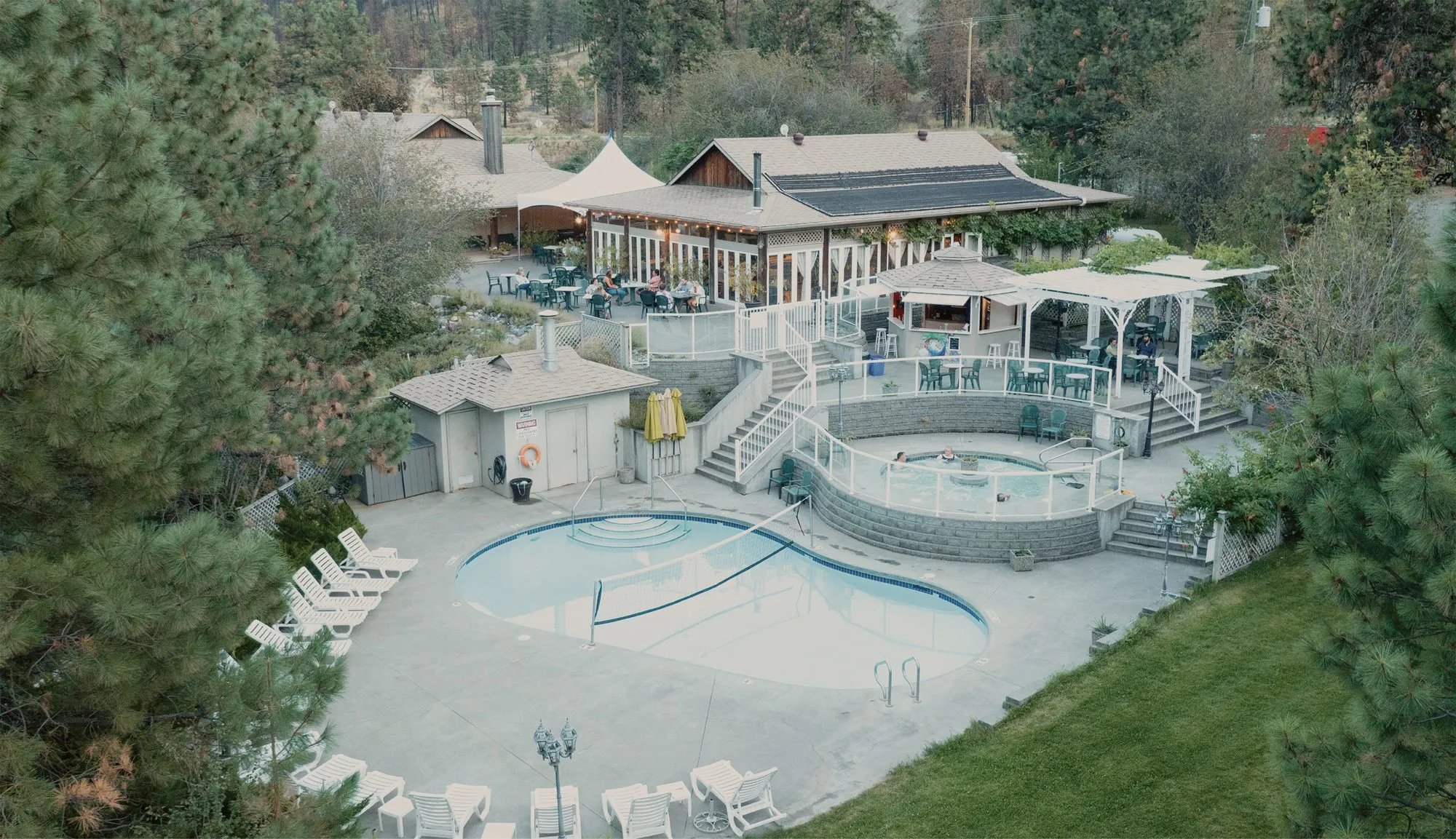
In 1994 Bernie and Lorna opened the resort itself, on six hectares overlooking a stretch of the Thompson called White Canyon, a few minutes up the highway from Lytton.
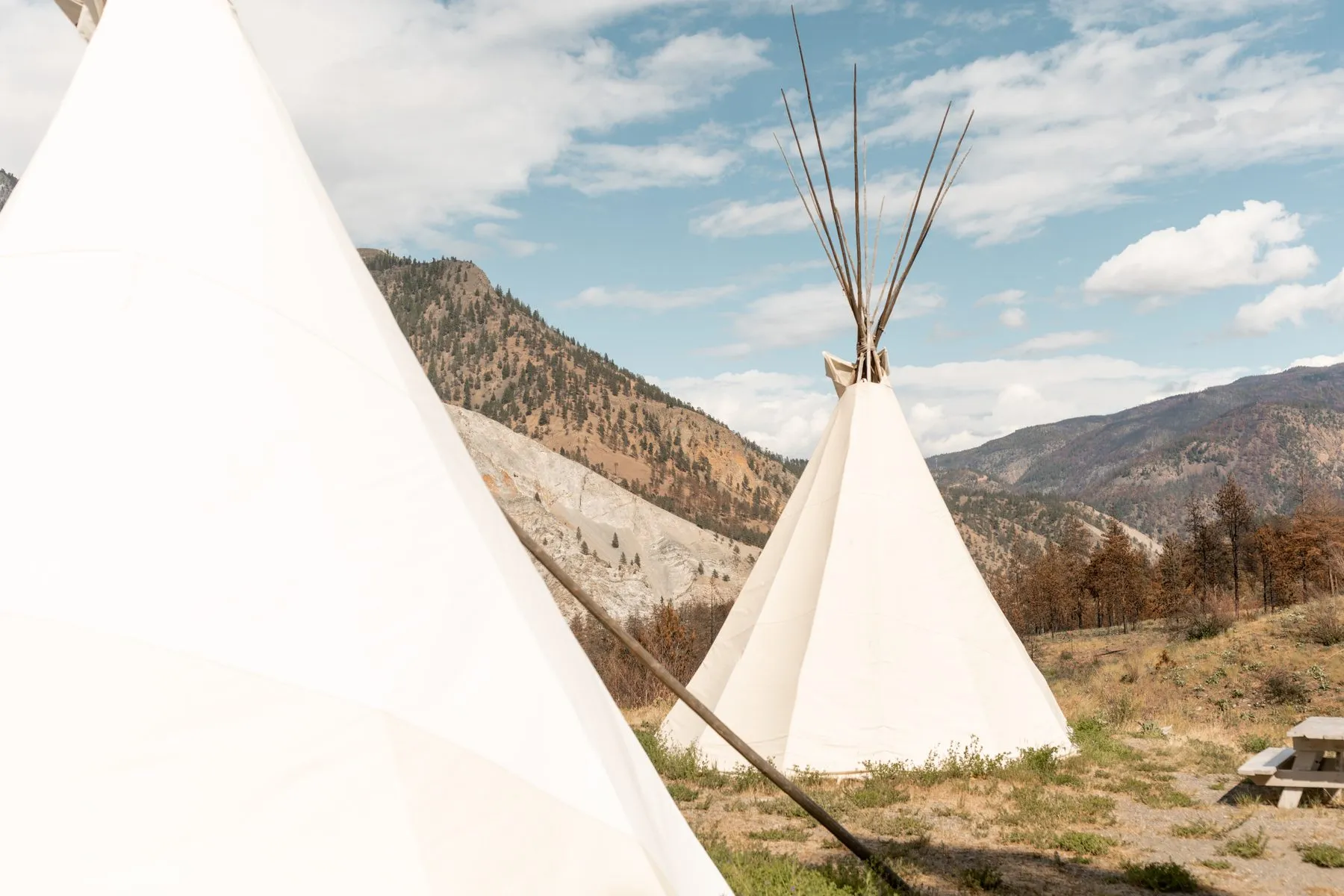
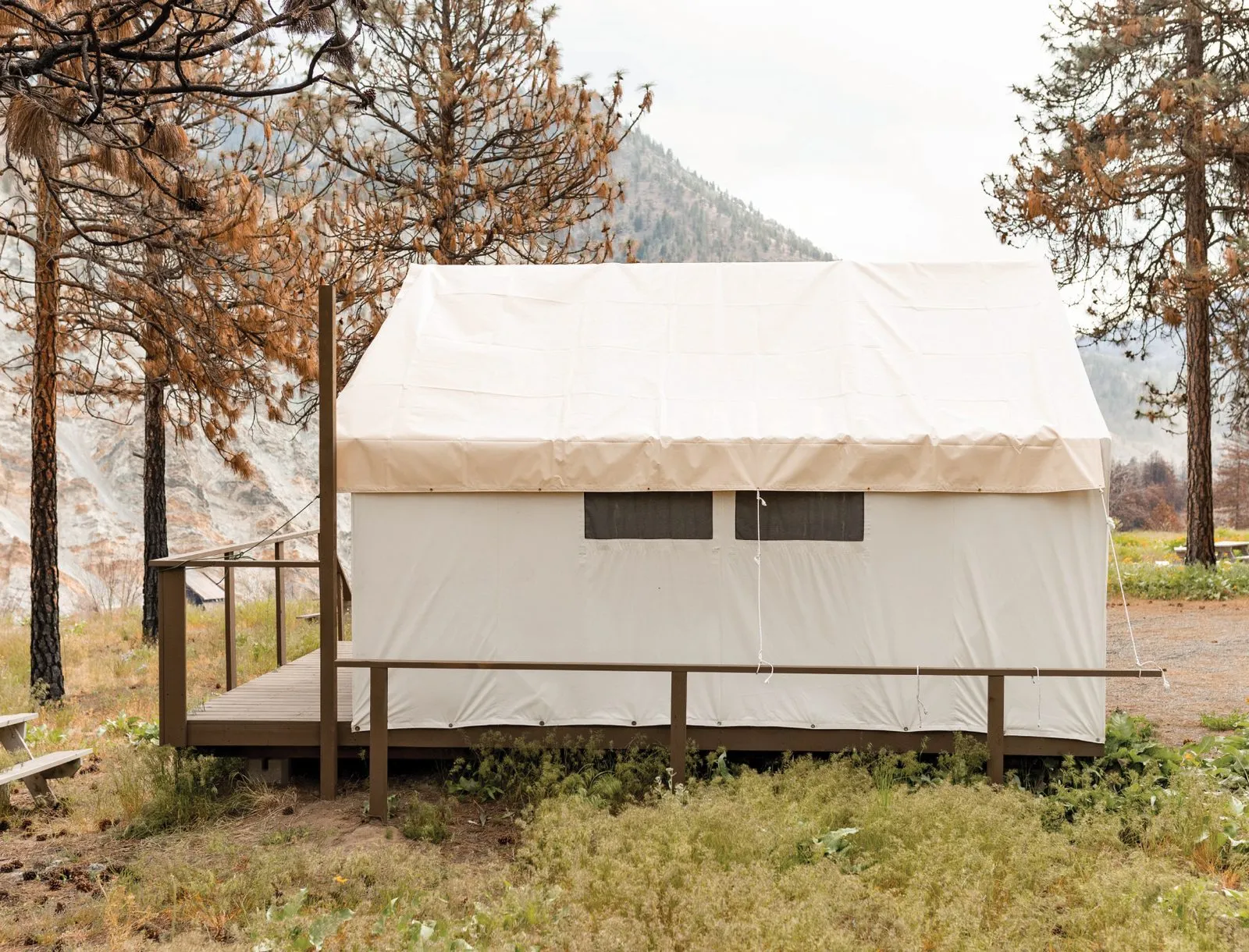
You can sleep in a canvas cabin, which is a wooden frame with fabric walls and a proper bed in it, or in a teepee with a double and two singles, or in your own tent or RV. There is a pool on three levels, a hot tub, a bar beside the pool, nine holes of disc golf and a chess set you walk around in. On Saturday nights in July and August a band plays in the gazebo.
The Cutting Board Restaurant does breakfast and dinner from Thursday to Monday, served family-style, and you have to book. If too few people do, dinner turns into takeout, which is at least honest.
Two things to know before you arrive. Both of Canada’s big railways run through this canyon, one on each bank, and freight trains do not observe quiet hours. Reception gives out free ear plugs. And this is the hottest place in the country. On June 29, 2021, Lytton reached 49.6 degrees, the highest temperature ever recorded in Canada. The pool is not decorative.
Freight trains do not observe quiet hours. Reception gives out free ear plugs.
The day after the hottest day
The next day, June 30, a fire went through Lytton. It destroyed about 90 percent of the village and killed two people. The resort, up the highway, did not burn. The town it belonged to was gone.
Kumsheen kept running trips. It is the largest employer in the area.
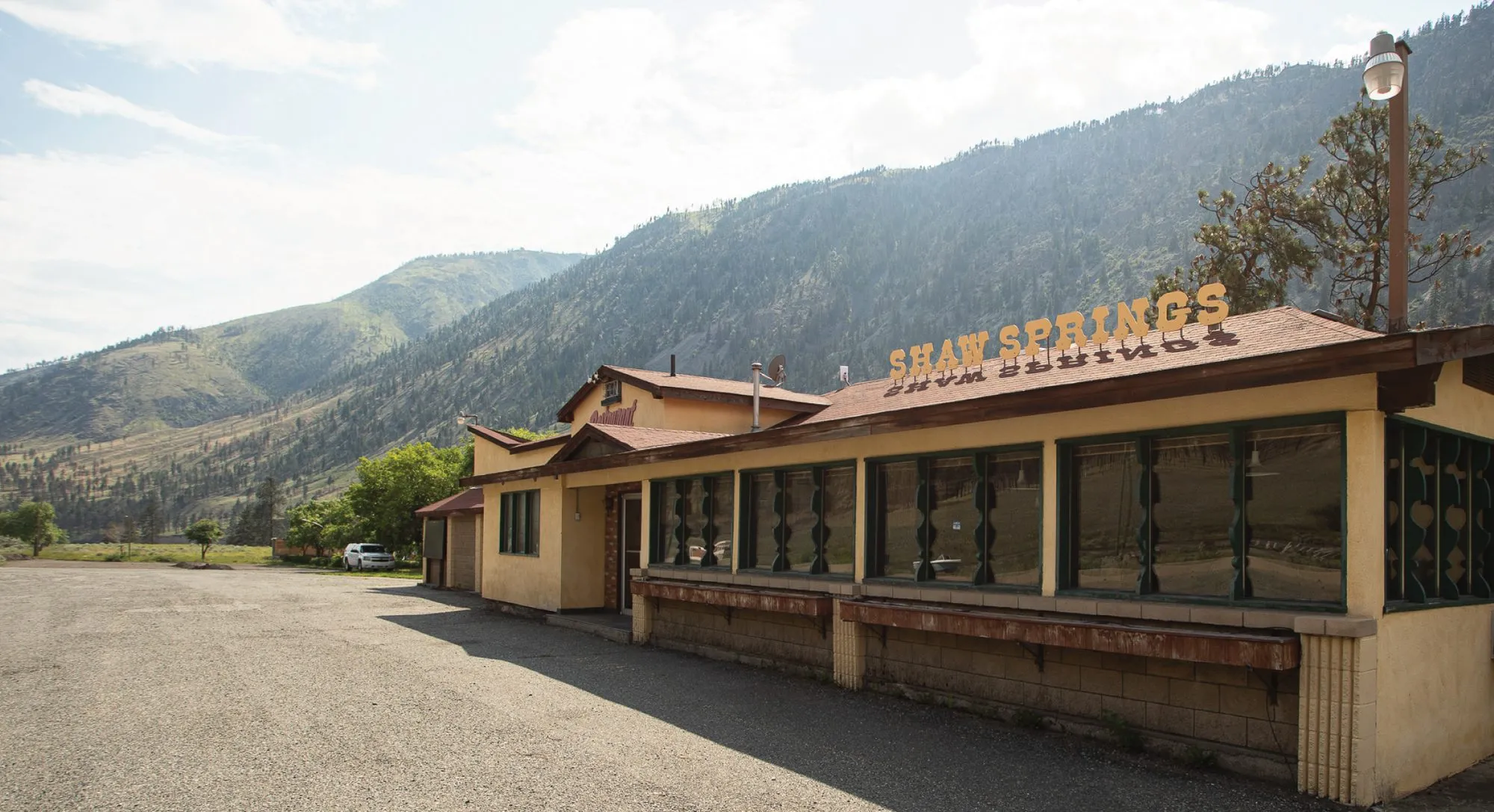
In 2023, its fiftieth year, more than 200 former guides and staff came back for the anniversary, and the family bought Shaw Springs, 16 hectares fifteen minutes up the river with an old roadside restaurant on it. The full-day trip now stops there for lunch. The kitchen is run by May and William, whose own restaurant, Jade Springs, burned in 2021. They serve the menu they had been serving for more than thirty years.
Lorna Fandrich had lost something as well. In 2017 she had opened the Lytton Chinese History Museum on the site of the town’s old joss house. The fire took the building and about 1,600 artifacts. She rebuilt it, Chinese Canadians across the country sent some 700 objects to fill it, and it reopened on May 3, 2025.
Their son Andrew manages the resort now. The grandchildren have already been put in rafts.
The 2026 price list
Two runs are going this year. Three others, including the Fraser through Hell’s Gate, are off until 2027.
On the river
Devil’s Gorge Run$139
Half a day and 18 rapids. Daily until September 30. Leaves at 9:00 by power raft, or at noon.
Legendary Thompson$179
A full day and about 40 sets of rapids, with lunch at Shaw Springs. Friday to Sunday until October 12. Leaves at 10:00.
Youth fares are $109 and $149.
Overnight
Canvas cabin or teepee$199
A night in peak season. It drops to $139 in spring and fall.
Campsite or RV site$35 to $55
A night, for up to four people.
Shaw Springs adds 22 full-service RV sites.
At the table
The Cutting BoardBy the menu
Breakfast and dinner, Thursday to Monday, from May 1 to September 7. Reservations only.
Prices and dates are Kumsheen’s own for the 2026 season, checked on October 1, 2026. Check again before you book.
If you go
- Getting there
- About three hours from Vancouver on Highway 1, through the Fraser Canyon. Wildfire shut the canyon for seven weeks in the summer of 2026, so look at DriveBC before you leave.
- When
- Big water runs from May to mid-July. The warm water and the warm evenings come in late July and August.
- What to wear
- Anything but cotton, and shoes that strap on. They supply the rest.
- Who can go
- Power rafts take children from eight at low water and ten at high, from 27 kilograms. Paddle rafts start at twelve.
- Not rafting
- You can book a cabin and never go near a raft.