MeetThingsNo cars
Mackinac Island · Lake Huron, Michigan
Banned the car in 1898. Has not changed its mind.
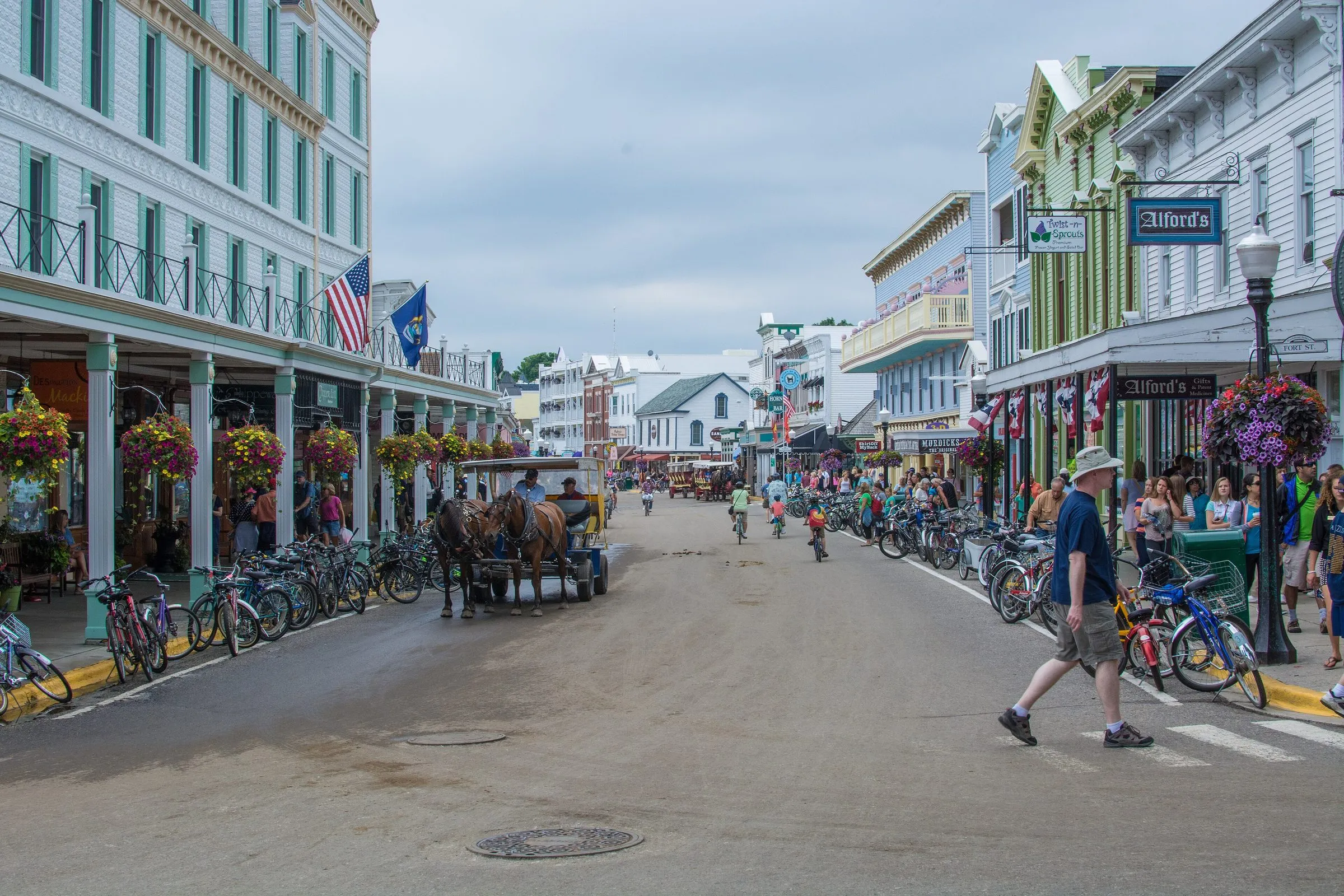
In 1898 the carriage drivers of Mackinac Island asked the village to ban the horseless carriage, because it frightened the horses. The village agreed. That was 128 years ago, and the answer is still no.
- Where
- Lake Huron, Michigan
- Cars banned
- 1898
- People
- 583
- Horses
- About 600 in summer
- The highway
- 13 km, no motors
- Pronounced
- Mack-in-aw
Resolved, 1898
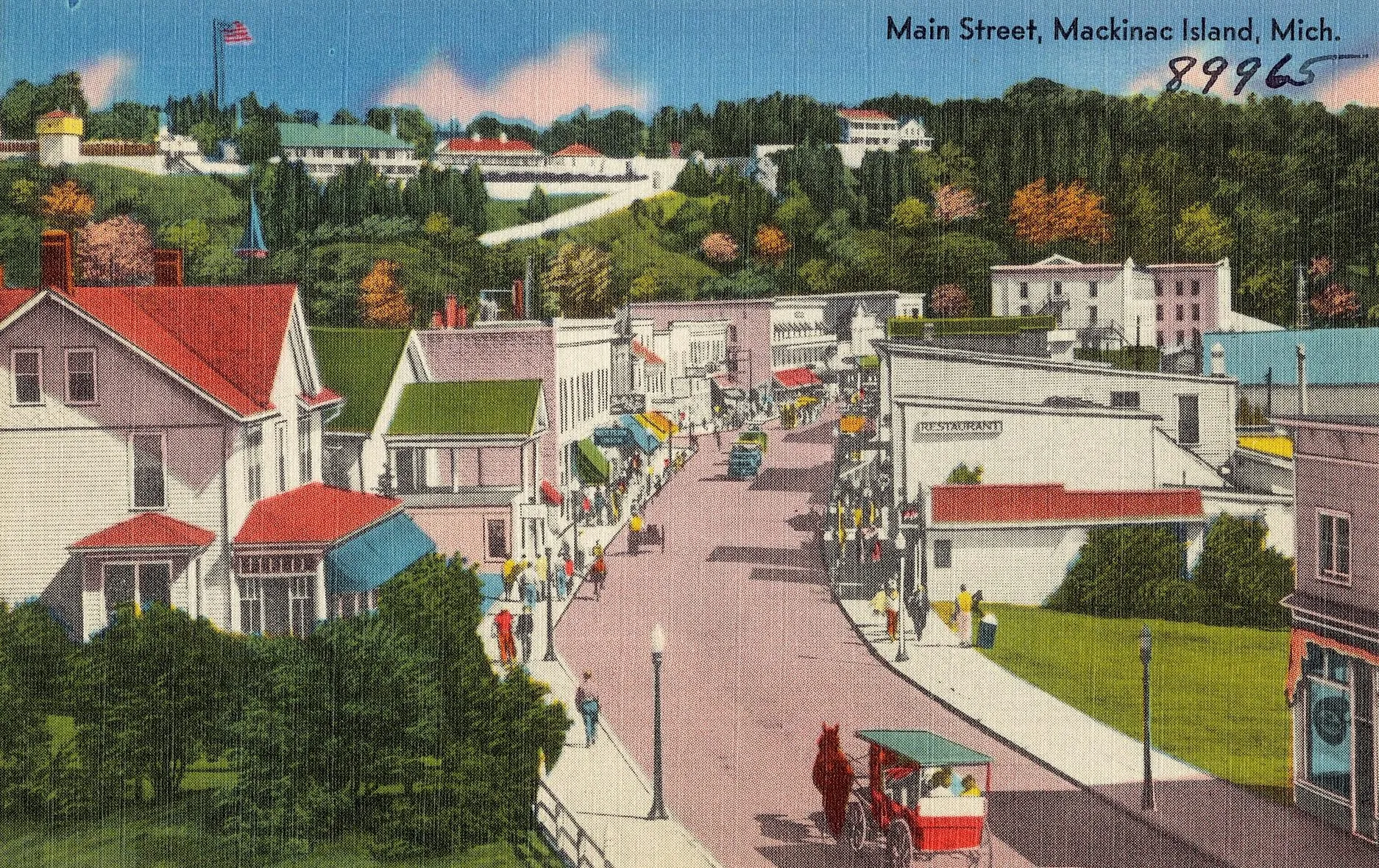
On July 6, 1898, the men who drove carriages for a living on Mackinac Island took a complaint to the village council. A horseless carriage had turned up, and it was frightening their horses. The council banned the things from the village.
Two years later a summer resident brought over a steam-powered Locomobile, drove it about, scared several horses and wrecked a few carriages, which settled the argument. In 1901 the commission that ran the state park banned cars from the rest of the island.
Everywhere else, the car went on to win. Here it lost the first vote and has never had another.
The ban is 128 years old. The island has 583 residents, about a million visitors a year, roughly 600 horses in summer and more bicycles than anyone has counted. It has a state highway and an airport. What it has never had is a parking problem.
Everywhere else, the car went on to win. Here it lost the first vote and has never had another.
Everything arrives by horse
Take the cars away and somebody still has to deliver the beer.
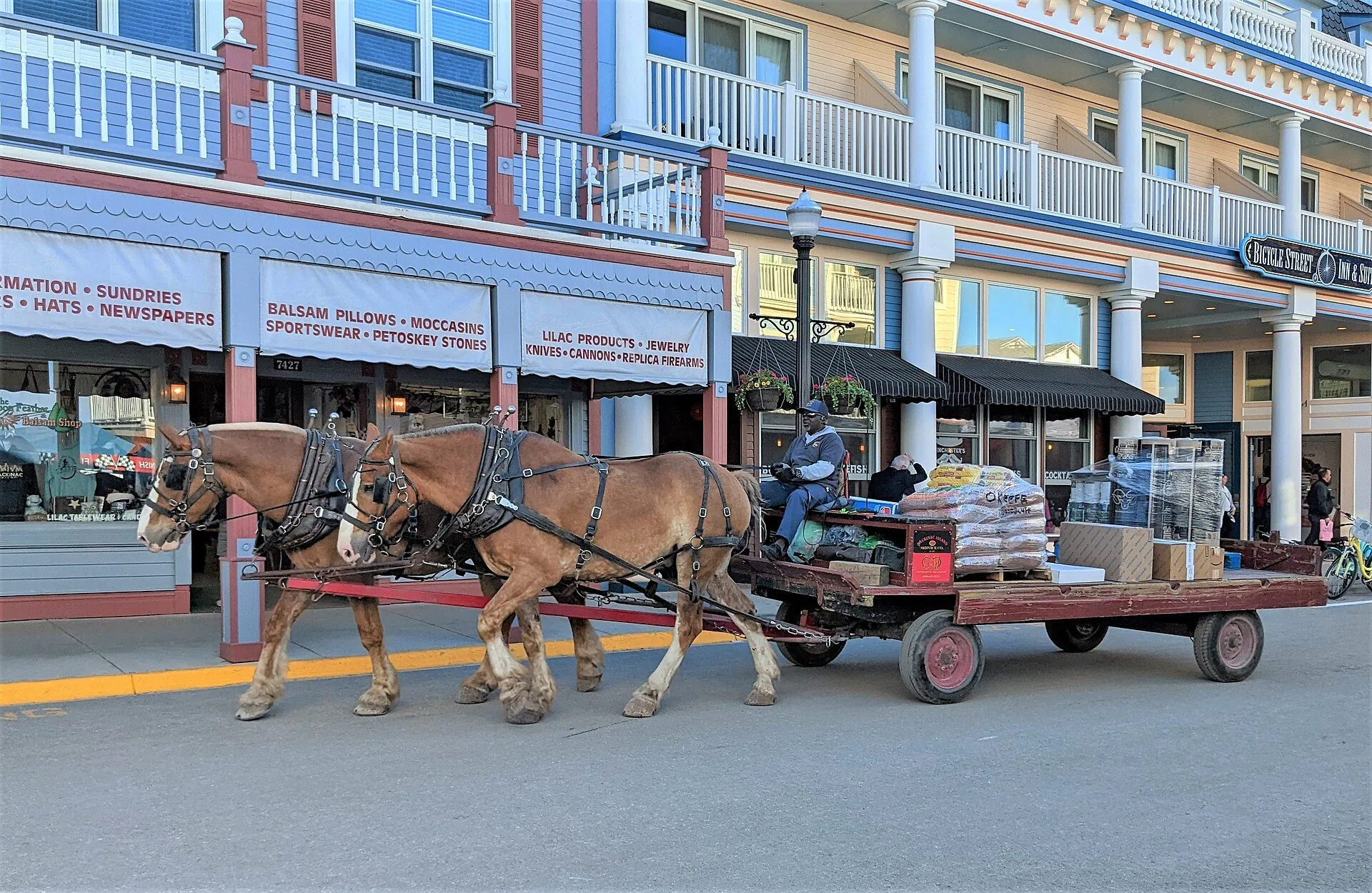
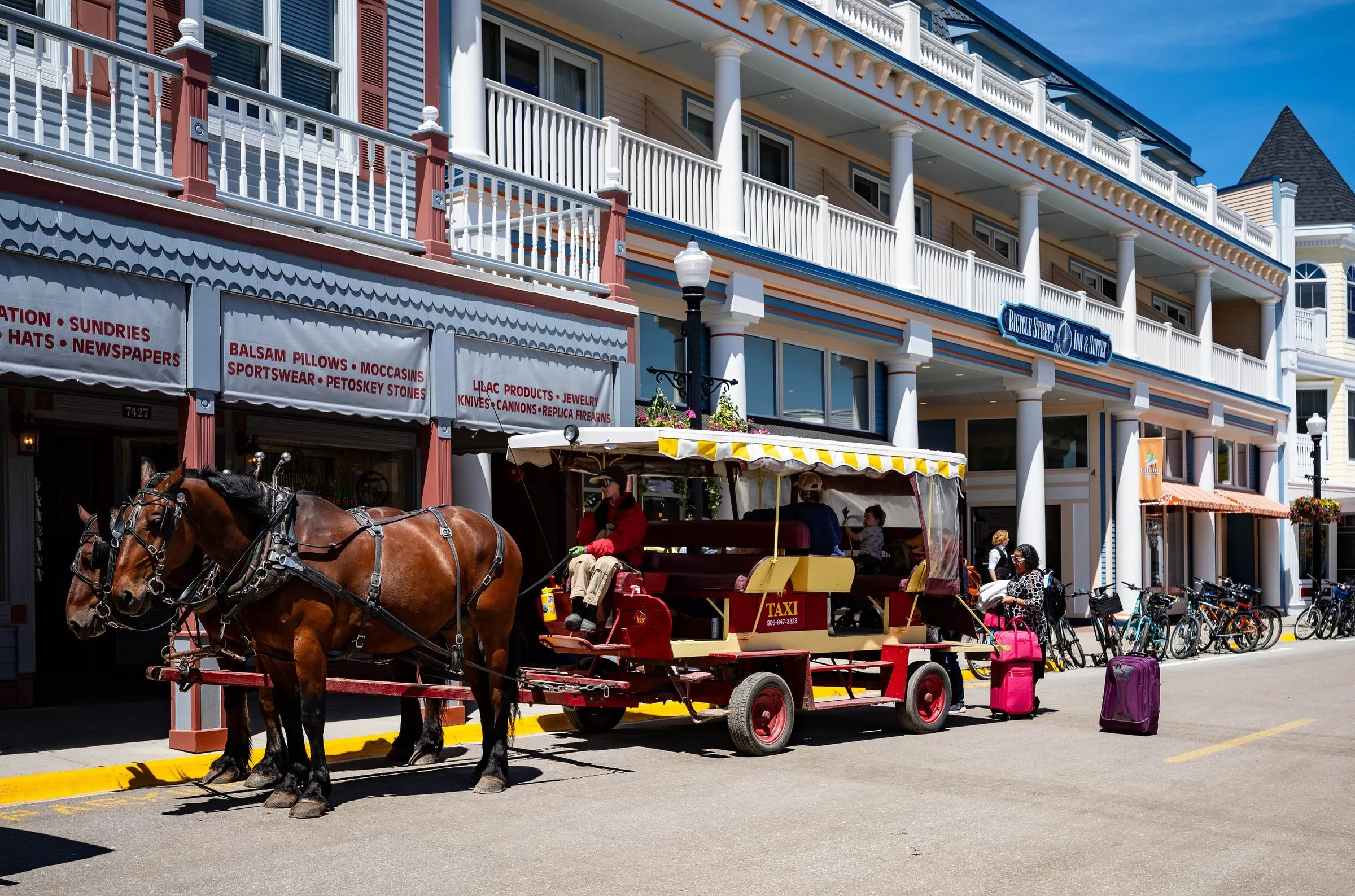
On Mackinac that somebody is a pair of draft horses pulling a dray, which is a flatbed wagon. Everything that comes off the ferry goes onto one. Luggage, lumber, groceries, mattresses, kegs. Parcels from UPS, FedEx and Amazon are brought to the door by horse, which is not what the tracking page leads you to expect.
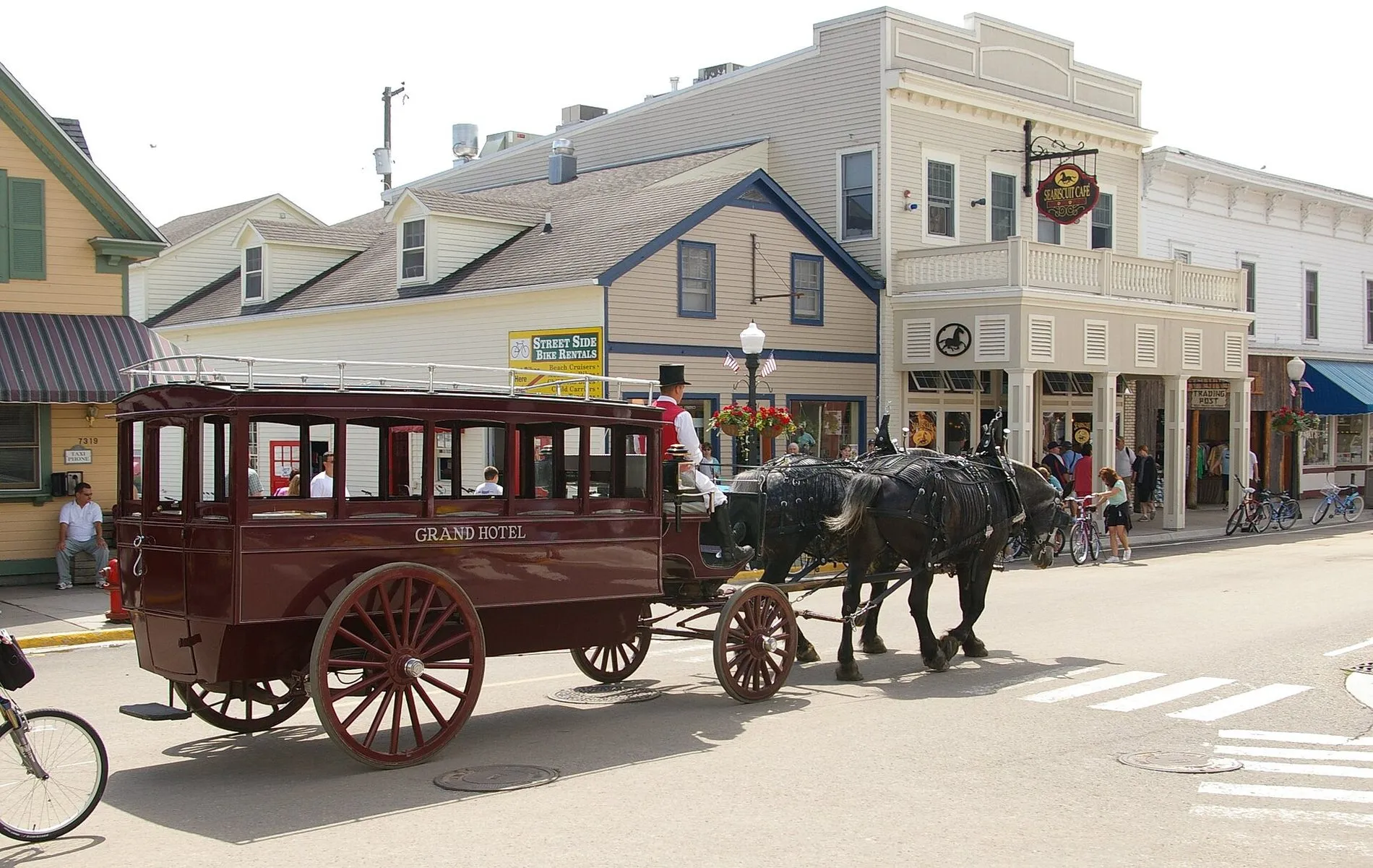
People travel the same way. The taxis are horse-drawn and take their time. The Grand Hotel sends a dark red omnibus down to meet the boat.
About 600 horses work the island in summer. In November most of them take the ferry to the mainland and spend the winter on farms in the Upper Peninsula. About twenty stay behind to look after the people who live here all year.
The rest is bicycles, thousands of them, parked in rows where another town would have meters.
All of this has a consequence, and people with shovels and carts follow it around all day. The island smells of two things, and one of them is fudge.
The island smells of two things, and one of them is fudge.
A highway with no cars
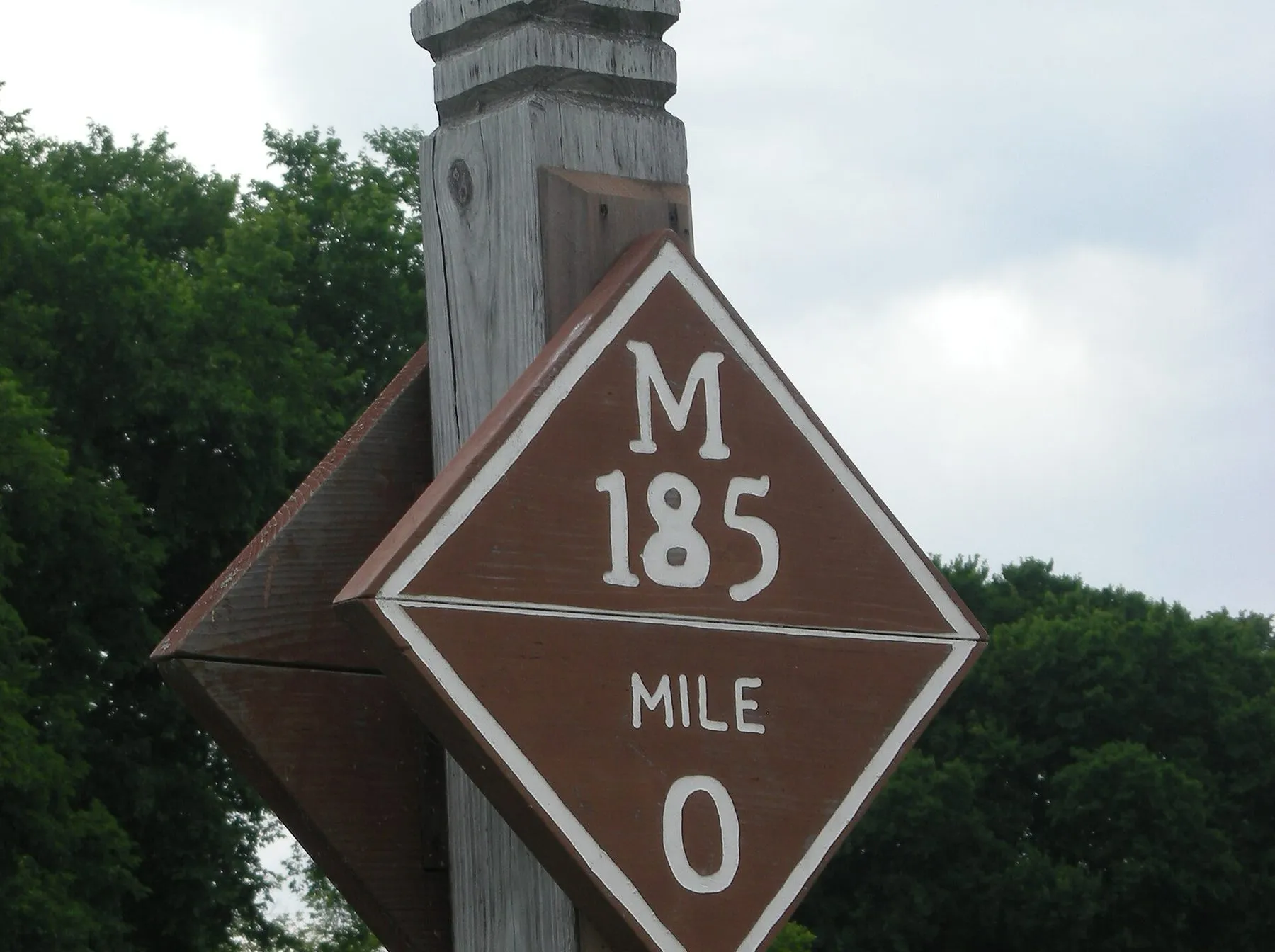
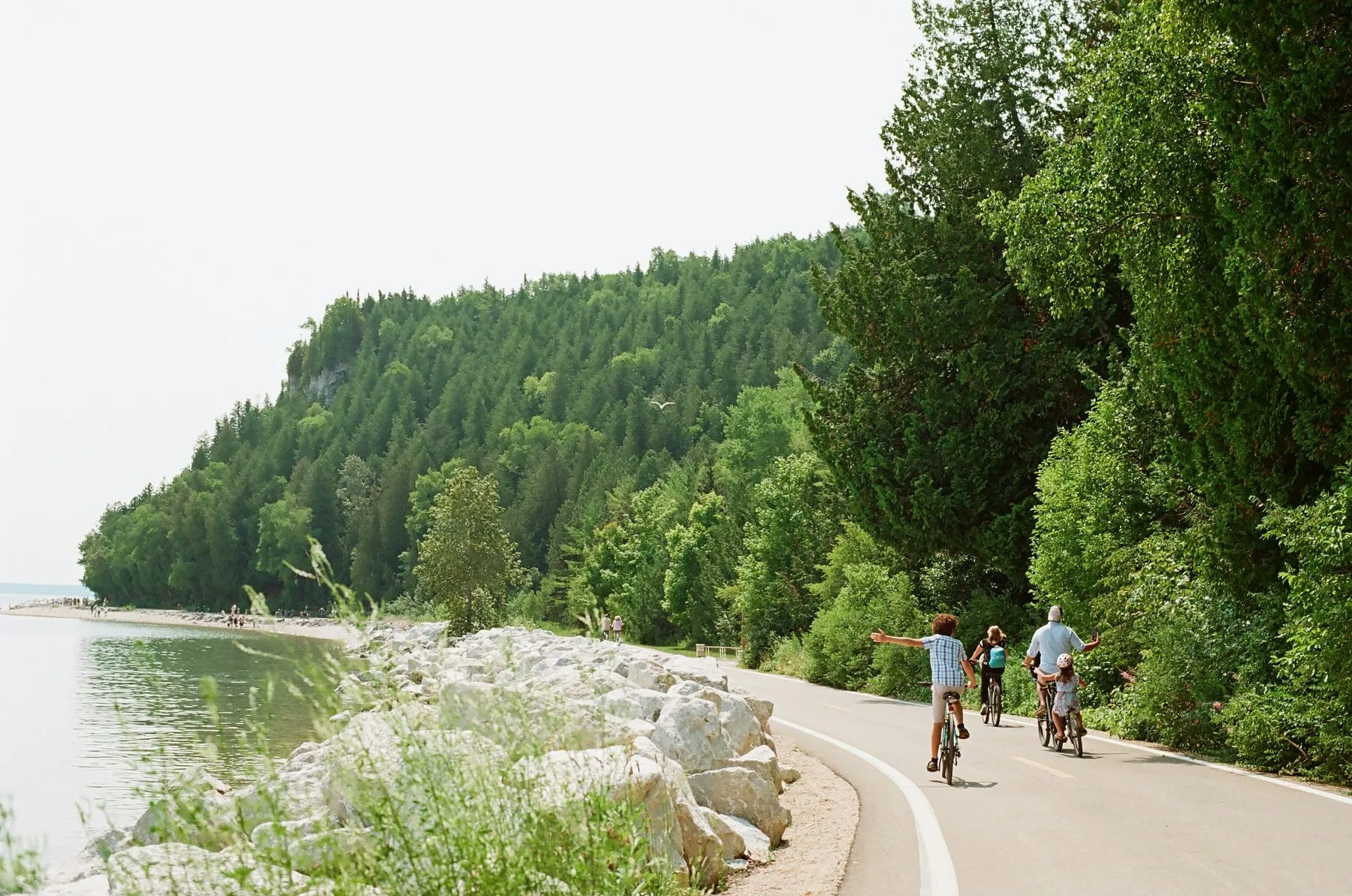
The road around the island is a state highway. M-185 runs 13 kilometres along the shore, back to where it started, and has been on Michigan’s books since 1933. The state says it is the only state highway in the country where motor vehicles are banned.
It has mile markers, a centre line and no traffic except bicycles, horses and people on foot. Riding all the way round takes about an hour, longer with stops, and there is nothing to stop for except the view.
The island’s first car accident came on May 13, 2005. The fire truck and the ambulance were both answering a call at the ferry dock, and the truck damaged the ambulance’s door. There was nothing else available to hit.
Electric bicycles are banned as well. The one exception is for people with a mobility disability, who may ride the kind that only helps while you pedal. The island’s view is that a motor is a motor.
It took 107 years to have a car accident, and it needed two emergency vehicles to manage it.
The exceptions
There are exceptions, and the island keeps count of them.
The fire truck, the ambulance and the police car are allowed. So are a few service vehicles, and golf carts, which have to stay on the golf courses. In 1979 a film crew was let in with cars to make Somewhere in Time, on the understanding that the cars left afterwards.
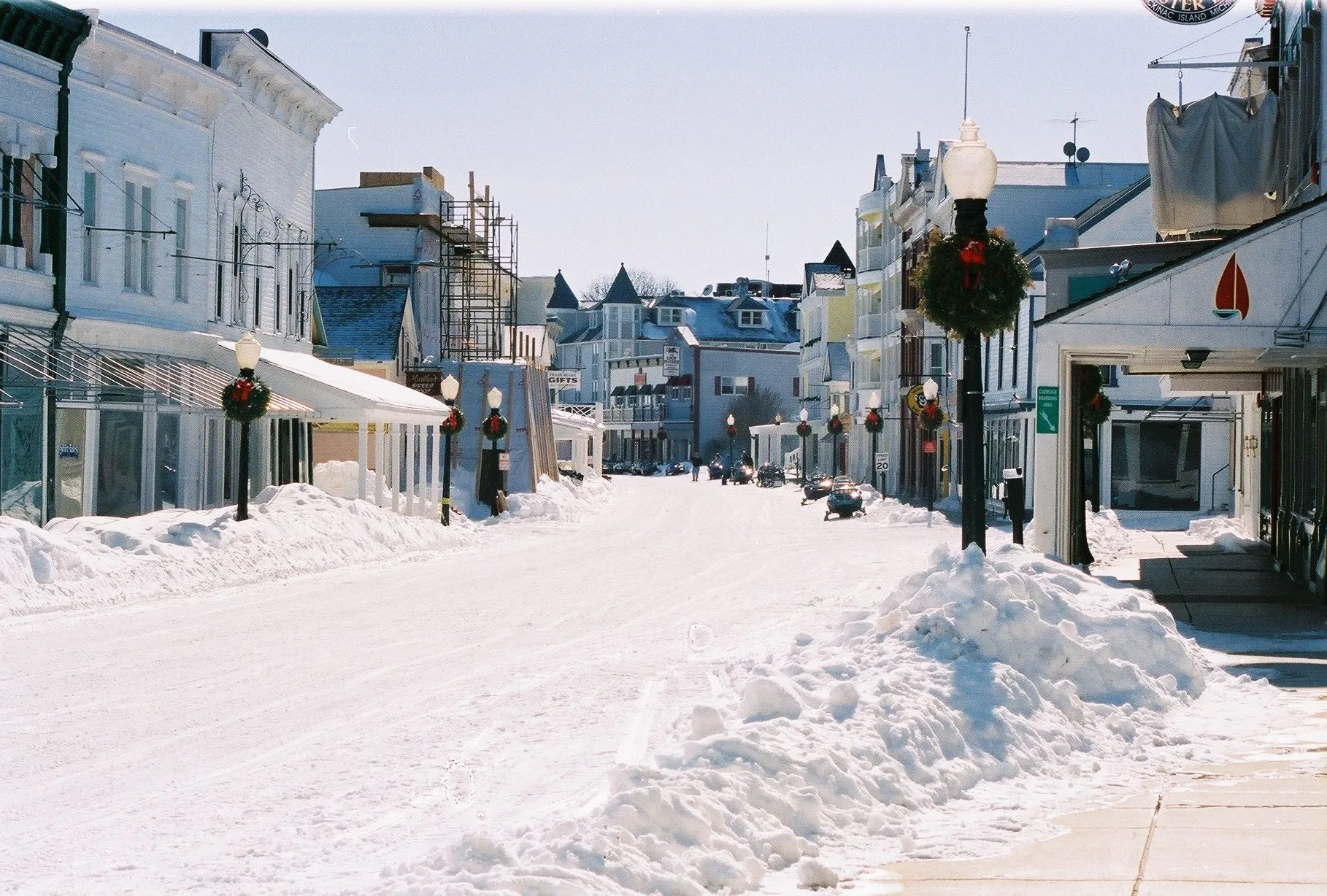
In winter, when the visitors and most of the horses have gone, the residents may use snowmobiles. If the lake freezes hard enough they mark a route across the ice to St. Ignace with their old Christmas trees, and ride to the mainland.
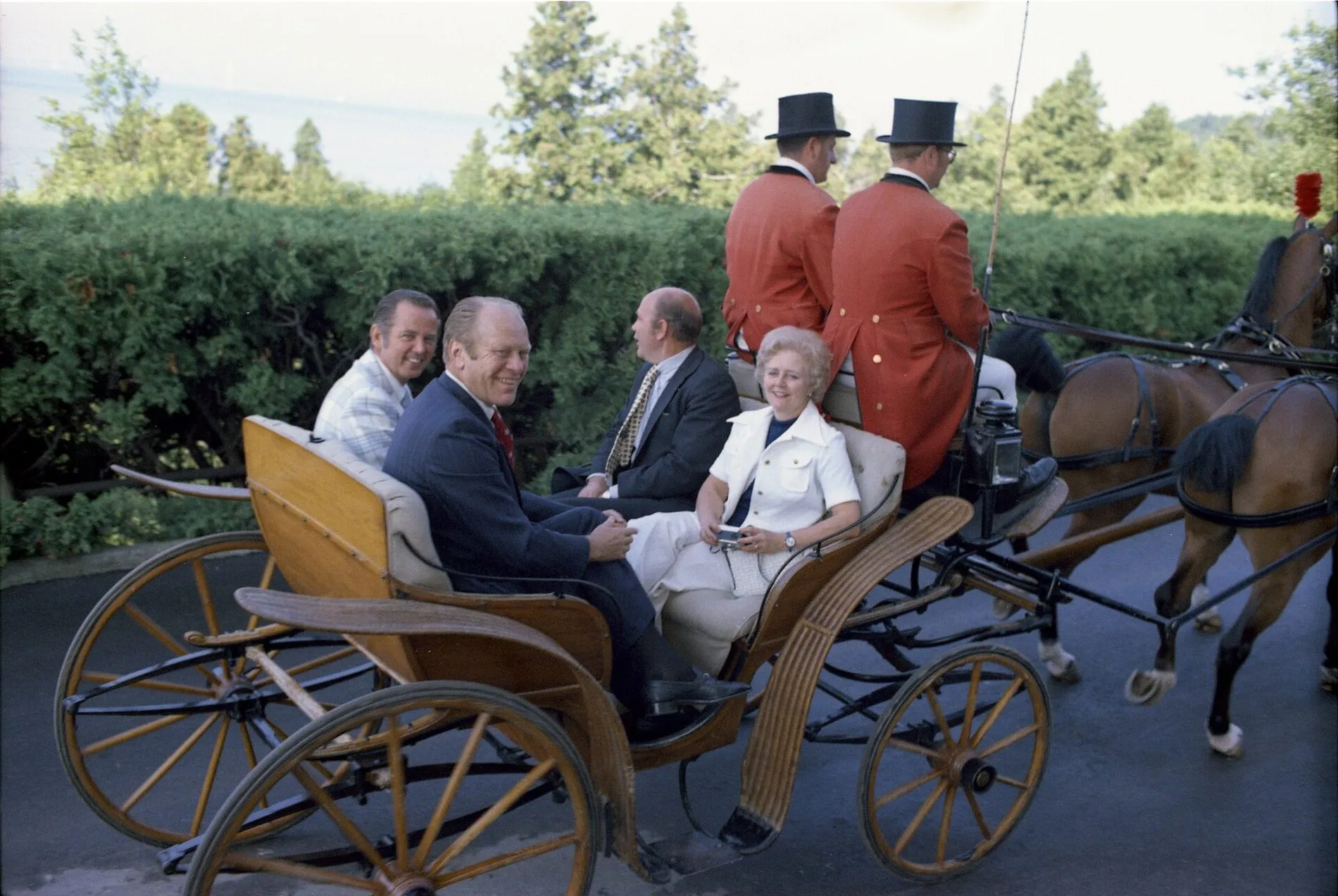
Presidents have been handled both ways. Gerald Ford came in 1975, the only sitting president to visit, and went about by horse and carriage like everybody else. A car is said to have been hidden on the island in case of emergency. In September 2019 Vice-President Mike Pence flew in for a conference at the Grand Hotel and covered the last stretch in a motorcade of eight vehicles, the first the island had ever seen.
Islanders had opinions about that.
The President arrived by horse. The Vice-President brought eight cars.
A porch you pay to stand on
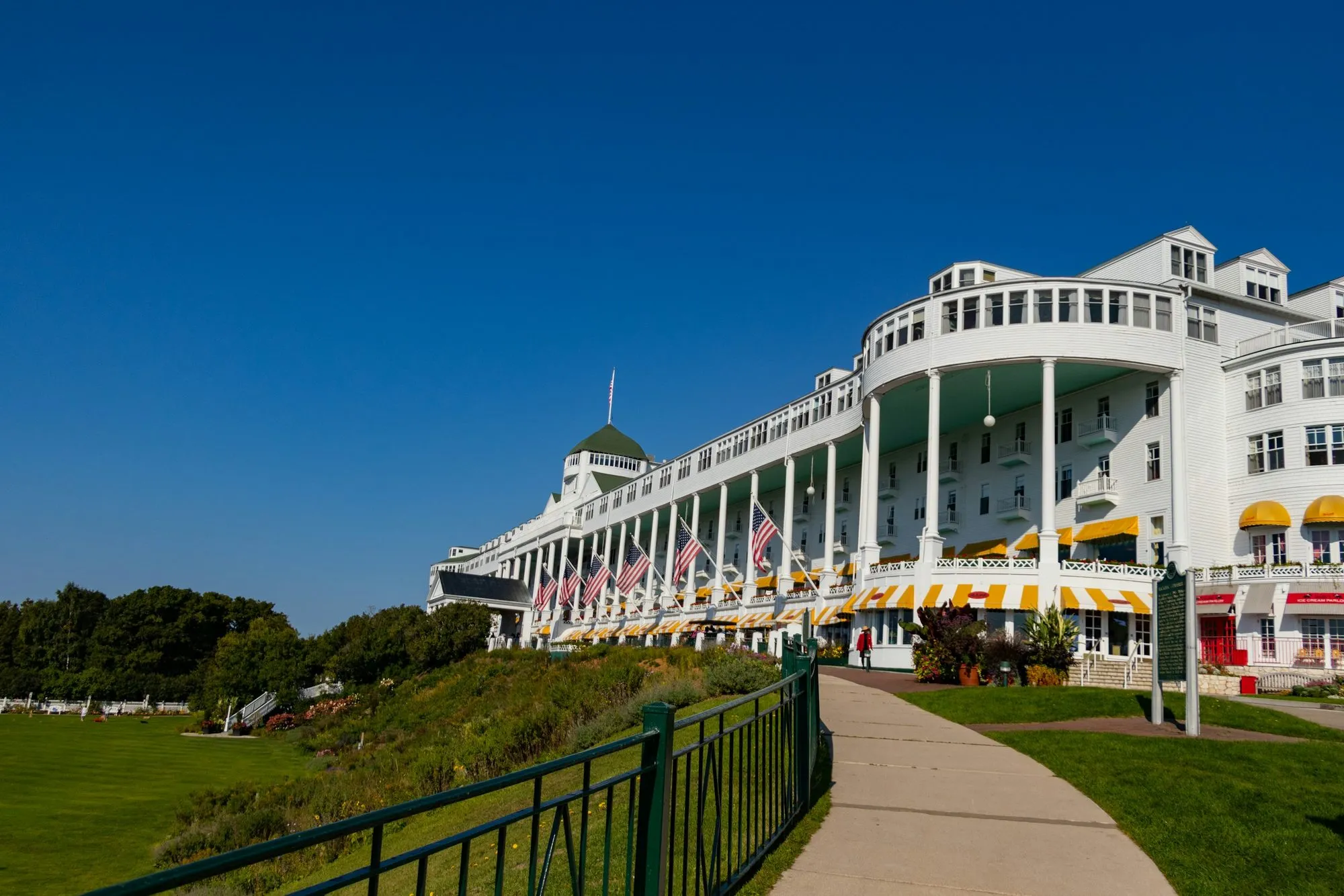
The Grand Hotel opened on July 10, 1887, having been built in 93 days. It has what it calls the longest porch in the world, about 200 metres of it. If you are not staying, it costs US$14 to walk in and look. After 6:30 in the evening the men need a jacket and tie.
The fudge is cheaper. The first fudge shop opened the same year as the hotel. There are now more than a dozen, and at the height of summer the island makes about 4,500 kilograms of it a day. Day visitors are known as fudgies. It is not entirely affectionate.
Up the hill is Fort Mackinac, which the British built in 1780 and later handed to the Americans. They took it back in July 1812 without a fight, because nobody had told the American garrison that a war had started.
In 1875 a large part of the island became the second national park in the United States, after Yellowstone. Twenty years later Washington gave it to Michigan, which is why about four-fifths of the island is state park today and why so little has been built on it since.
That is the real result of 1898. The island did not only keep out the car. It kept out most of what arrives with the car, and it has been charging admission to the result ever since.
A day without a car
In U.S. dollars. Leaving the car on the mainland is not optional.
Getting across
The ferry, there and back$39
Adult. About twenty minutes each way.
The ferry, ages 5 to 12$27
There and back.
Bringing your own bicycle$21
Parking on the mainland$15
For the day.
Shepler’s fares for 2026. Arnold Transit charges about two dollars less.
Getting around
A carriage tour$44
Adult.
Hiring a bicycleAbout $15
By the hour.
WalkingFree
The whole island is 13 km round.
The Grand Hotel
Walking in to look$14
If you are not staying. Ages 6 to 12 pay $7.
A room for twoFrom about $600
A night, with breakfast and dinner.
Prices were checked with the ferry lines and the hotel in October 2026. Most of the island shuts from late October to early May. A reduced ferry keeps running for the residents until the ice stops it.
If you go
- Getting there
- Ferries run from Mackinaw City, at the top of Michigan’s Lower Peninsula, and from St. Ignace across the bridge. Both are about four and a half hours north of Detroit, and about an hour south of the Canadian border at Sault Ste. Marie.
- When
- Early May to late October. The Grand Hotel shuts in the third week of October and most of the island follows. June has the lilacs and fewer people than July.
- Getting around
- On foot, by bicycle or behind a horse. Bring your own bicycle or hire one at the dock. Electric ones stay on the mainland.
- Staying over
- Most visitors leave on the last boat. The island is a different place after six o’clock, and a better one.
- Mind
- The horses have right of way, and so does whatever they leave behind.