MeetProductsFurniture
The Muskoka chair · Docks, lawns and national parks
Canada’s favourite chair is from New York
It was designed in 1903 by a man on holiday beside Lake Champlain, patented by his hunting friend, and renamed by Canadian shops eighty years later. It is very comfortable and nearly impossible to leave.
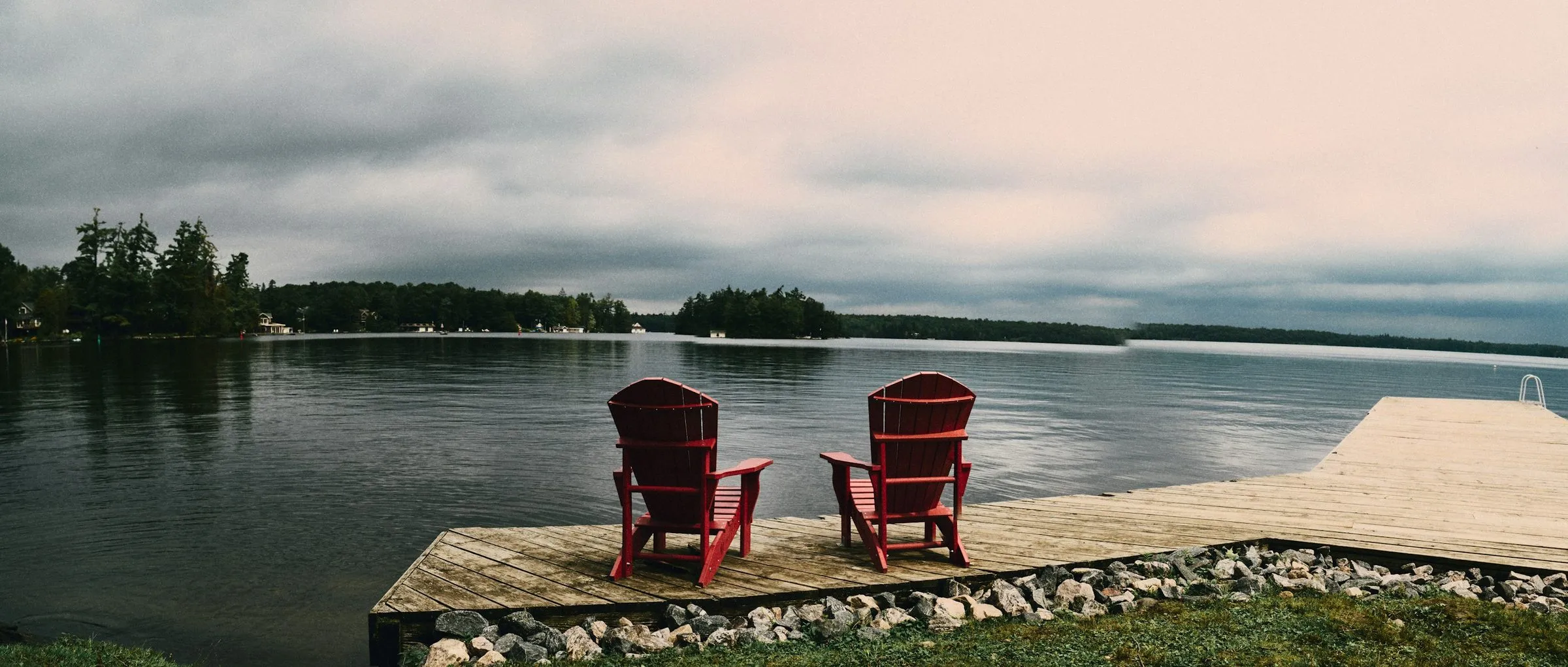
- Designed
- 1903, Westport, New York
- By
- Thomas Lee, on holiday
- Patented
- 1905, by his friend
- Renamed
- The 1980s, in Canada
- Best feature
- The arms
A man with twenty-two relatives
In the summer of 1903 Thomas Lee, a Harvard man from Massachusetts, was at his family’s place on Lake Champlain, in Westport, New York. It was called Stony Sides. The view was of the Adirondacks, the ground sloped, and there was nothing comfortable to sit on outside.
So he started nailing boards together. He built one chair after another and had the household try them. There were twenty-two relatives in residence, and every one of them was asked for an opinion, which must have made for a long summer.
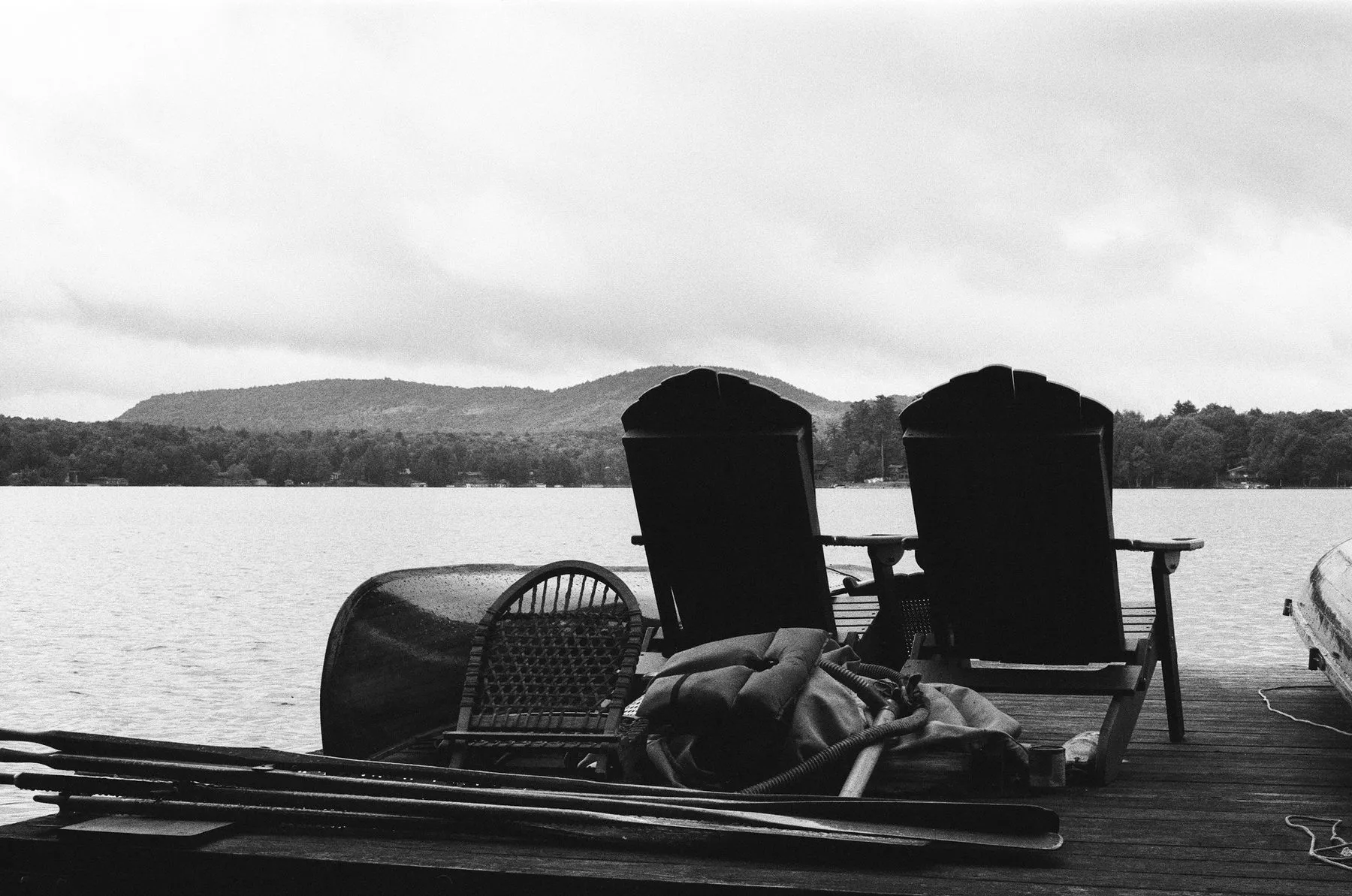
The chair they chose was made of eleven pieces cut from a single plank. The seat sloped back and sat low. The back was one wide board. The arms were broad enough to hold a plate, a book and a drink at the same time, and this remains the chair’s finest feature.
The arms hold a plate, a book and a drink at the same time.

The friend, and the patent
Lee had a hunting friend in Westport, a carpenter named Harry Bunnell, who was worried about getting through the winter. Lee gave him the design and suggested he make a few to sell to the summer people.
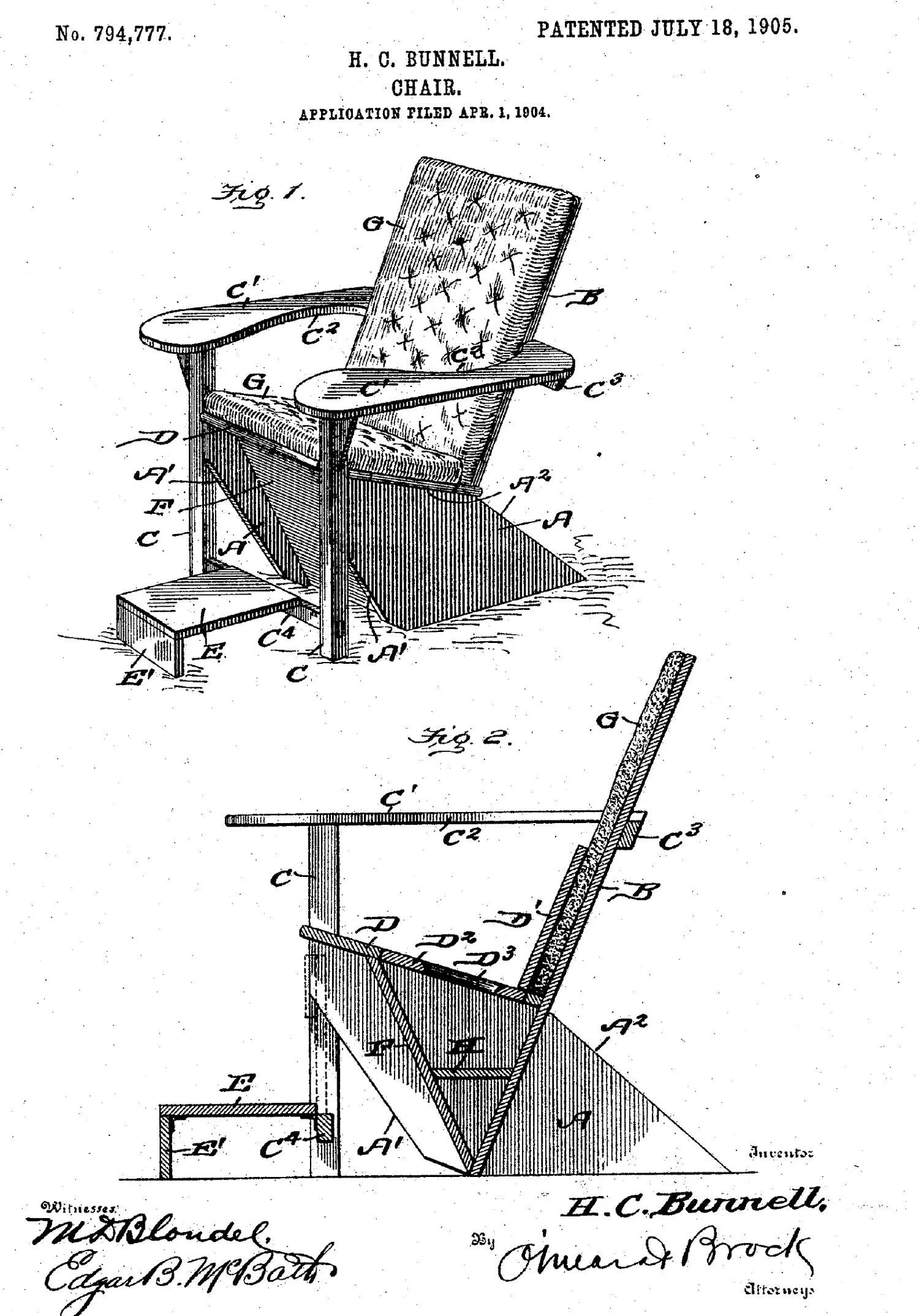
Bunnell made them, and they sold. Then, on April 1, 1904, he filed for a patent in his own name. Most accounts say he did not ask first. It was granted on July 18, 1905, as U.S. patent 794,777, and it does not mention Thomas Lee.
The patent describes a chair for porches, lawns and camps. It adds a hinged footrest and a cupboard under the seat. It also explains how to convert the chair for invalids, by fitting a seat with a round hole in it and a shelf underneath for “a vessel or receptacle of any desired kind”. The most relaxing chair in North America was patented as a part-time commode.
Bunnell built Westport chairs for about twenty years, in hemlock, painted green or brown, and signed every one. Lee never made a cent from them and never objected. Dealers now ask between 6,500 and 8,500 U.S. dollars for an original.
The most relaxing chair in North America was patented as a part-time commode.
How it became Canadian
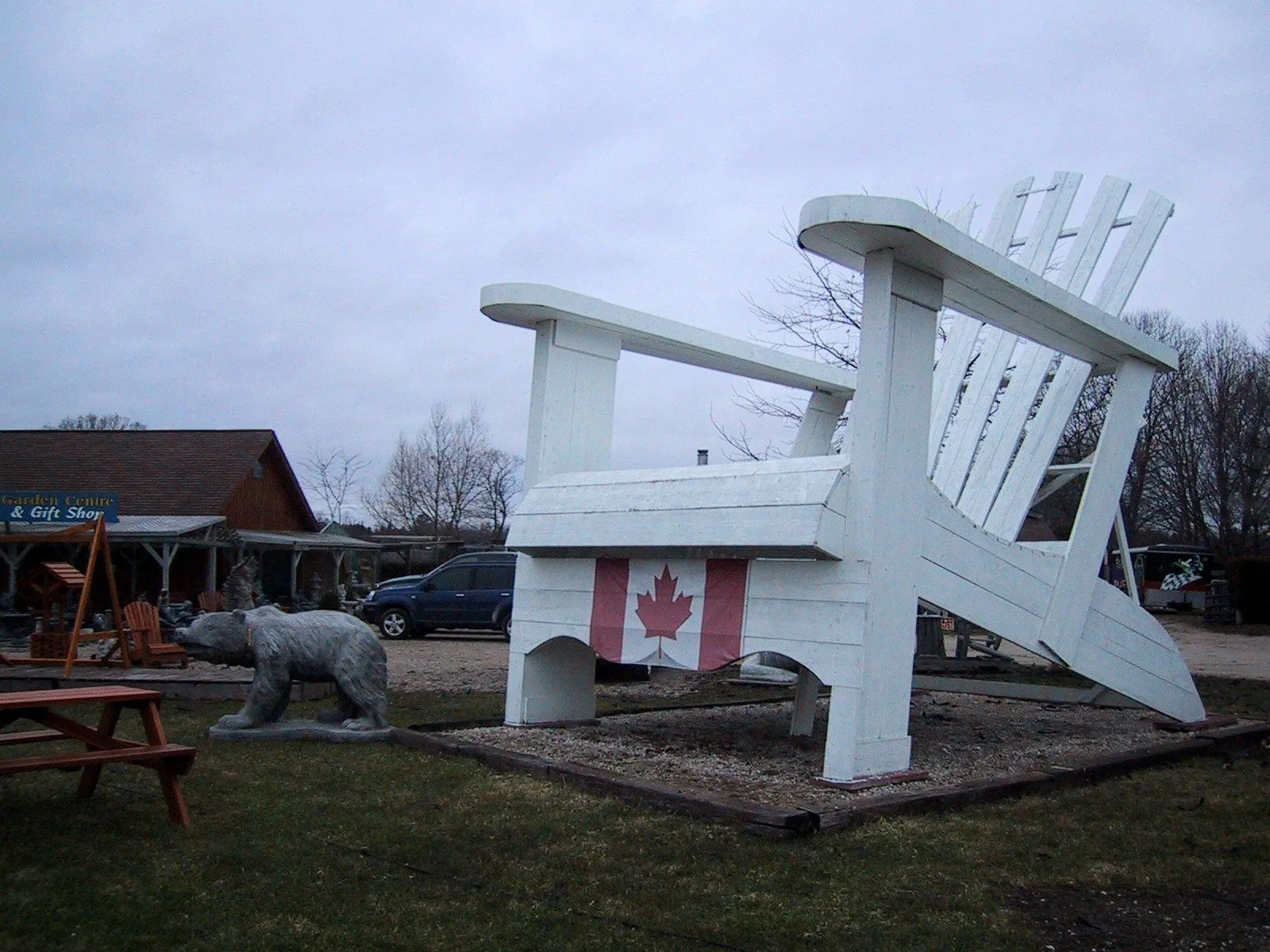
The chair you know is not quite Lee’s. In 1938 a man named Irving Wolpin patented a version with a rounded back made of slats, which needs no wide plank and fits a spine better. That is the one on your dock.
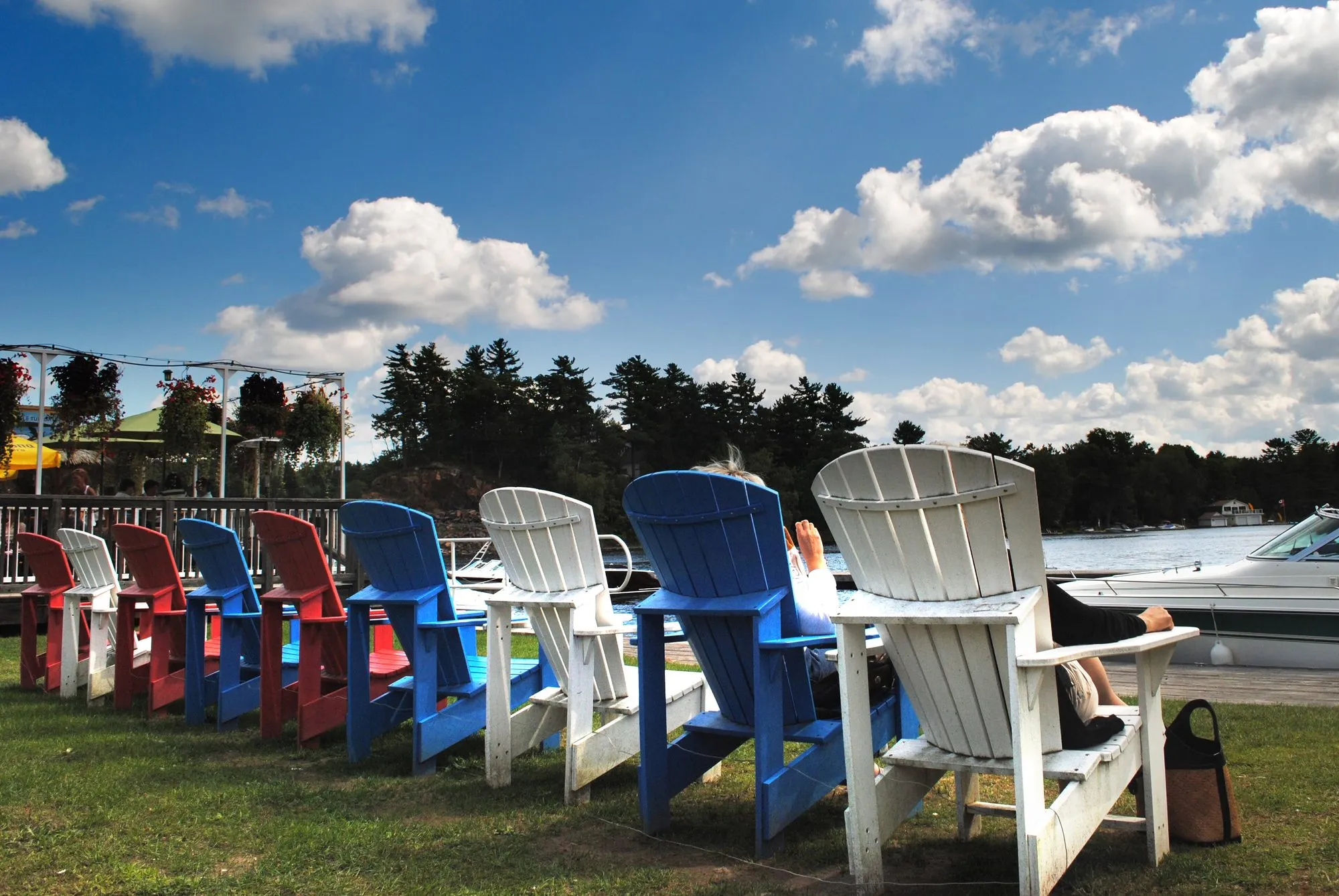
For most of the century it was an Adirondack chair, after the mountains Lee was looking at. Then, in the 1980s, Canadian shops began selling it as the Muskoka chair, after Ontario’s cottage country, which had nothing to do with its invention and a great deal to do with its use. The name stuck so well that plenty of Canadians believe it was born here.
Some makers insist the two are different, the Muskoka being a couple of inches lower and narrower, with a curved top. Most people who sell them say it is the same chair.
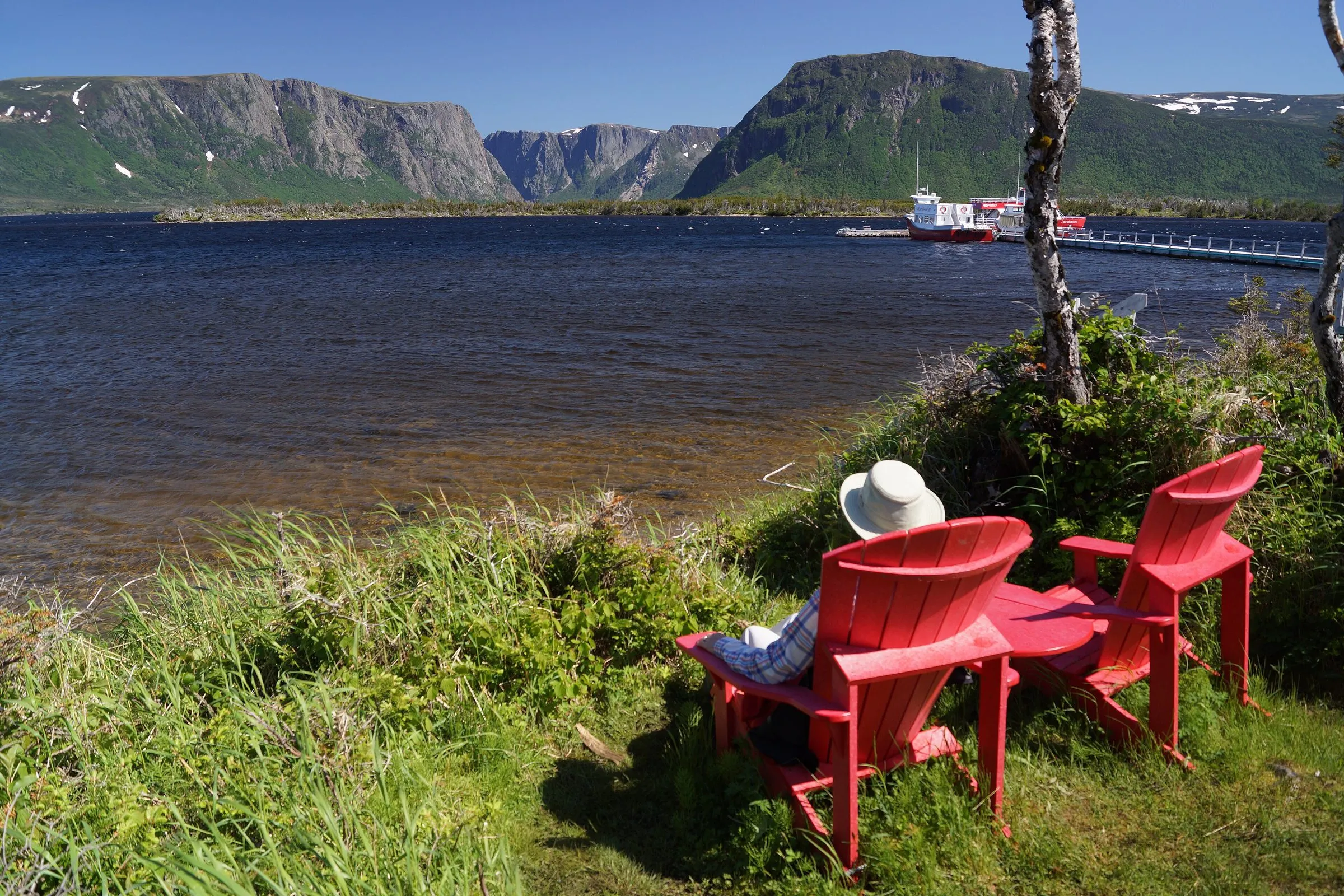
Canada has since made it official in its own way. In 2011 Gros Morne National Park put out eighteen pairs of red ones where the views were good. Parks Canada now has more than two hundred red chairs in over a hundred places, and people drive a long way to sit in them.
The catch
The catch is the exit. The seat is low and slopes backward, so your knees end up higher than your hips and your weight goes exactly where you cannot use it. Getting out means shuffling to the front edge, planting both feet and pushing on the arms with some commitment. Thomas Lee tested the chair on twenty-two relatives, and it seems none of them needed to be anywhere.
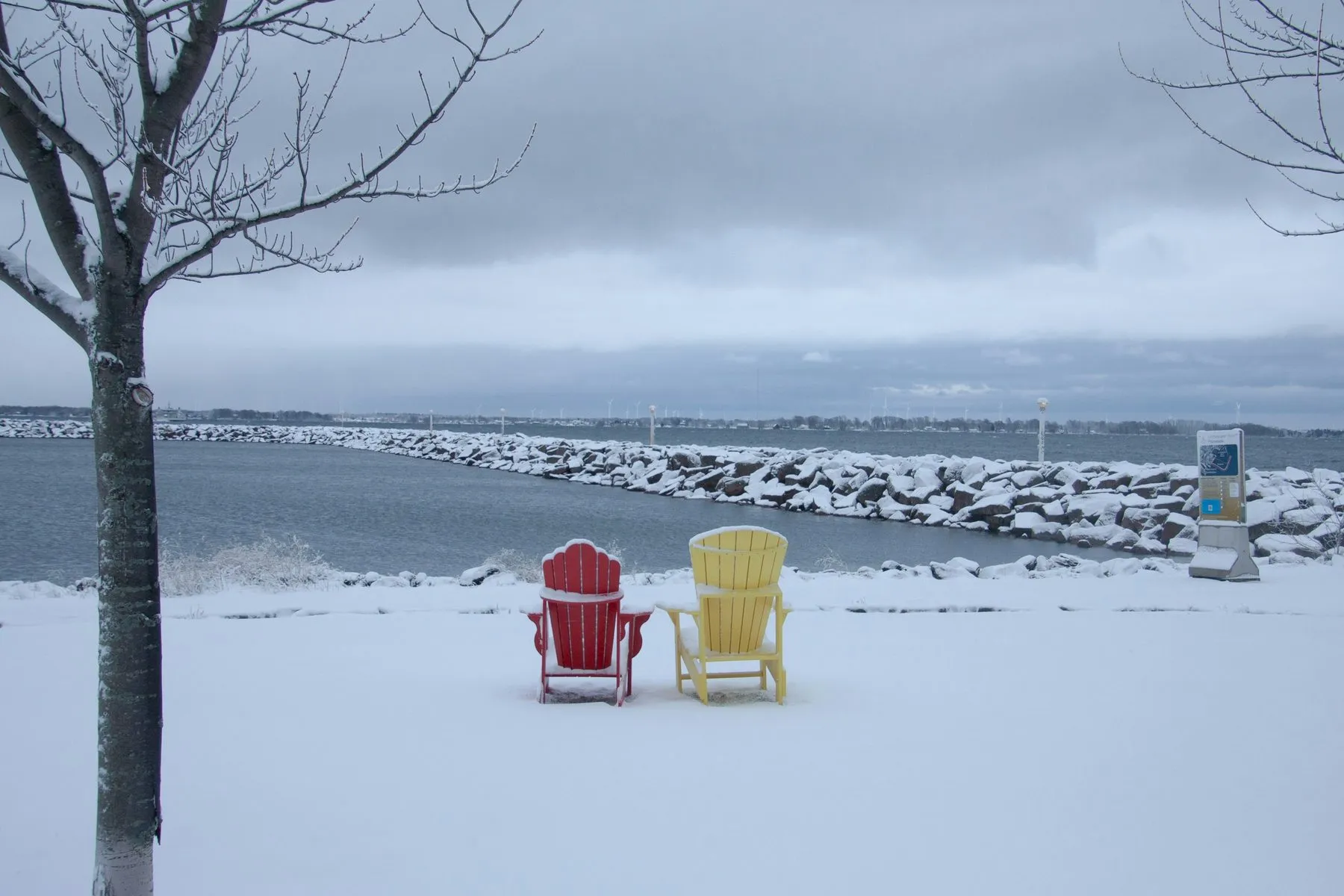
You cannot eat at a table from one, and you cannot easily turn to the person beside you. Conversations in Muskoka chairs are conducted facing the lake.
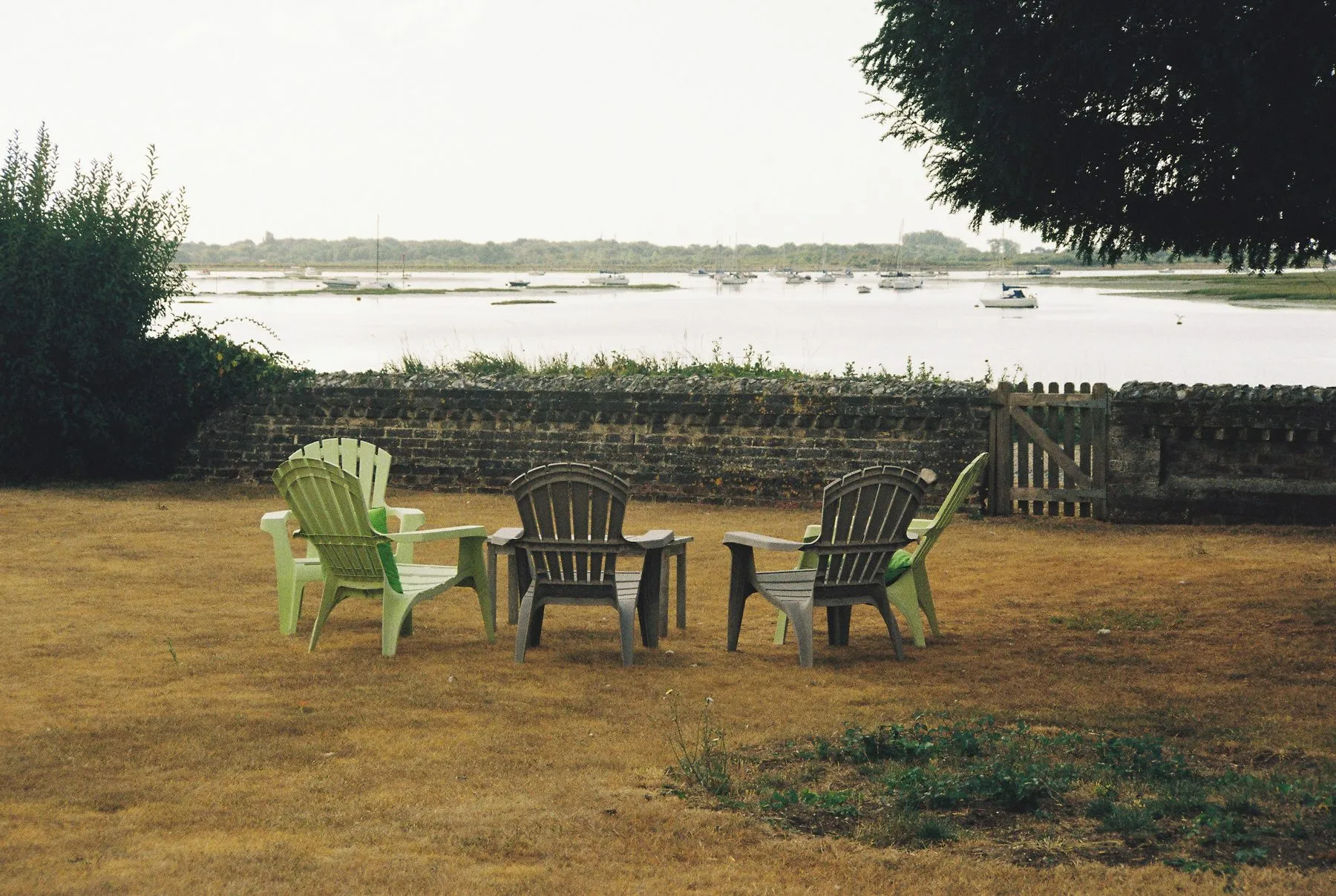
That may be the point. It is a chair for looking at water, and it does that job better than anything invented since. The wooden ones go grey and need replacing every so often. The recycled plastic ones, some of them made in Stratford, Ontario, out of bottle caps, weigh about as much as a small child and will outlive the dock.
Somewhere in Canada right now there are two of them at the end of one, empty, facing west.
Conversations in Muskoka chairs are conducted facing the lake.
What one costs
From a hardware store to an antique dealer.
New
Plastic, from Canadian Tire$159.99
The For Living all-season chair. Seen on sale for $99.99.
Recycled plastic, made in Stratford, Ontario$239.99
The Canvas Arrowhead chair. About 24,000 bottle caps each.
Old
An original Westport chair$6,500 and up
Signed by Harry Bunnell, from a dealer. In U.S. dollars.
Borrowed
A red one in a national park$0
More than a hundred places. You pay to get into the park, not to sit.
Prices checked on October 2, 2026.
If you sit in one
- Getting out
- Slide forward to the edge, get both feet under you and push on the arms. Do not attempt it holding a drink.
- Wood or plastic
- Cedar and pine are lighter and weather to grey. Recycled plastic is heavy, stays out all winter and never needs paint.
- Finding a red one
- Parks Canada lists the red chair spots for each park on its website. Gros Morne, where it started, has a pair at Western Brook Pond.
- Building one
- Lee’s chair was eleven pieces from one plank. Plans for the slatted kind are easy to find, and it is a weekend’s work.
- The name
- South of the border, ask for an Adirondack chair. Asking for a Muskoka chair gets you a blank look.