MeetThingsFrance
Saint-Pierre and Miquelon · 20 km off Newfoundland
You can take a ferry from Newfoundland to France
Twenty kilometres off the south coast of Newfoundland there is a town where the police are gendarmes, the money is the euro and the shops shut for lunch. It is not a theme. It is France, and the ferry takes ninety minutes.
- Where
- 20 km off Newfoundland
- Country
- France
- The crossing
- 90 minutes from Fortune
- Money
- The euro
- Clocks
- Half an hour ahead
- People
- About 5,800
Ninety minutes to the Republic
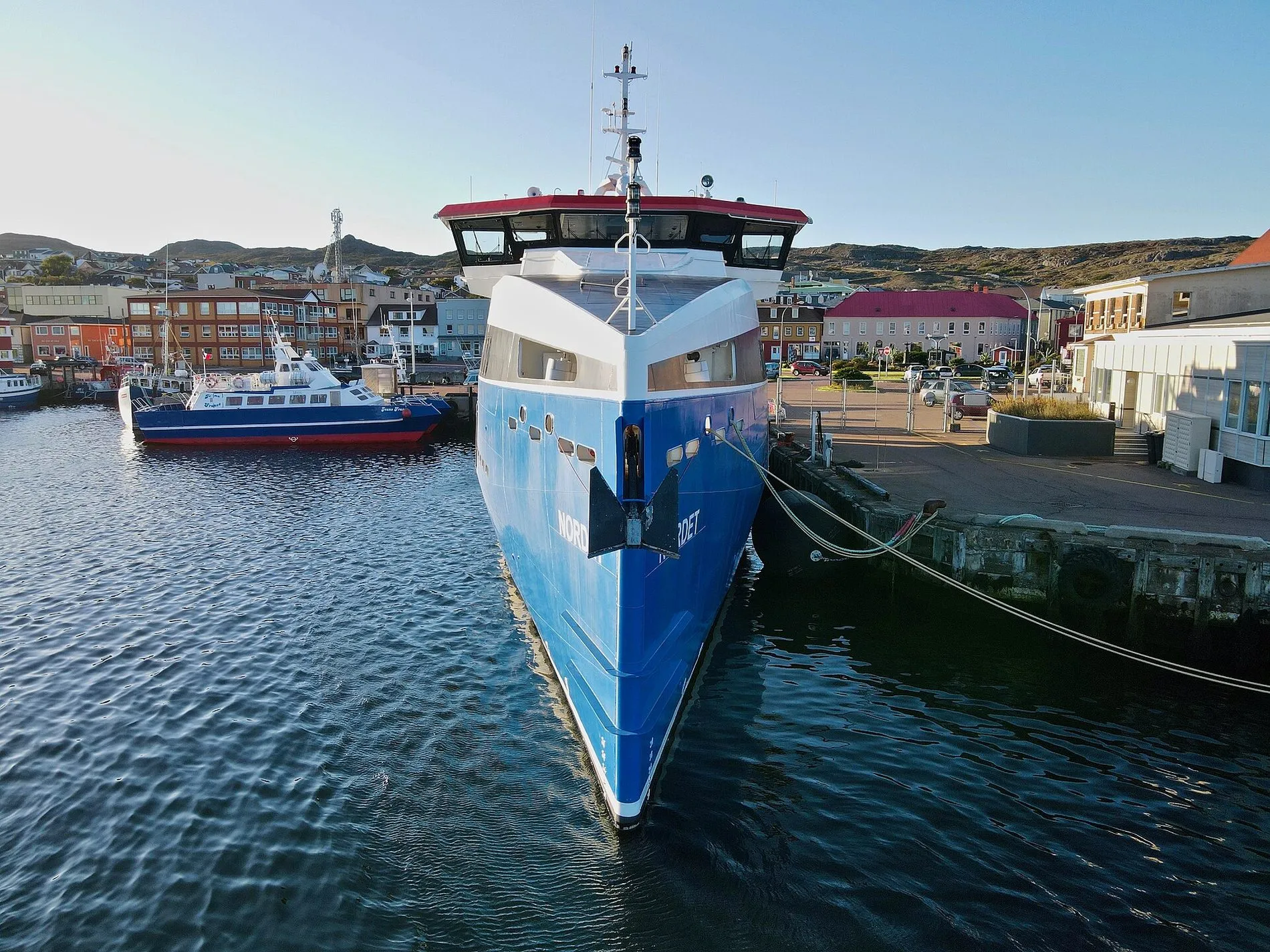
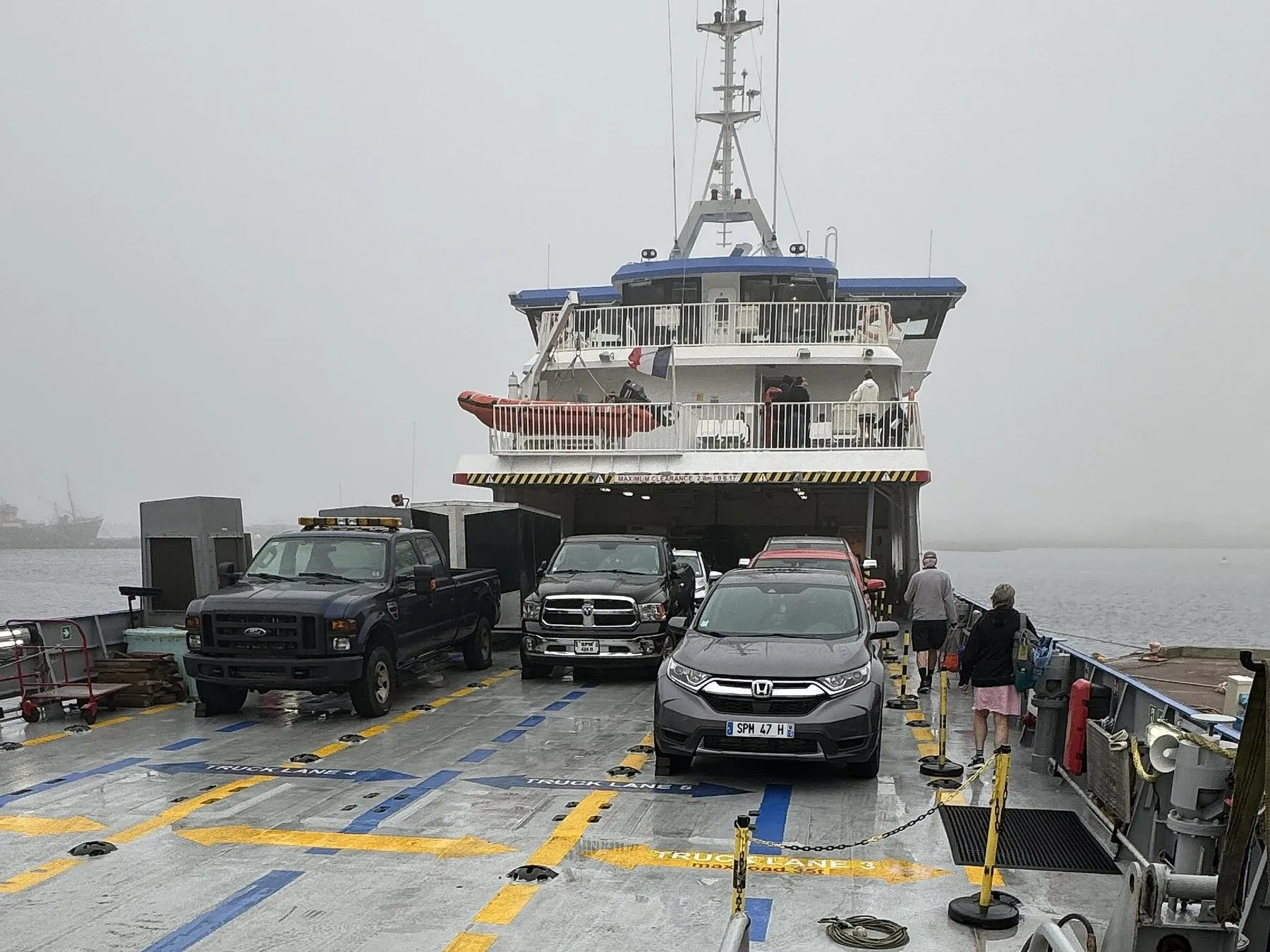
The ferry leaves Fortune, on Newfoundland’s Burin Peninsula, and ninety minutes later it ties up in France.
This is not a figure of speech, a twinning arrangement or a theme. Saint-Pierre and Miquelon is French territory, the last piece of what France once held in North America, about 20 kilometres off the Canadian coast. The people are French citizens. They vote for the president, send a deputy and a senator to Paris, pay in euros and are policed by gendarmes.
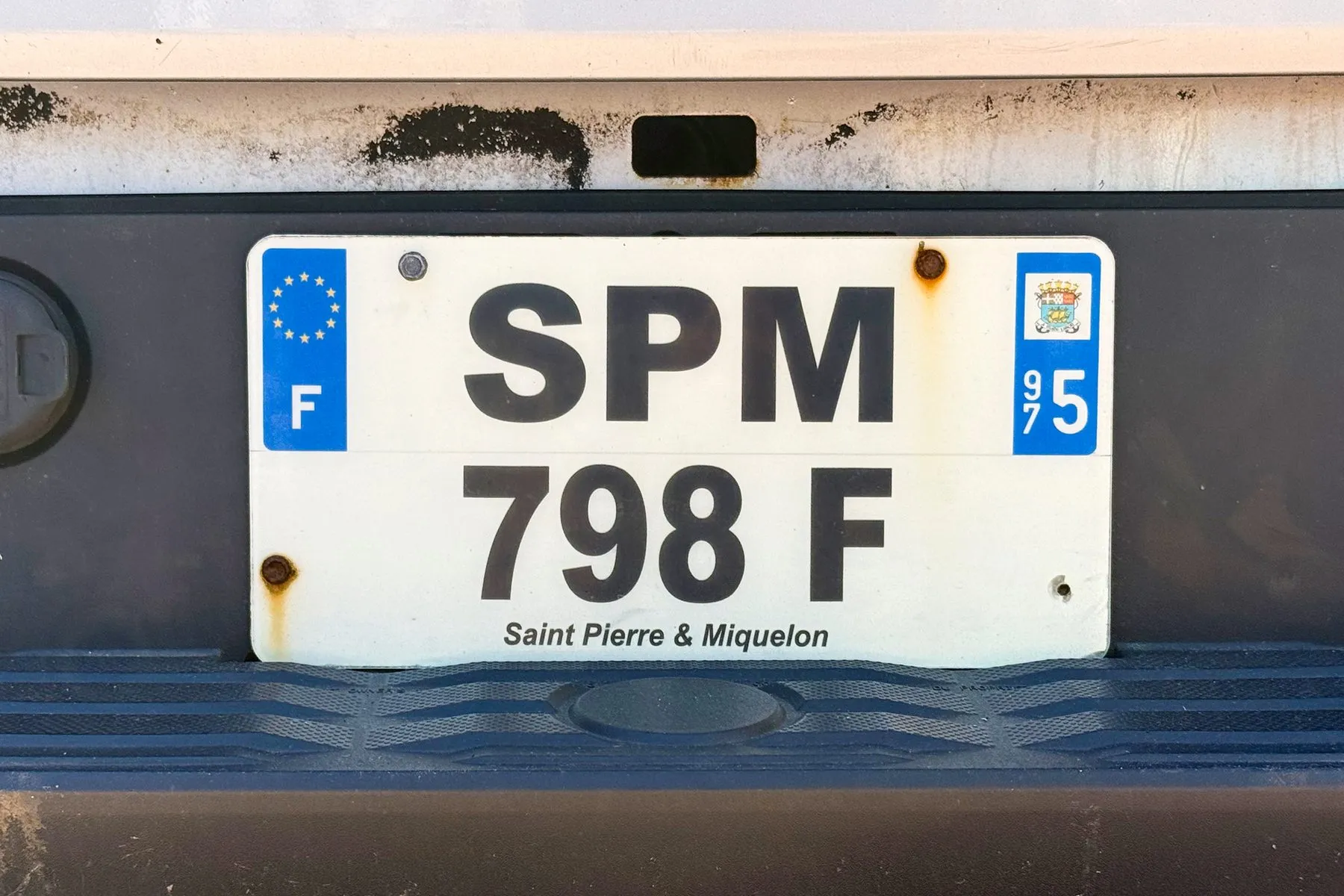
The licence plates are the size of a Canadian one and carry the stars of the European Union, which Saint-Pierre is not actually in. It uses the euro anyway.
The clocks are half an hour ahead of Newfoundland, which is already half an hour ahead of everybody else.
You will want euros, an adapter for the plugs and your passport. Your phone will think it has gone abroad. It is right.
Your phone will think it has gone abroad. It is right.
It is not pretending
What surprises people is how little effort the place puts into being French. It has no need to.
There are bakeries, and they are French bakeries. The cheese and the wine come from France. Most of the shops shut at noon for lunch and open again when lunch is over, which is not a decision anyone here feels the need to explain.
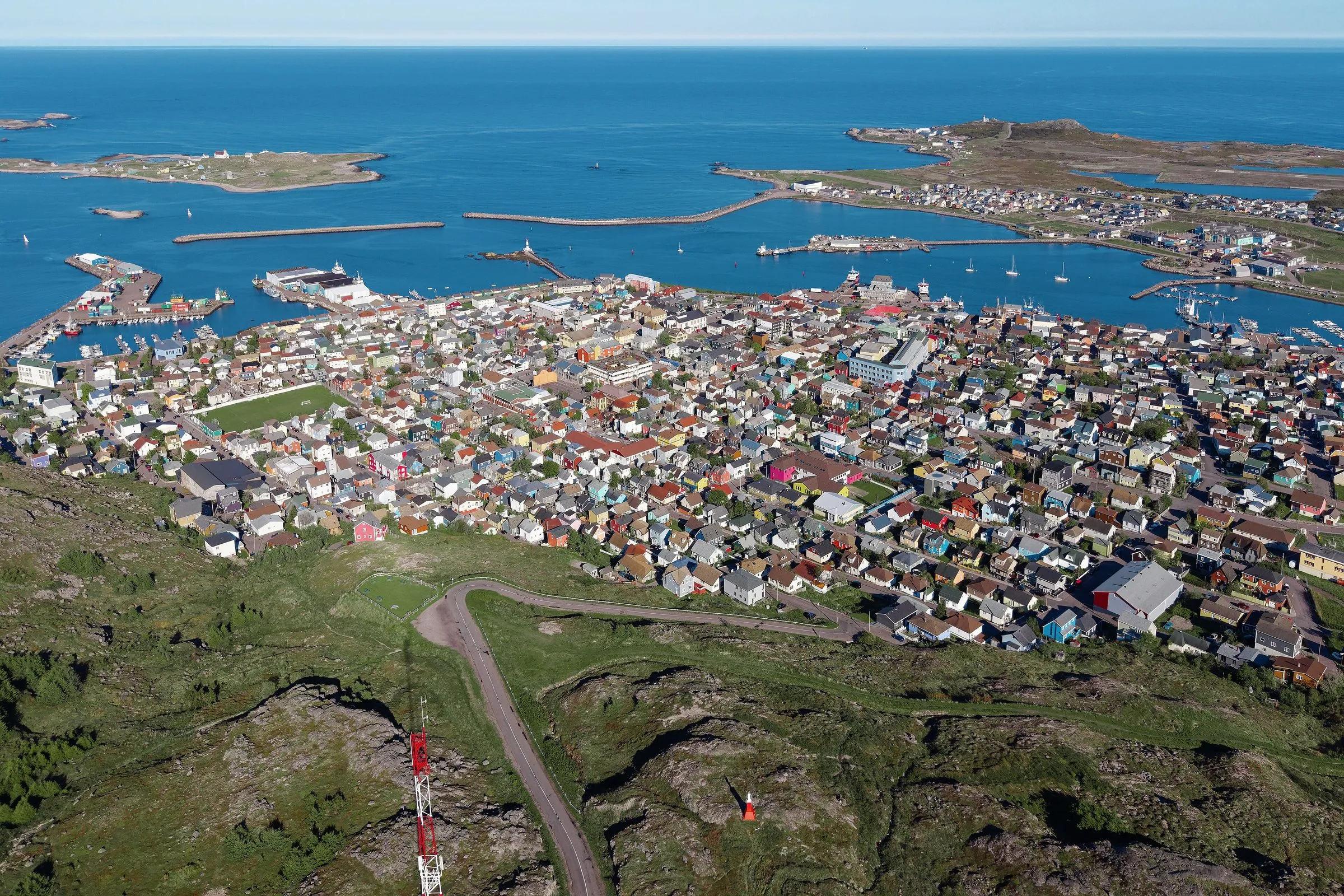
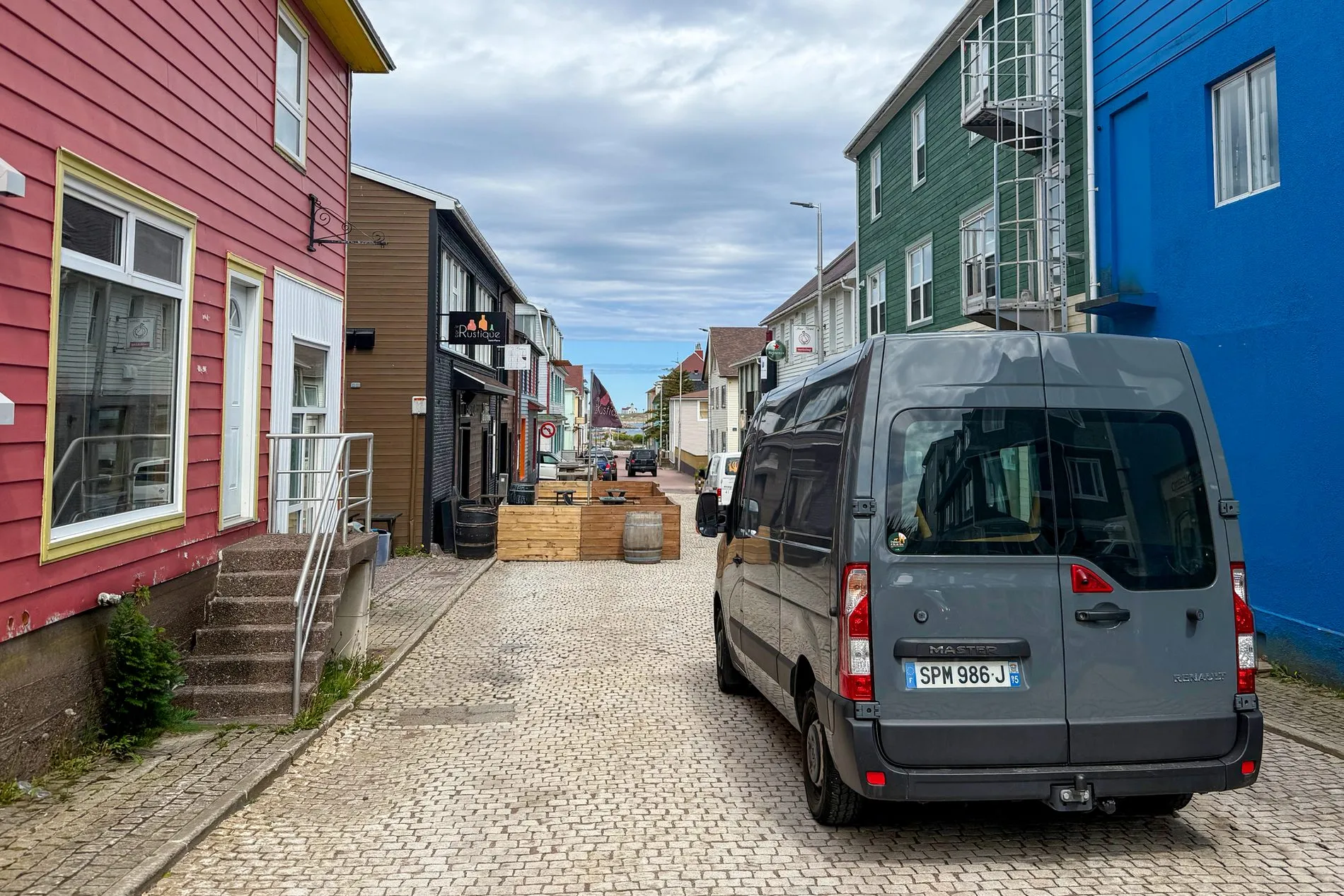
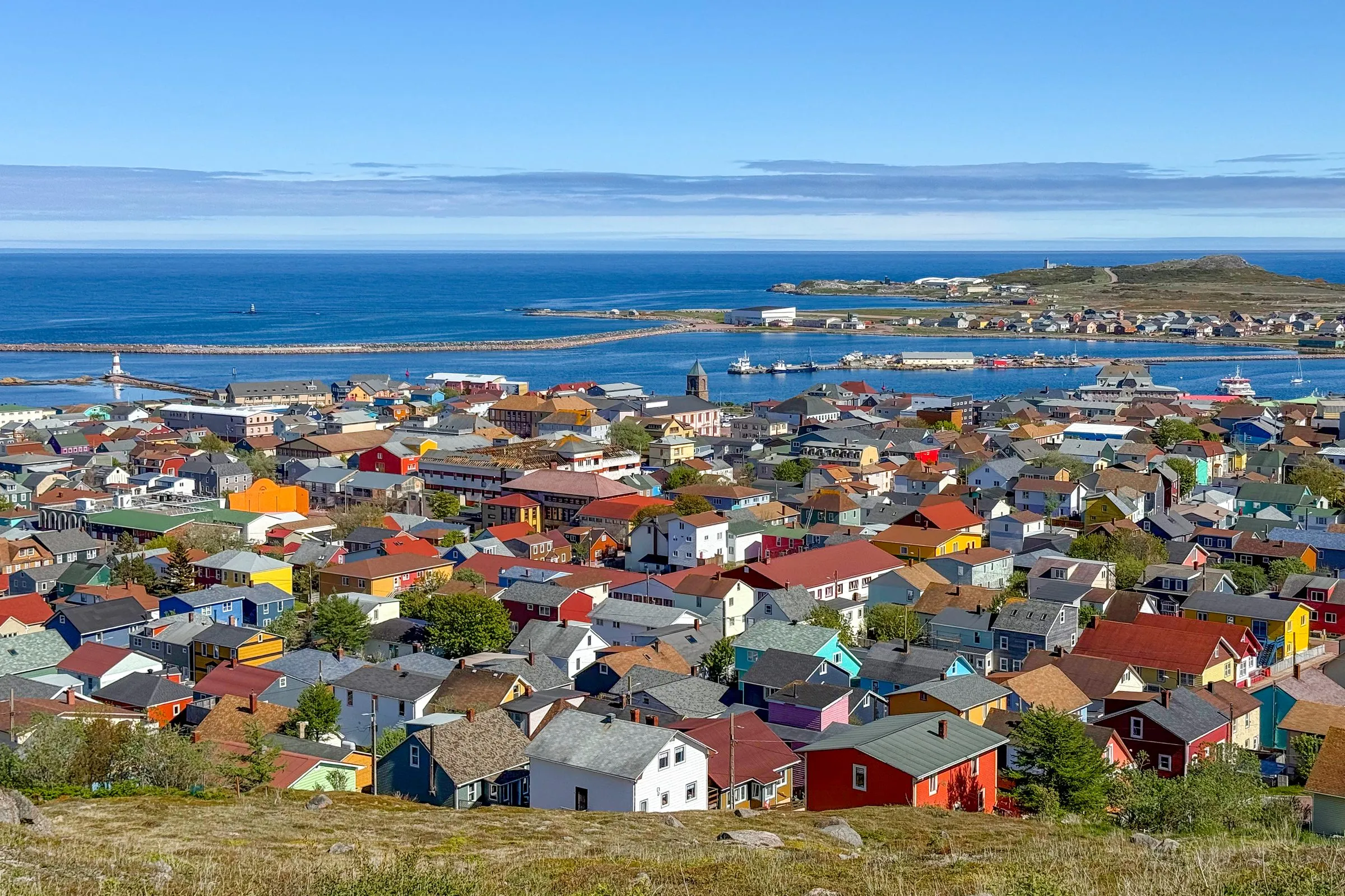
The town itself looks like neither country. The houses are wooden, as they are in Newfoundland, and painted every colour a hardware store stocks. They are packed onto a hillside above the harbour as if land were scarce, which it is. About 5,800 people live in the whole territory, and nearly all of them live in this one town.
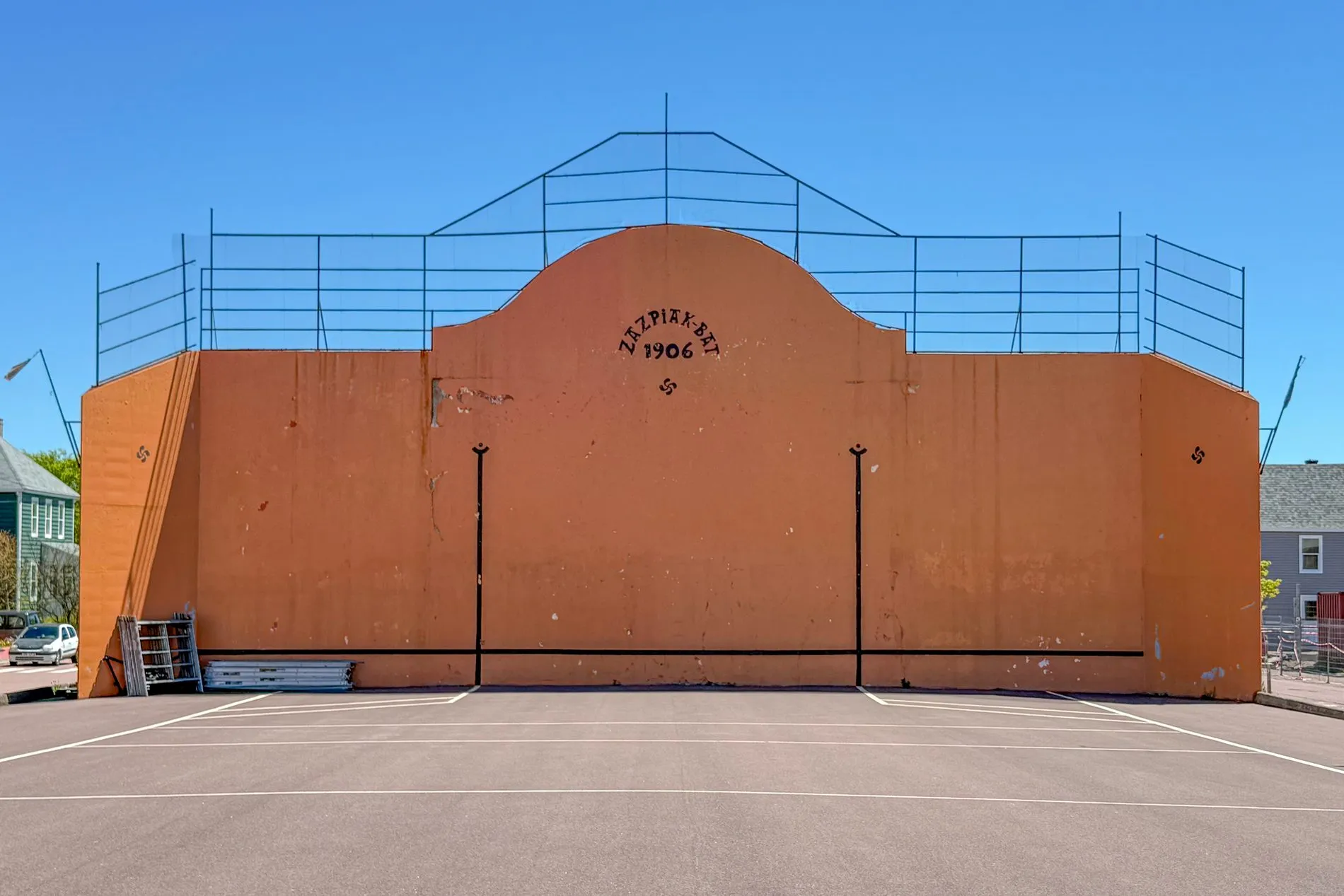
Down by the water is a pelota court built in 1906. A good many of the families here came from the Basque country, and the rest from Brittany and Normandy. Every August there is a Basque festival, with dancing, and large men pulling on a rope.
The houses are painted every colour a hardware store stocks.
Whisky, a guillotine and an invasion
For a small fishing port, Saint-Pierre has had an eventful time.
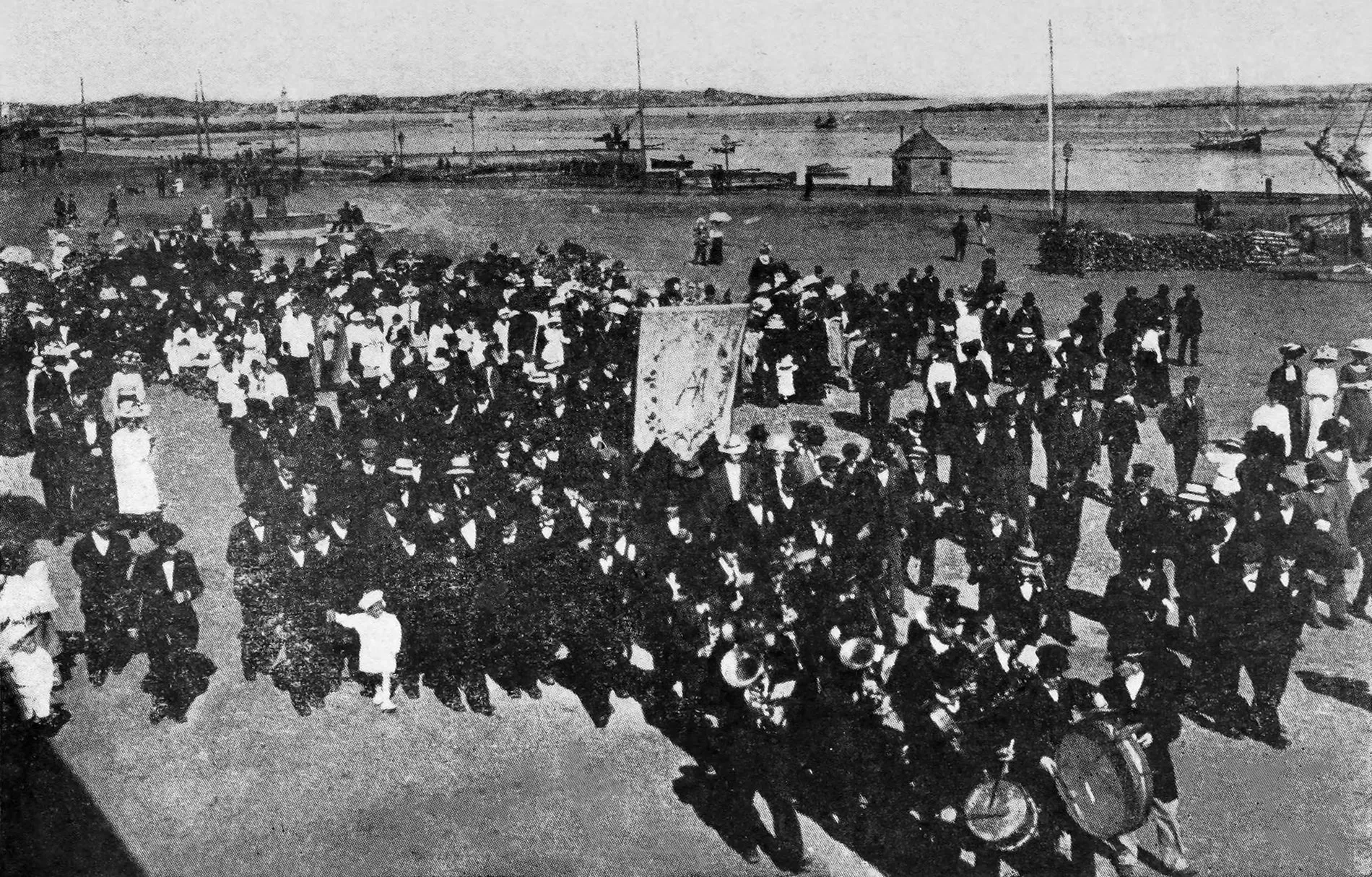
When the United States banned alcohol in 1920, it could not stop Canada making it, and Canada was free to sell it to France. France, conveniently, was 20 kilometres away. Distillers shipped whisky here by the boatload and smugglers ran it down the coast. In a single year the islands took in about seven million litres. The fish plants became warehouses. Wooden crates rattled and gave the boats away, so the bottles were repacked in sacks, and at least one house in town was built out of the crates left behind. The Hôtel Robert still shows a hat it says Al Capone forgot. Prohibition ended in 1933, and with it the best thirteen years the local economy ever had.
In 1889 a fisherman named Auguste Néel was sentenced to death for murder. French law called for the guillotine and the colony did not own one, so one was shipped up from Martinique. Nobody on the island would work it. In the end a prisoner agreed to. It is the only time the guillotine has been used in North America, and the machine is in the town museum.
On Christmas Eve 1941 the islands were still answering to Vichy. A Free French admiral arrived with three small warships and a submarine and took the place without firing a shot. The next day he held a vote, and 98 percent chose de Gaulle. Washington, which had an understanding with Vichy, was furious. It made no difference.
Nobody on the island would work the guillotine, so they found a prisoner who would.
What was left when the cod went
All of that was a sideshow. For four hundred years the real business here was cod.
Then the cod ran out. In 1992 Canada closed its cod fishery, and in the same year a tribunal settled a long argument between Canada and France over who owned the sea around the islands. France had asked for a great deal. It was given a band of water around the islands and a corridor 19 kilometres wide running about 350 kilometres due south, roughly a quarter of what it wanted. On the chart it looks exactly like a baguette, and that is what everybody calls it.
The fishing never came back. The islands now live largely on money from Paris and on whatever visitors bring.
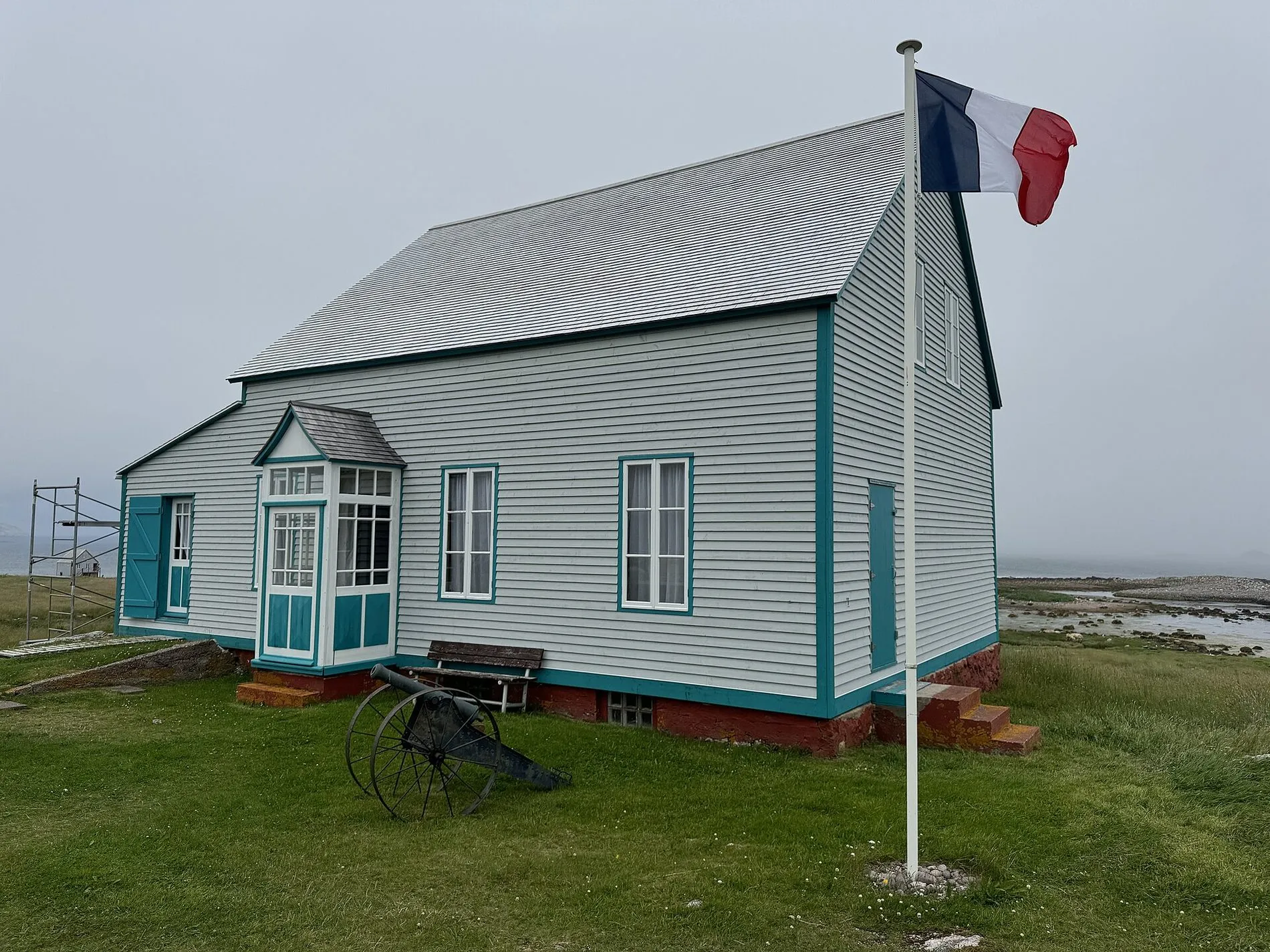
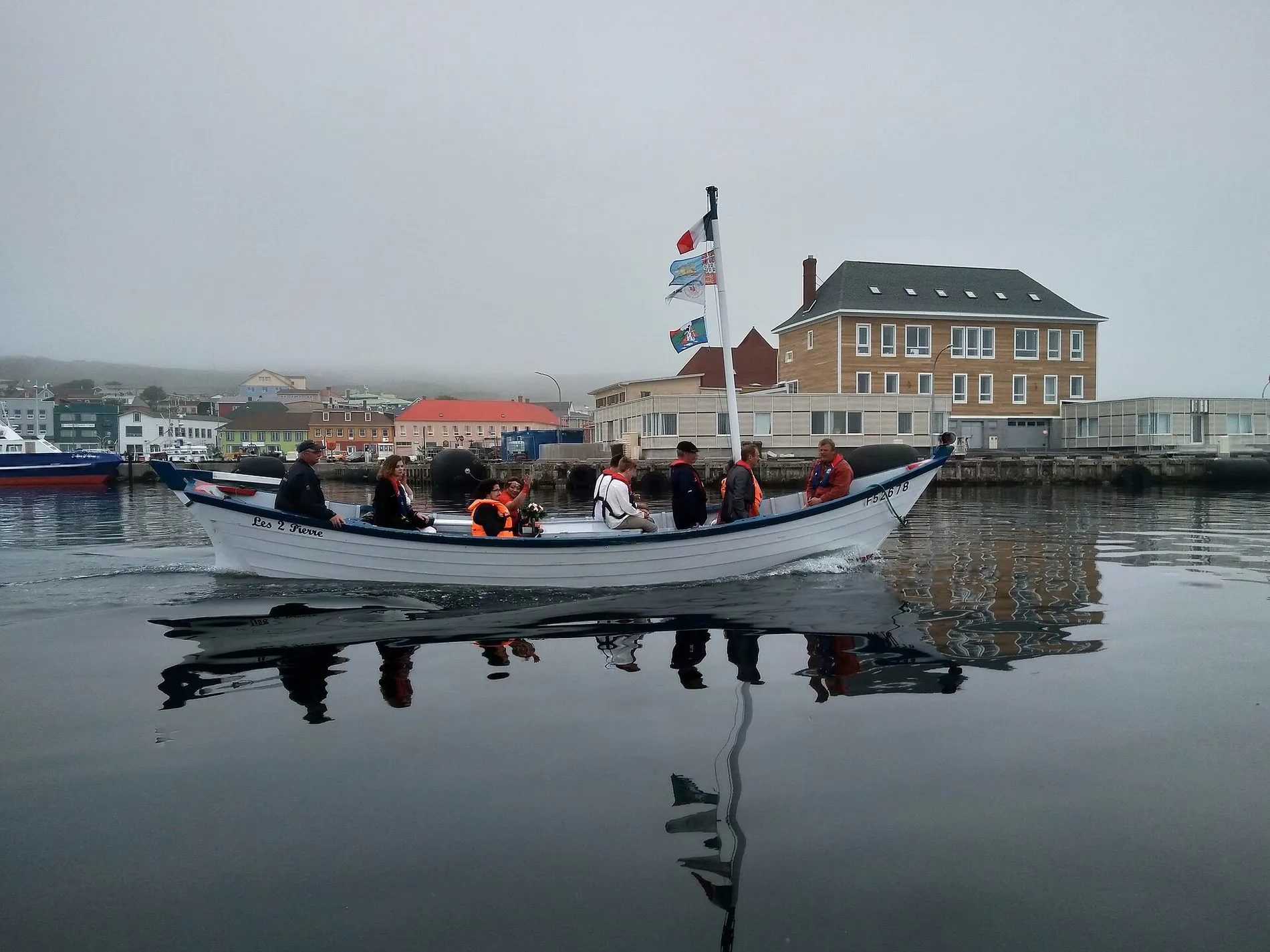
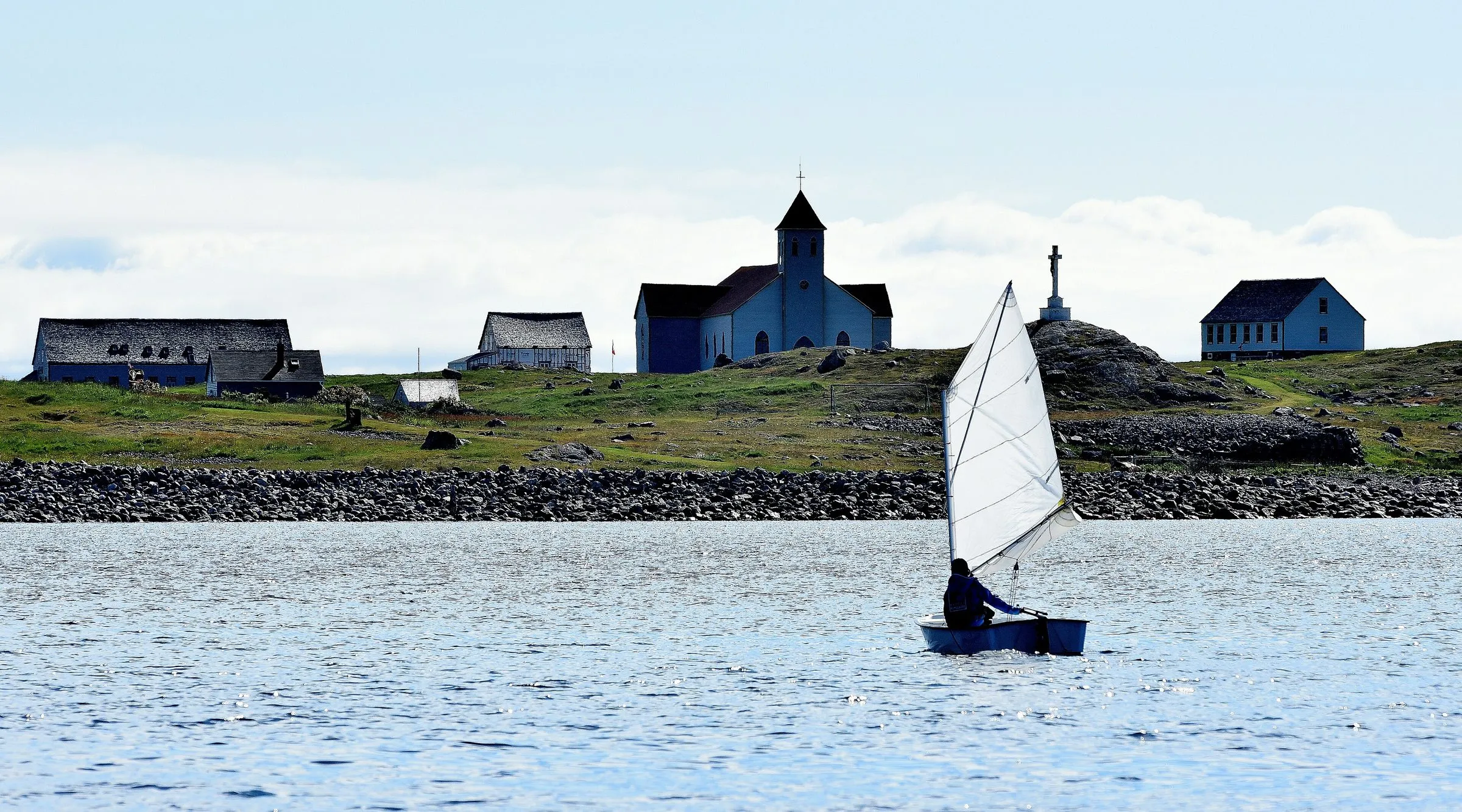
Across the harbour is Île aux Marins, the island of sailors, where fishing families lived until the 1960s. Their houses, the church of 1874, the school and a shipwreck are all still there, kept up as a museum. In summer a small boat goes over every half hour and takes about ten minutes.
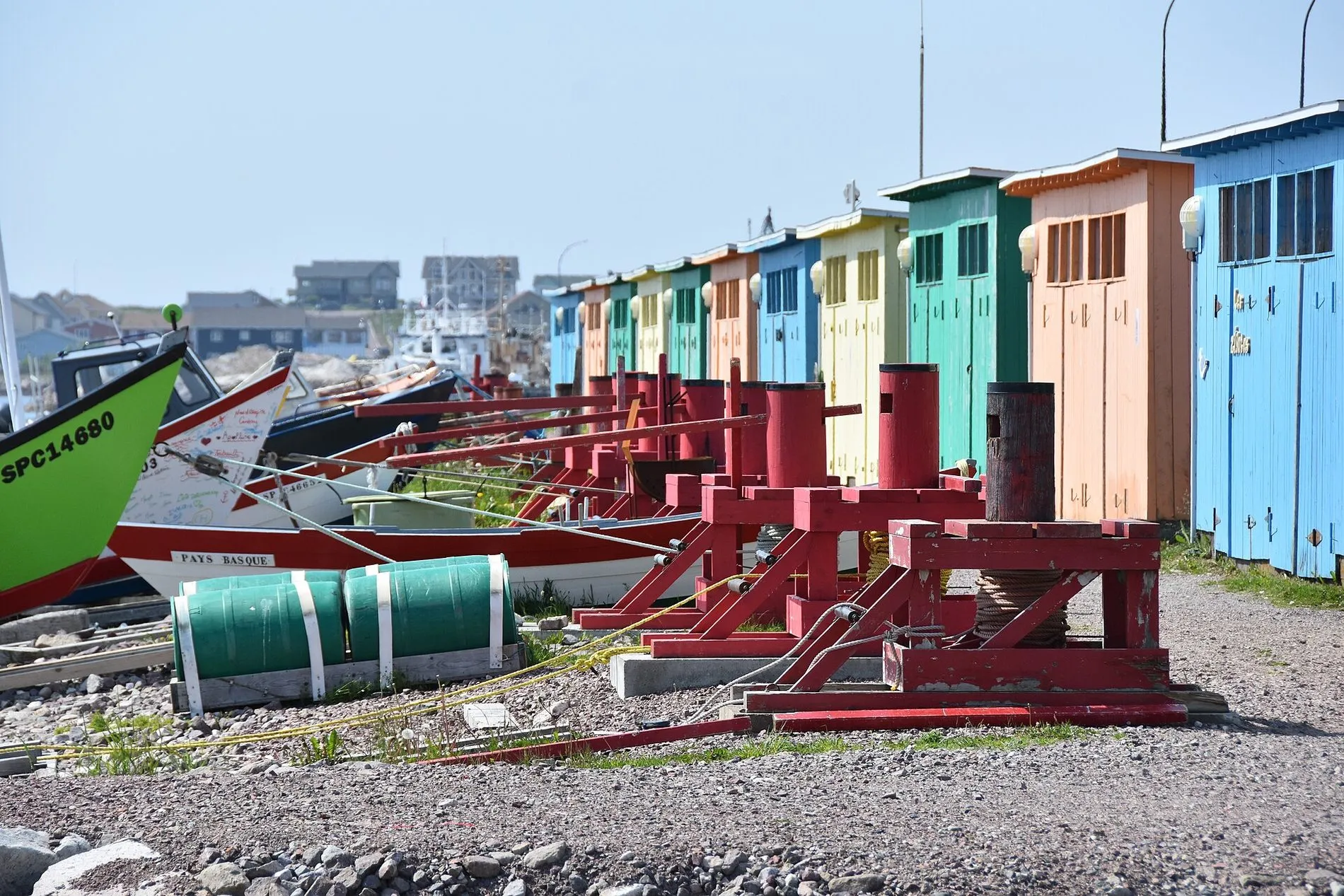
In town, a few dories are still hauled up the slip by capstan, in front of a row of fishing sheds painted the same colours as the houses. People still go out in them. Not for a living.
On the chart it looks exactly like a baguette, and that is what everybody calls it.
The crossing, in euros
SPM Ferries is run by the islands’ own government and charges in its own currency.
Fortune to Saint-Pierre
Adult€73 return
One way €45.
Aged 60 and over€68 return
One way €40.
Child€49 return
One way €35. Under twos go free.
A bicycle€10
A pet€8
Tickets cannot be bought or changed after 4 p.m. on the day before you sail.
Fares are from SPM Ferries, checked on October 2, 2026. A return for an adult comes to roughly C$110 to C$120, depending on the exchange rate that week.
If you go
- Getting there
- The ferry sails from Fortune, about four hours’ drive from St. John’s. In July and August it runs every day except Monday, and twice on Wednesdays and Saturdays. From January to March it runs on Mondays, Wednesdays and Fridays. Fog and wind cancel sailings, so leave a day spare.
- Or fly
- Air Saint-Pierre flies from St. John’s, Halifax and Montréal. In summer there is a direct flight to Paris.
- Papers
- Canadians coming straight from Canada for a short stay can enter on government photo ID. Bring the passport anyway. It makes the trip home simpler, and everybody else needs one.
- Money and plugs
- Euros. Cards work, and some places take Canadian dollars at a rate of their own choosing. The sockets are French and the power is 230 volts, so bring an adapter.
- Time
- Half an hour ahead of Newfoundland. The timetable gives each departure in the local time of its own port, which is worth reading twice.
- The car
- Leave it in Fortune. The town is small, steep and best walked.