MeetThingsSteam
Paddle Steamer Waverley · The Firth of Clyde, Scotland
Sold for a pound. Still in steam.
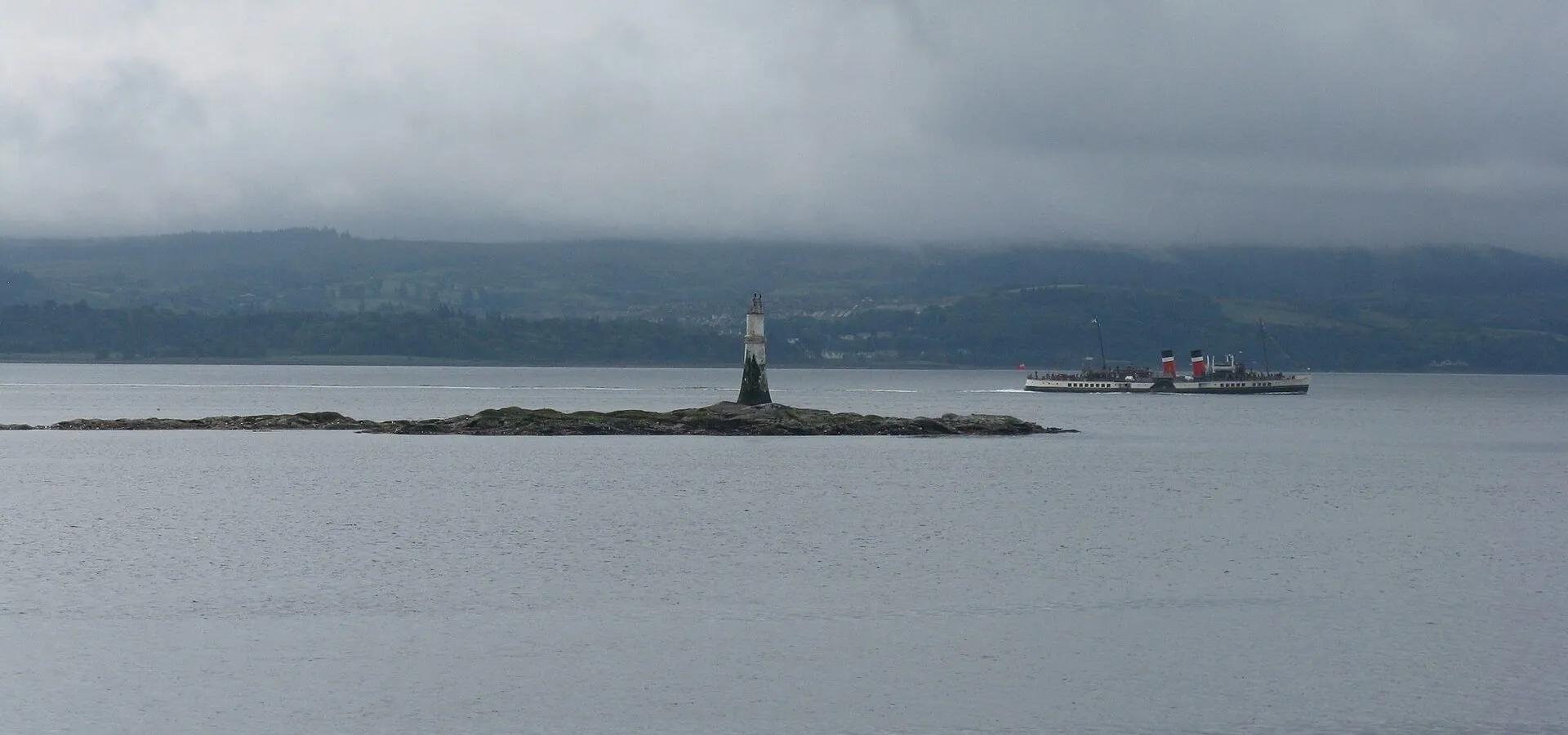
Waverley was launched in Glasgow on October 2, 1946, withdrawn in 1973 and handed to a preservation society for one pound. Eighty years on she is the last seagoing paddle steamer in the world, and you can still buy a ticket.
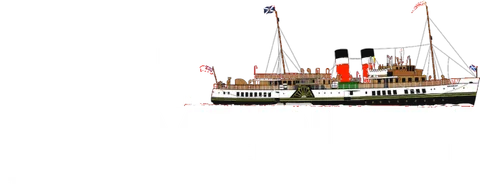
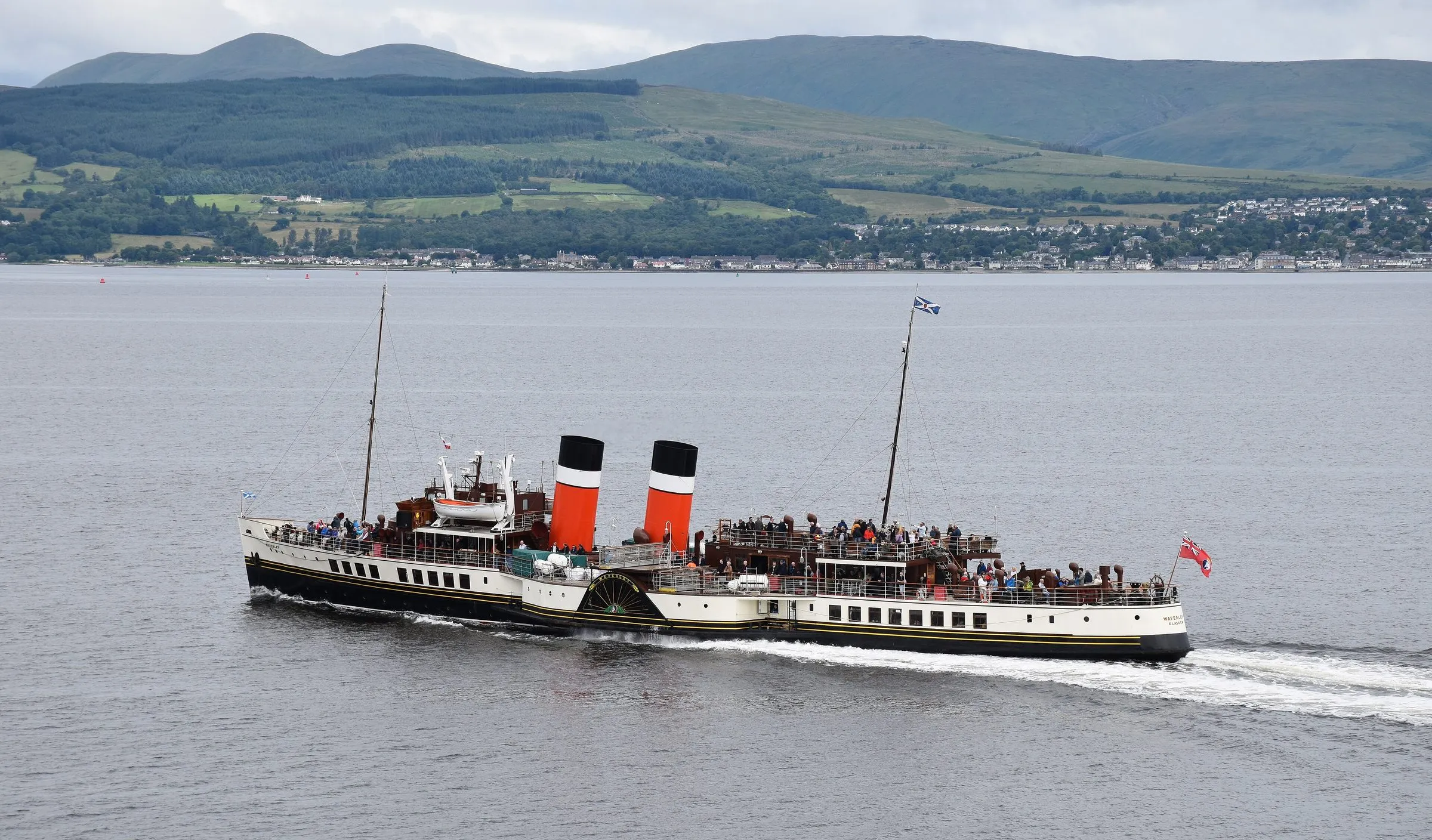
- Launched
- October 2, 1946, Glasgow
- Sold
- 1974, for one pound
- Engine
- Steam, 2,100 horsepower
- Carries
- Up to 860 passengers
- Season
- May to October
Built to replace a casualty
The first Waverley was a Clyde paddle steamer built in 1899. By 1940 she was a minesweeper, and on May 29 she was bombed and sunk on the way back from Dunkirk with about 600 soldiers aboard. A great many of them did not get home.
Her replacement was ordered as soon as the war ended. The keel was laid at the A. & J. Inglis yard in Glasgow on December 27, 1945, and the ship was launched on October 2, 1946, by Lady Matthews, wife of the chairman of the London and North Eastern Railway. It was misty. Like her predecessor, she was named after Sir Walter Scott’s novels.
She entered service on June 16, 1947, carrying people from the railway pier at Craigendoran up Loch Long to Arrochar. This was the tail end of an old Glasgow habit called going doon the watter, which meant a day on a steamer and was how the city took its holidays.
Then came cars, and cheap flights to Spain. By 1973 her owners, by then Caledonian MacBrayne, had no further use for a paddle steamer. They withdrew her at the end of September.
One pound
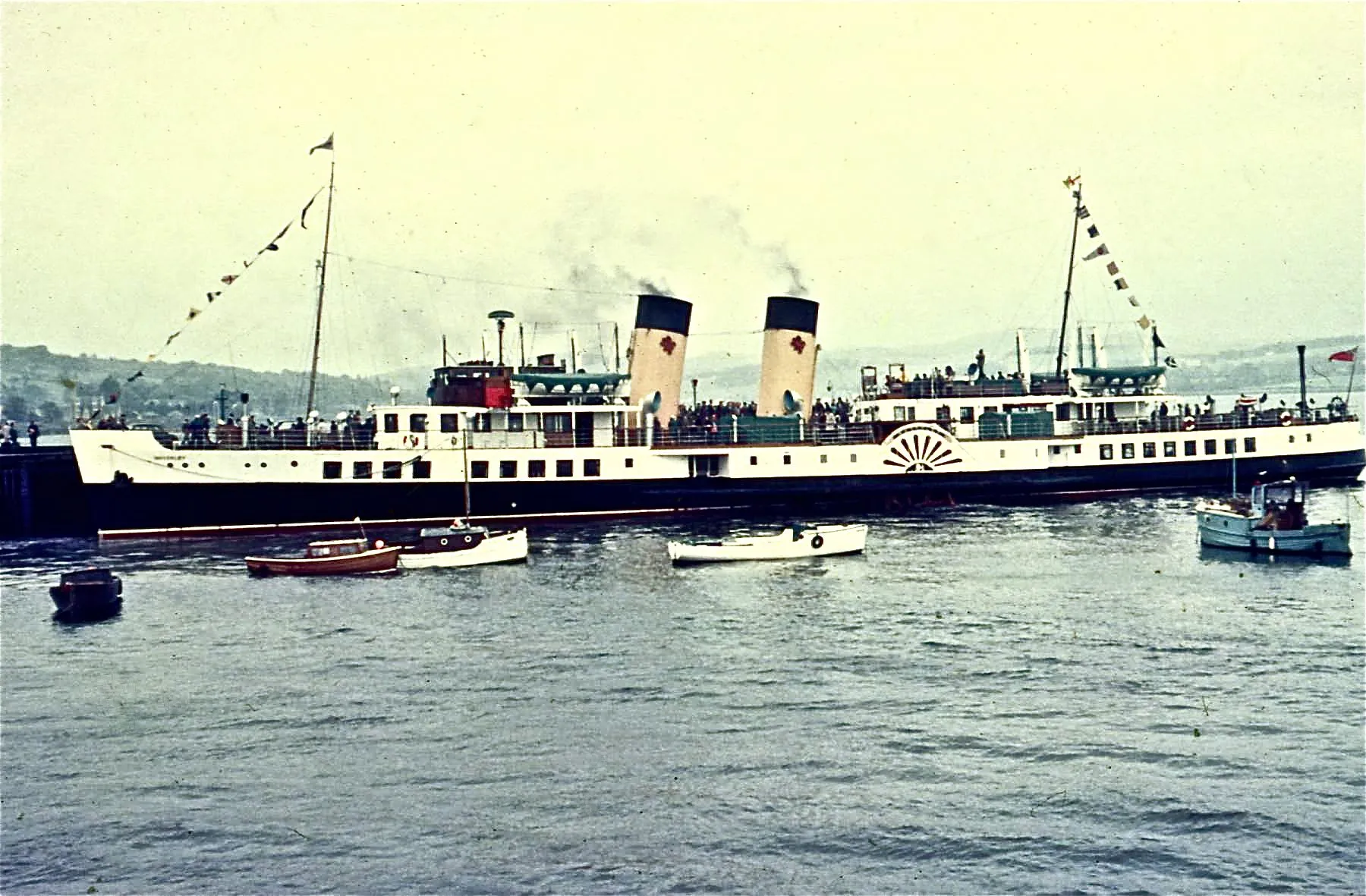
Caledonian MacBrayne offered her to the Paddle Steamer Preservation Society, and on August 8, 1974, at James Watt Dock in Greenock, she was handed over to Douglas McGowan of the society for one pound.
A pound was a fair price for a ship nobody could afford to run. The society raised the money anyway, and on May 22, 1975, she carried passengers again.
It has not been a quiet retirement. In July 1977 she ran onto the Gantocks, a reef off Dunoon, and lost six weeks of the season. She was given a new boiler in 1981, and rebuilt between 2000 and 2003 with seven million pounds of lottery money, which put her back in her 1947 colours.
In May 2019 both boilers were condemned and the whole season was cancelled. More than 8,500 people gave 2.3 million pounds to replace them. She returned in August 2020 and, twelve days later, hit the pier at Brodick hard enough to injure 24 people and end that season too.
She has carried more than six million passengers since 1975. In 2025 she recorded 161,950 passenger journeys, her best year since 1996.
A pound was a fair price for a ship nobody could afford to run.
The engine is the entertainment
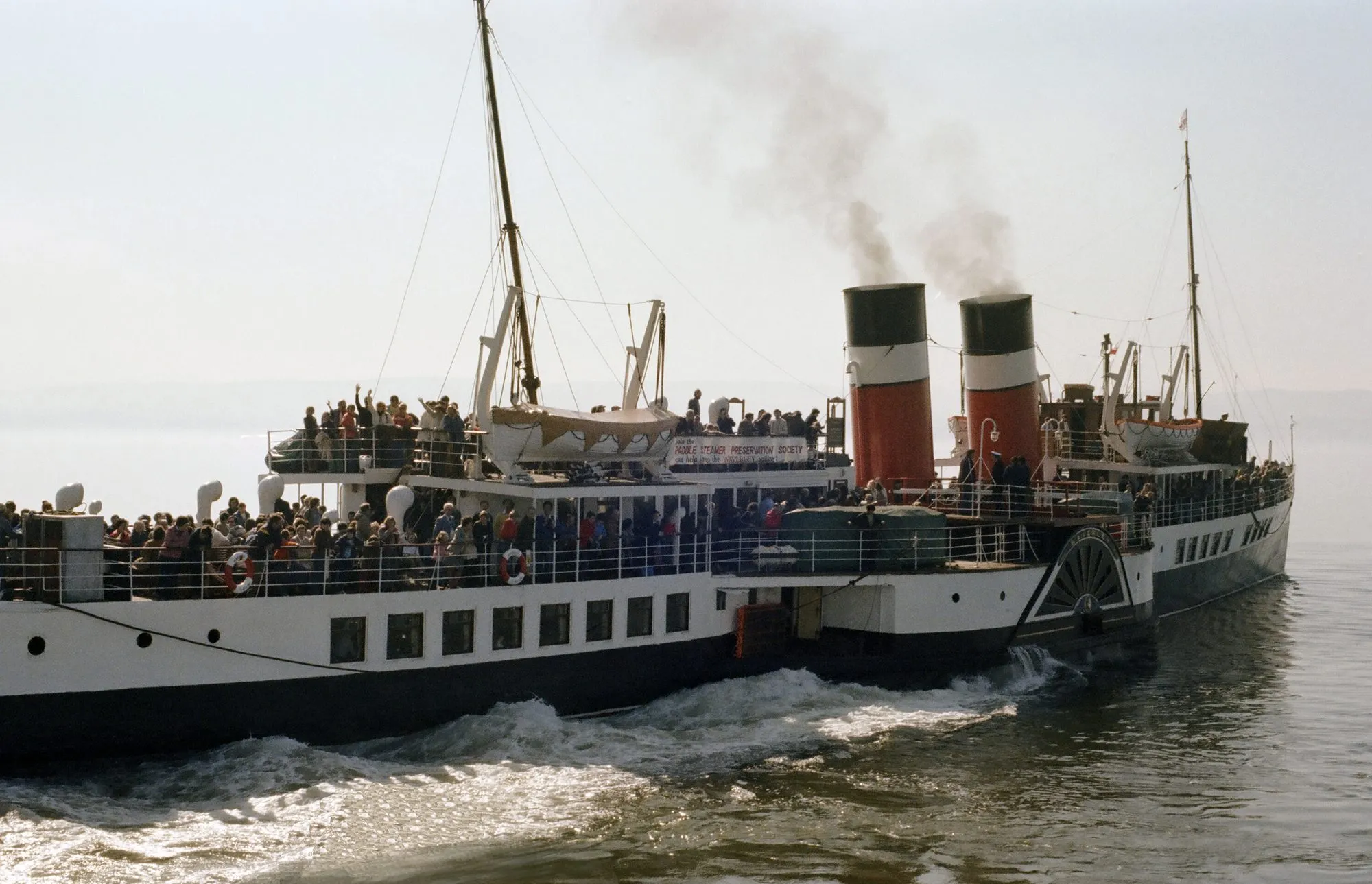
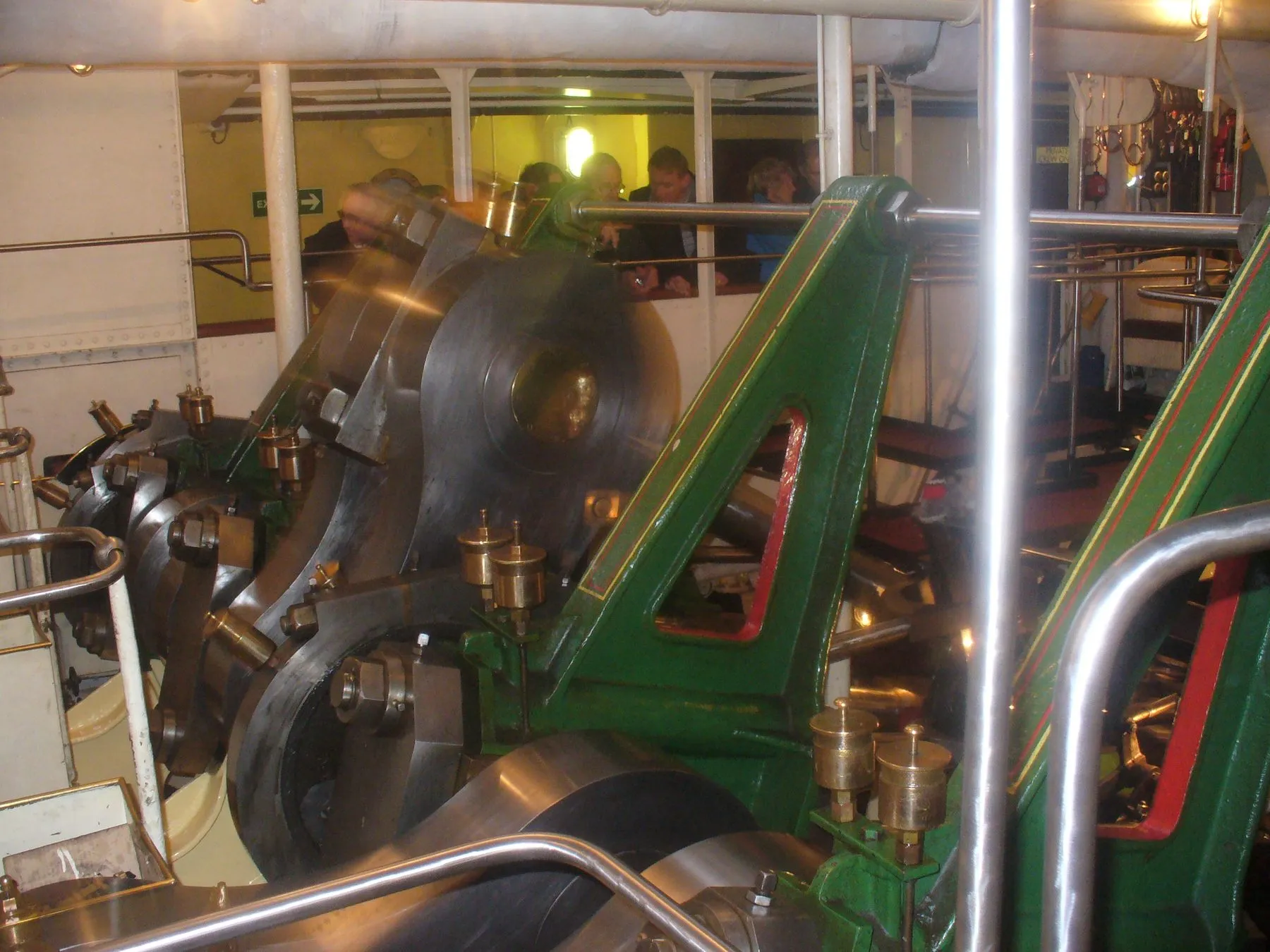
Most ships hide the engine. Waverley puts hers in the middle of the main deck behind a rail, and a good share of the passengers spend the voyage standing there watching it.
It is a triple-expansion steam engine built by Rankin and Blackmore of Greenock, 2,100 horsepower, with three great cranks turning in the open. It drives both paddle wheels through a single shaft. On her trials in 1947 she made just over 18 knots. These days she cruises at about 14.
The single shaft is the catch. The wheels cannot be turned separately, so she cannot spin on the spot the way a modern ferry does. She steers with a small rudder and a lot of forethought, and needs a few hundred metres to turn round. This goes some way to explaining the piers.
She is also expensive. In 2026 her operators put the cost of keeping her in steam at almost fifteen pounds a minute, and added a fuel surcharge to every ticket.
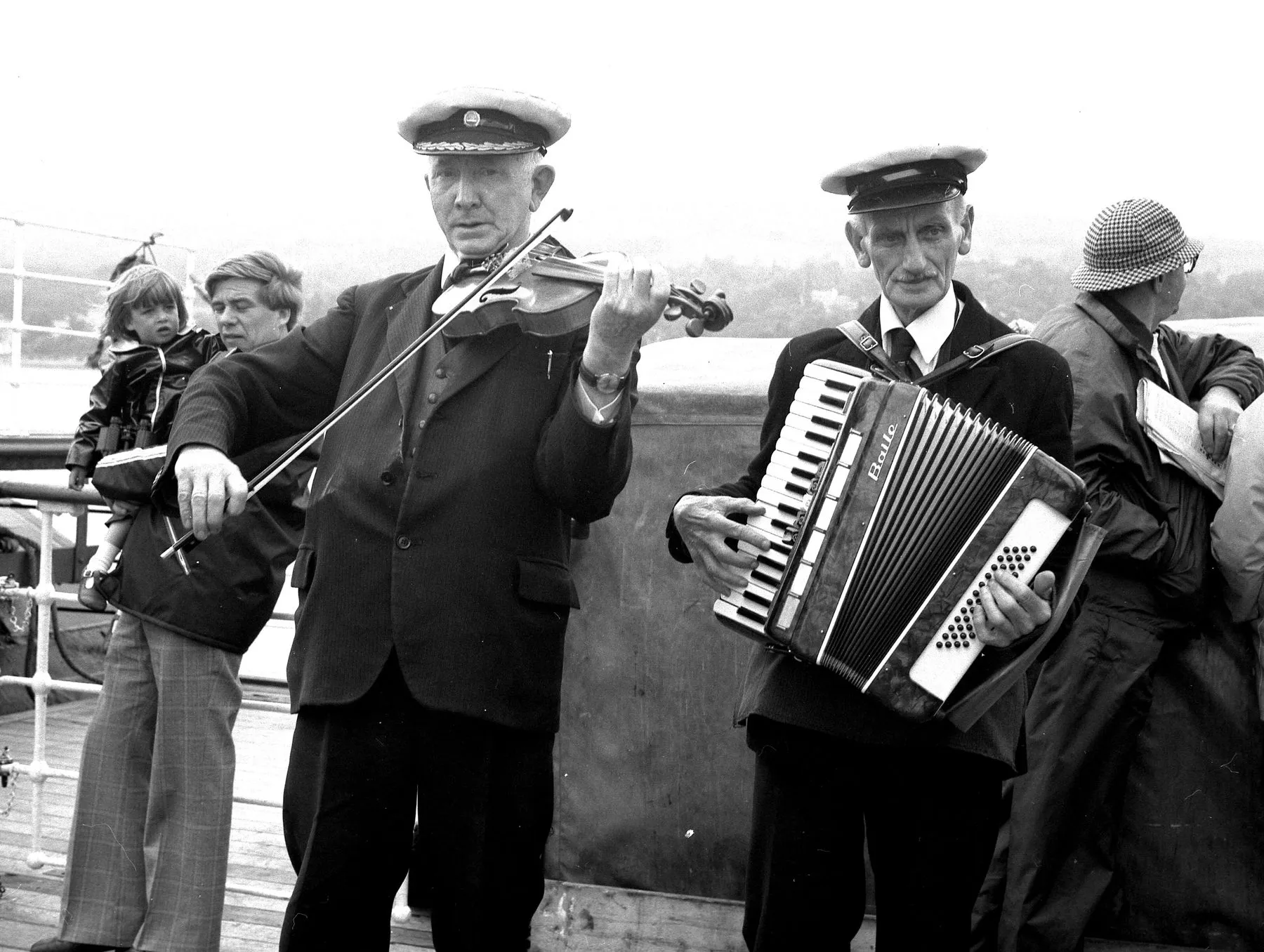
Elsewhere on board there is a dining saloon, a lounge bar, a tea room and, on a good day, somebody with an accordion.
She steers with a small rudder and a lot of forethought.
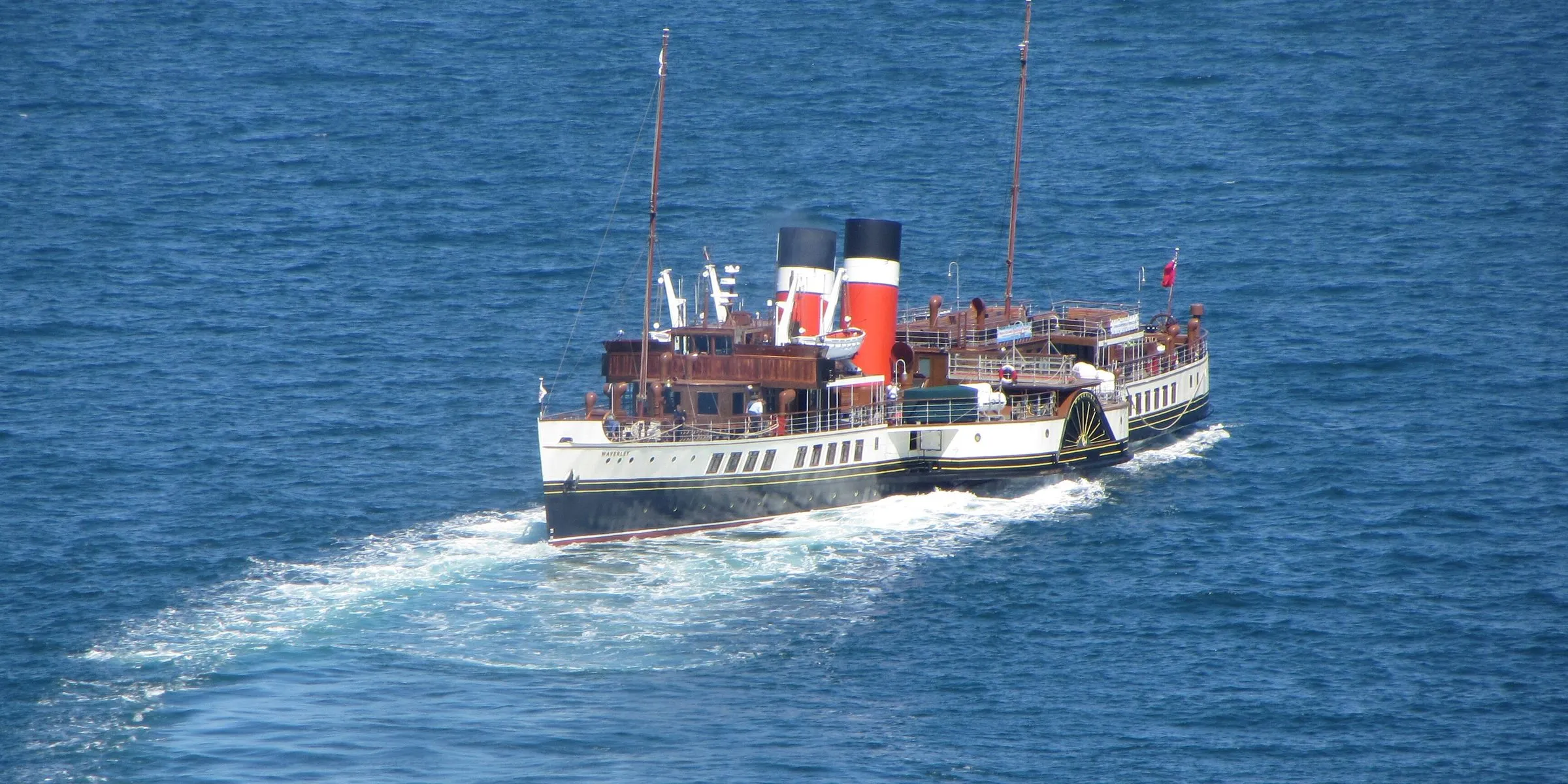
Where she goes
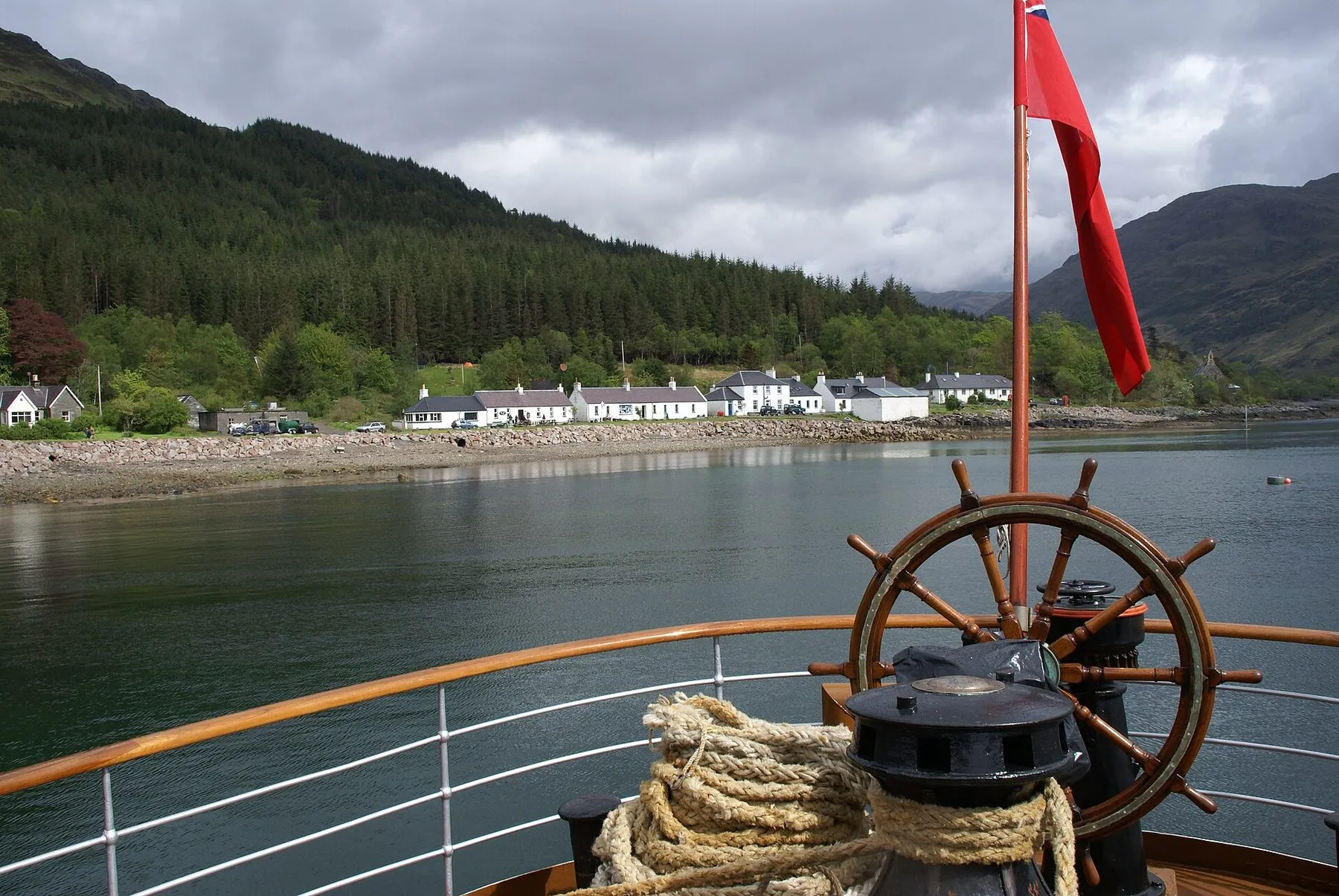
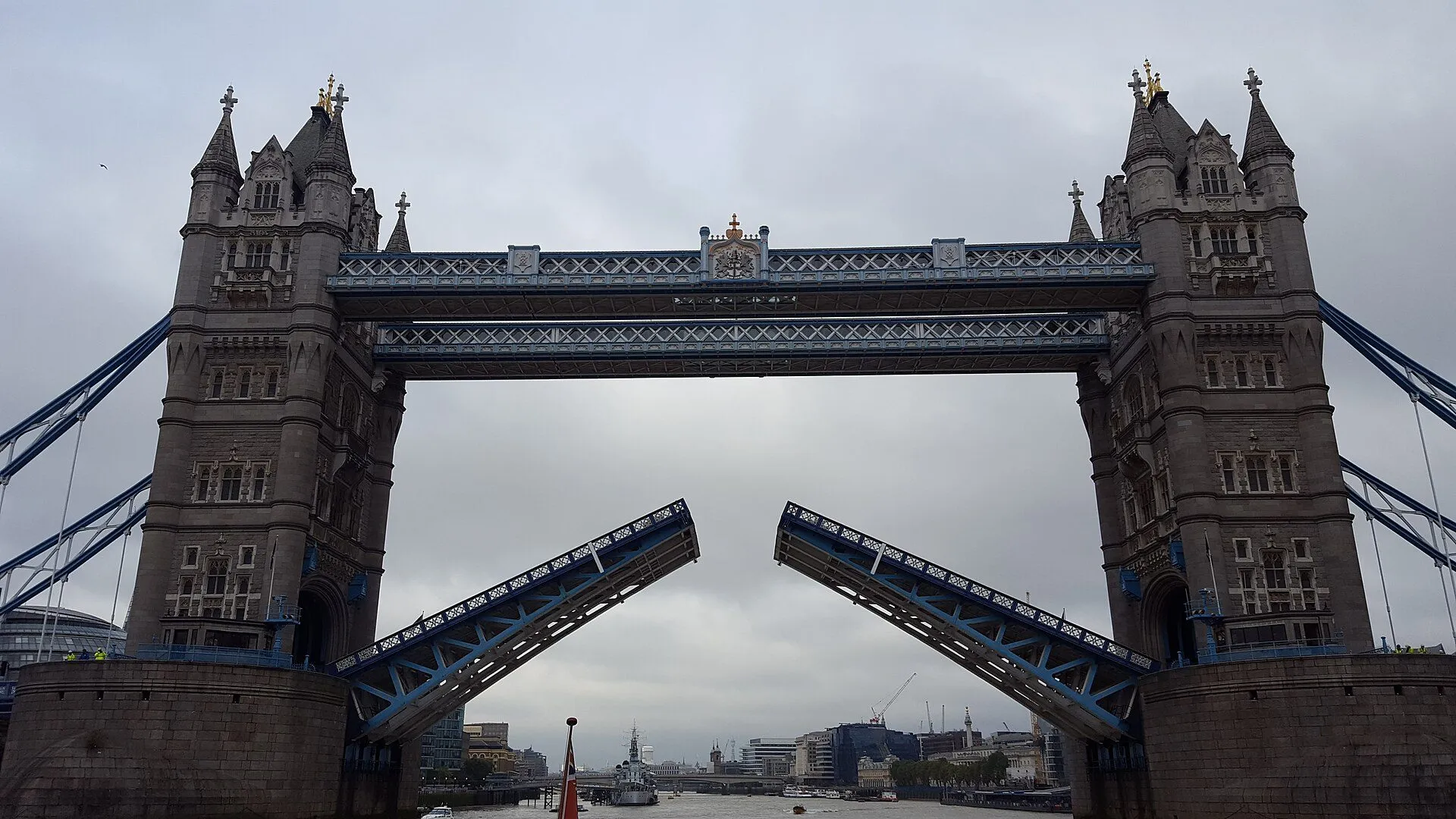
She does not stay on the Clyde. A season starts there in May, moves to Oban and the Inner Hebrides, then works its way round the coast. The Bristol Channel, the south coast of England, and in late September the Thames, where Tower Bridge is raised to let her through. In October she comes home for two last sailings.
The 2026 season was planned as her longest in more than a decade, ending on October 18 with a trip round the island of Bute. On October 2, eighty years to the day after her launch, she was booked to sail from Tower Pier in London with a band on board.
She is owned by a Scottish charity and run without profit, which is just as well, given what steam costs. The refit before the 2026 season came to a million and a half pounds, and an appeal for two new masts and thirteen dining saloon windows raised more than a hundred thousand.
Timetables for the next season come out from February.
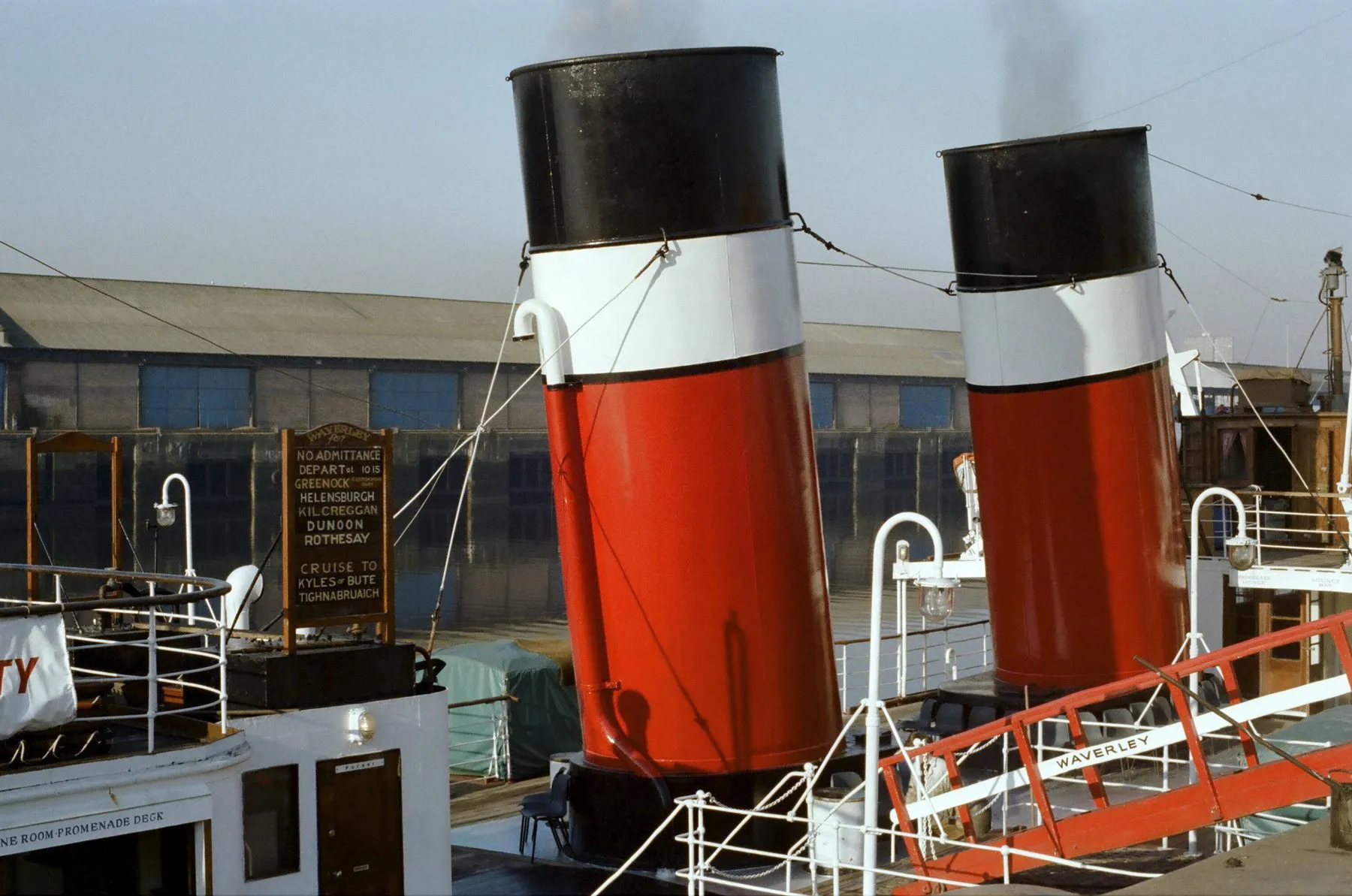
The 2026 fares
Adults and seniors paid the same on these sailings.
From Glasgow
Down the Clyde to Greenock£31
One way. An hour and three quarters.
Loch Long to Arrochar and back£57
All day, out at 10:00 and home at 7:40.
Round Bute, through the Kyles£61
All day. The last sailing of the season.
Children from 5 to 16 travel for £1 on the Clyde. Under fives go free.
From London
Tower Pier to Gravesend£47
One way, through Tower Bridge.
Tower Pier to Southend£49
One way.
An evening on the Thames£47
Under a floodlit Tower Bridge and down to Gravesend.
Children pay about half on the Thames.
Fares are from Waverley Excursions’ own booking system on October 2, 2026. A fuel surcharge of £3 or £5 is added to each ticket. Dogs are £5 on shorter sailings and bicycles £10.
If you go
- Getting aboard
- In Glasgow she berths beside the Science Centre. Exhibition Centre station is a 20-minute walk, and the car park charges £9.50 for the day.
- When
- Clyde sailings run on a few days in May, then from late June to the end of August, with two more in October. Timetables appear from February.
- Weather
- Sailings change with the wind and the tide. If yours is cancelled you can rebook or ask for your money back.
- Access
- Gangways can be steep at low tide. Manual wheelchairs can be carried aboard. Electric ones and scooters cannot.
- Bring
- A coat. The decks are open and the Clyde is not the Mediterranean. The engine room is warm.