The place file / The Algarve
Tavira,
Portugal
The Roman bridge isn’t Roman.
The river changes its name as it goes under.
Salty Seniors place guide
Could I live here?The draw
Sixteen degrees in January
The catch
No heating indoors
The question
Ninety days, or a visa?
The Roman bridge
is not Roman
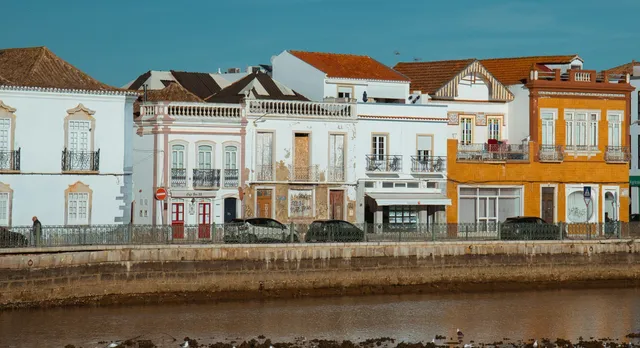
The bridge in the middle of Tavira is called the Roman Bridge. It is medieval. It fell down in 1655, and the one you walk across was finished in 1667. Nobody has changed the name.
The river under it has a similar arrangement. Above the bridge it is the Séqua. Below the bridge it is the Gilão.
Tavira is said to have 37 churches. The count depends on who is counting and what they consider a church. For a town of about 14,000 people, any of the numbers is a lot.
Between the town and the sea the land flattens into salt pans, where the salt is still raked by hand and flamingos stand about in the shallows. The beach is on a barrier island, reached by a small ferry. A few kilometres west, at Barril, a miniature train crosses the marsh to a beach where the tuna fleet left its anchors behind. There are a couple of hundred of them, rusting in rows in the sand.
The tuna stopped coming in the 1960s. The anchors stayed.
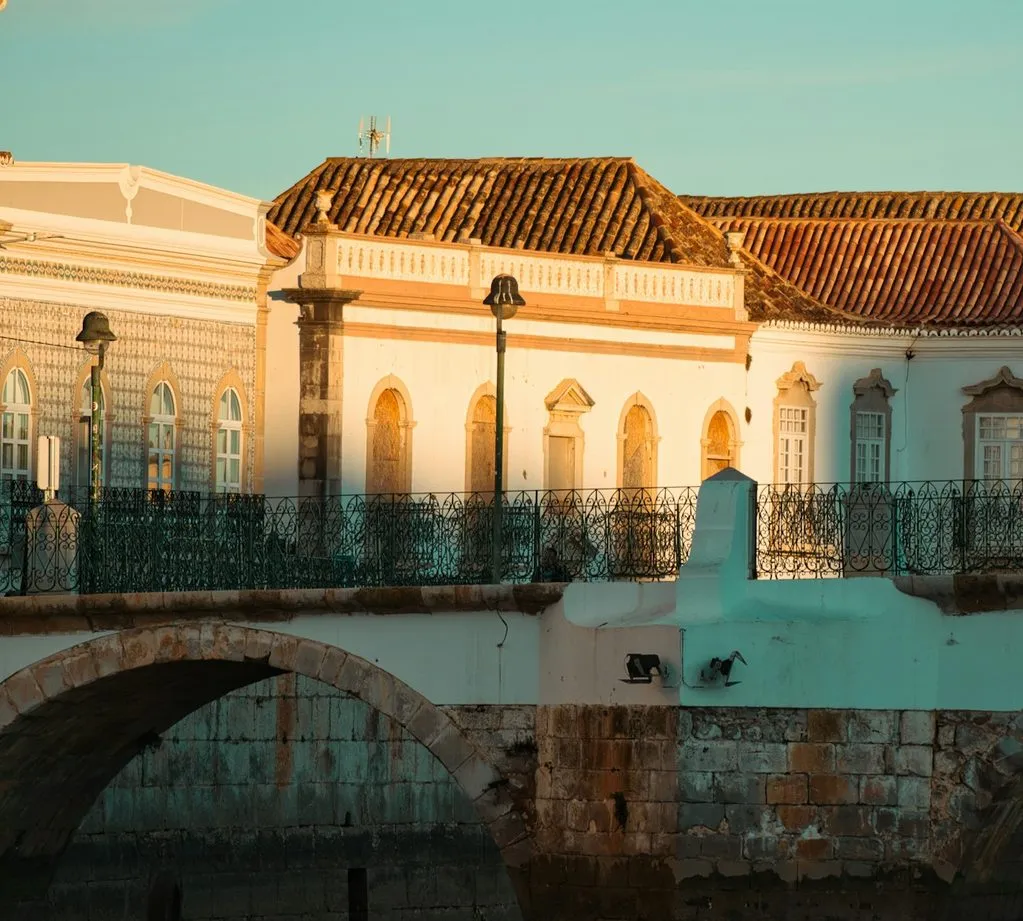
Above the bridge the river is the Séqua. Below it, the Gilão. Same water.
What stays open year-round?
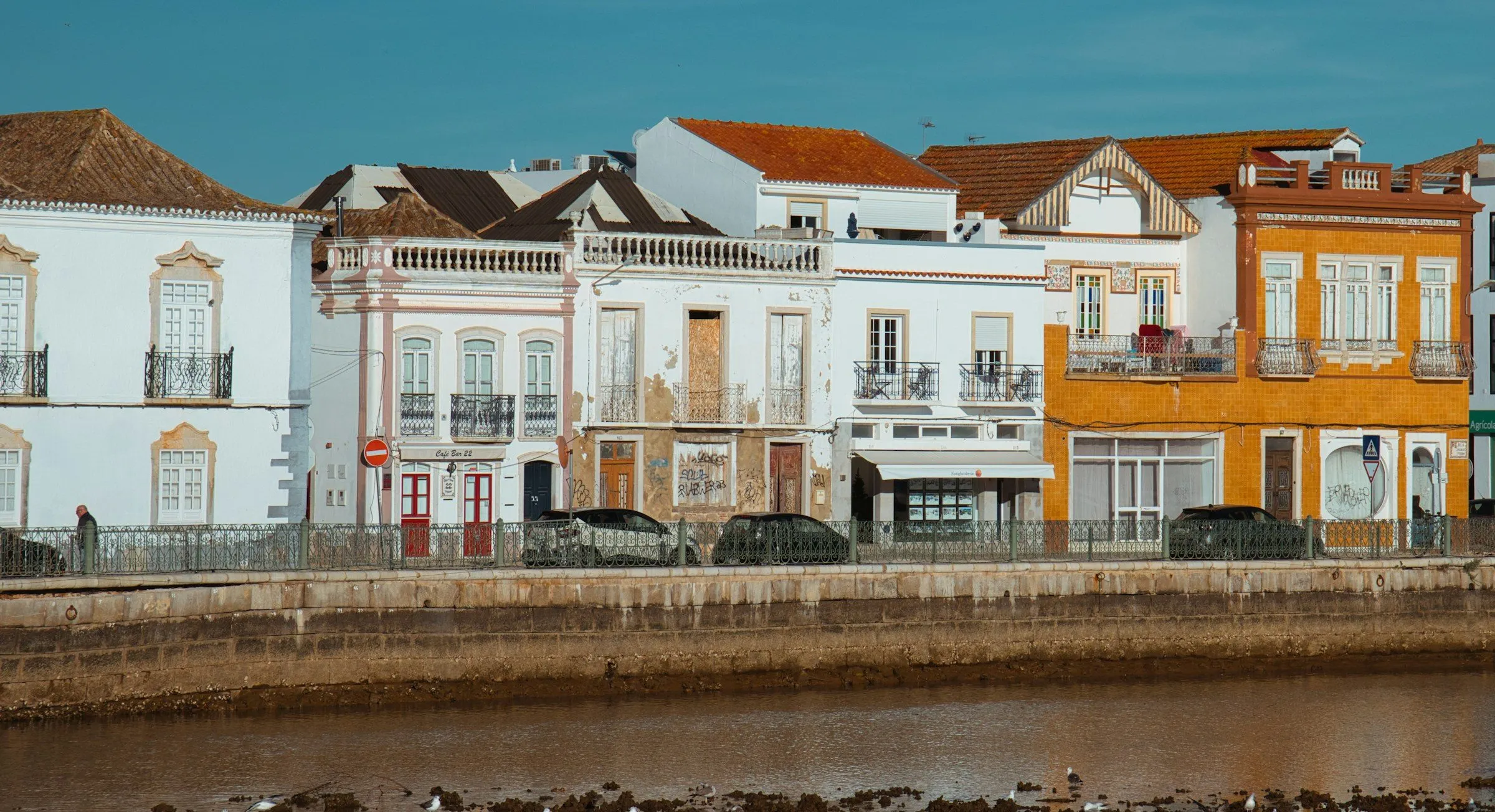
Most of it. Tavira is a working town with schools, a market and a courthouse, not a resort that empties in October. The beach restaurants on the island shut for the winter and the ferries run less often. The cafés on the river stay open, and you will be able to get a table.
What will winter ask of you?
A sweater, indoors. January afternoons reach about 16°C, which is why you are reading this. But most Algarve houses were built without insulation or central heating, and a stone house on a January night can feel colder than a Canadian one, because the Canadian one has a furnace. Ask how the place is heated before you ask about the terrace.
How close is the care you need?
There is a public health centre in town for everyday things. The public hospital is in Faro, about 30 km west. Many foreign residents also carry private insurance and use the private hospitals around Faro, where English is more widely spoken.
Could you live without a car?
In town, yes. It is compact, mostly flat along the river, and the train reaches Faro in about 40 minutes. The airport is roughly 40 km away. For the hill villages, the big supermarkets and the hospital, a car makes life easier, and Spain is half an hour east if you have one.
What does a house cost?
Roughly €3,500 to €3,900 a square metre in 2026, which is no longer the bargain your friends described. Call it €350,000 for a 100-square-metre apartment. The old tax break for foreign pensioners ended in 2024, and pensions are now taxed at ordinary Portuguese rates. Get advice before you get attached.
How long can you stay?
As a visitor, 90 days in any 180, counted across the whole Schengen area. To stay longer, the usual route for anyone living on a pension or investments is the D7 visa, which in 2026 asks for a steady income of at least €920 a month, or €1,380 for a couple. From Canada you will usually fly through Lisbon.
