The place file / British Columbia
Vancouver
Island
Vancouver Island has no shortage of towns that will make you briefly consider selling everything you own and buying a raincoat.
Salty Seniors place guide
Could I live here?The draw
Flowers in February
The catch
Everything waits for the ferry
The question
Dry side or wet side?
Vancouver is not on it
Vancouver is not on Vancouver Island. Victoria is, and about half of the island’s 865,000 people live in or around it. The rest are spread along 456 kilometres of coast, which thins out quickly once you pass Campbell River.
Every March the people of Victoria count their flowers and announce the total to the rest of the country. In 2025 it was 44 billion. There is no other reason for the count.
One side of the island is drier than its reputation and the other is wetter. Victoria gets about 600 mm of rain a year, which is less than Toronto. Tofino, on the west coast, gets more than 3,200. A lake a little farther down that coast averages nearly seven metres, the most in North America.
In Coombs there are goats on the roof of the market. They have been up there since the 1970s. In Nanaimo they race bathtubs on the open sea, and have done since 1967.
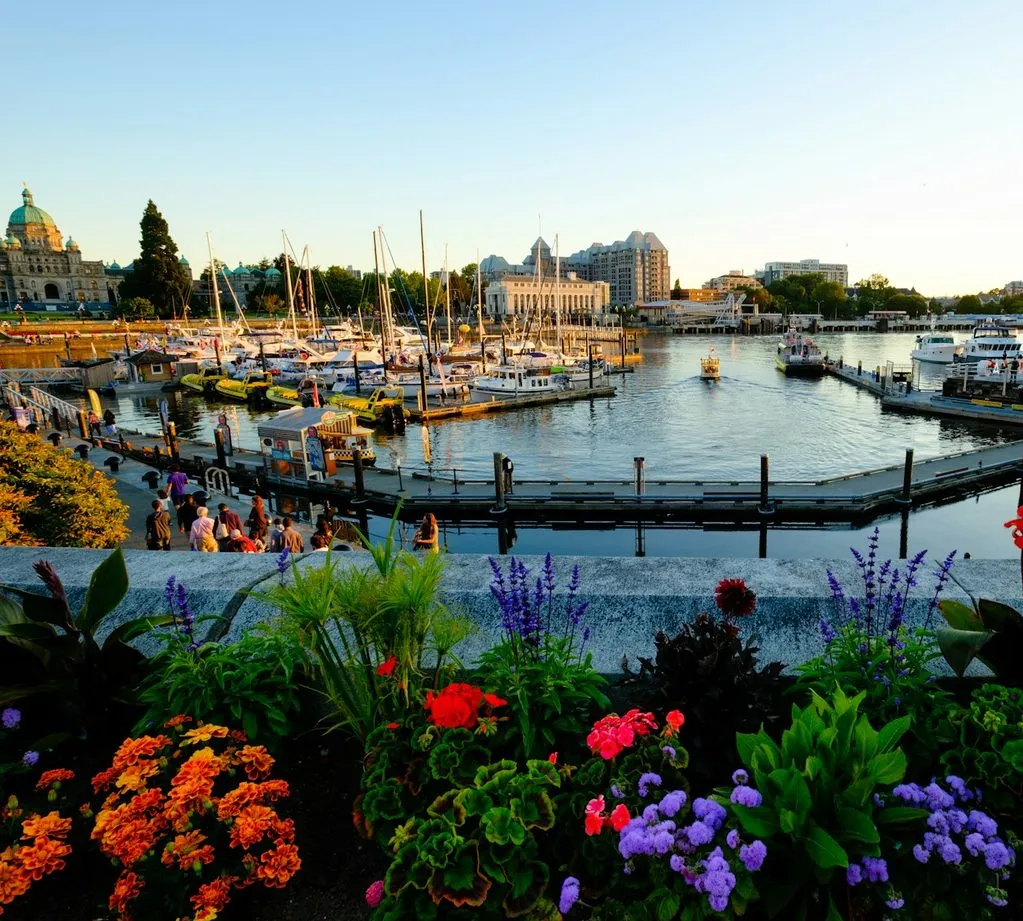
You get here by boat or by plane. That one fact explains most of the others.
What stays open year-round?
In Victoria, Nanaimo and the Comox Valley, everything. These are real cities and towns with hospitals, colleges and big-box stores. The west coast is different. Tofino and Ucluelet run on visitors, and the smaller places go quiet from November to March. Tofino’s hotels now sell the winter storms as an attraction, and it works.
What will winter ask of you?
A raincoat, as promised. It rarely freezes on the south and east coasts, and Victoria gets snow a few days a year, which brings the city to a stop each time. Winter is grey, wet and dark by half past four. The west coast adds wind, and the power goes out when a tree comes down on the line.
How close is the care you need?
The hospitals are well spread. Victoria, Nanaimo, the Comox Valley and Campbell River all have full ones. The family doctor is the problem. About one in five British Columbians doesn’t have one, and the Victoria area has been short for years. Put your name on the province’s Health Connect Registry the week you arrive.
Could you live without a car?
In central Victoria, yes. It is one of the few places in Canada where that is easy, with real buses, bike lanes and a winter you can walk in. Sidney, downtown Nanaimo and Courtenay are possible with planning. Anywhere else, no. The island’s passenger train stopped running in 2011, and it is a long island.
What does a house cost?
More than you hoped. In 2026 the benchmark single-family house was about $1.3 million in Victoria, $870,000 in the Comox Valley, $815,000 in Nanaimo and $690,000 in Campbell River. It gets cheaper as you go north and as the ferry gets farther away. Condos and townhouses run well below those numbers.
How do you get there?
By BC Ferries, mostly. Tsawwassen to Swartz Bay takes an hour and 35 minutes. Horseshoe Bay to Nanaimo takes an hour and 40, and that run now requires a reservation if you are bringing a car. In summer and on long weekends, book or wait. There are airports at Victoria, Nanaimo and Comox, and float planes from downtown Vancouver if you are in a hurry.
