The place file / Inner Hebrides
Tobermory,
Scotland
A Spanish galleon blew up in the bay in 1588.
People have been diving for the gold ever since, and it has not turned up.
Salty Seniors place guide
Could I live here?The draw
A painted harbour with its own whisky
The catch
Life runs on the ferry
The question
Will Britain let you stay?
The original Tobermory
The name is Gaelic. Tobar Mhoire, the well of Mary. The town is newer than the name. The British Fisheries Society laid it out in 1788 as a fishing port, and Thomas Telford had a hand in the plans.
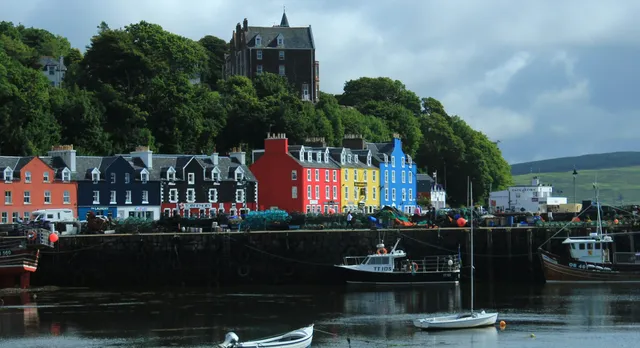
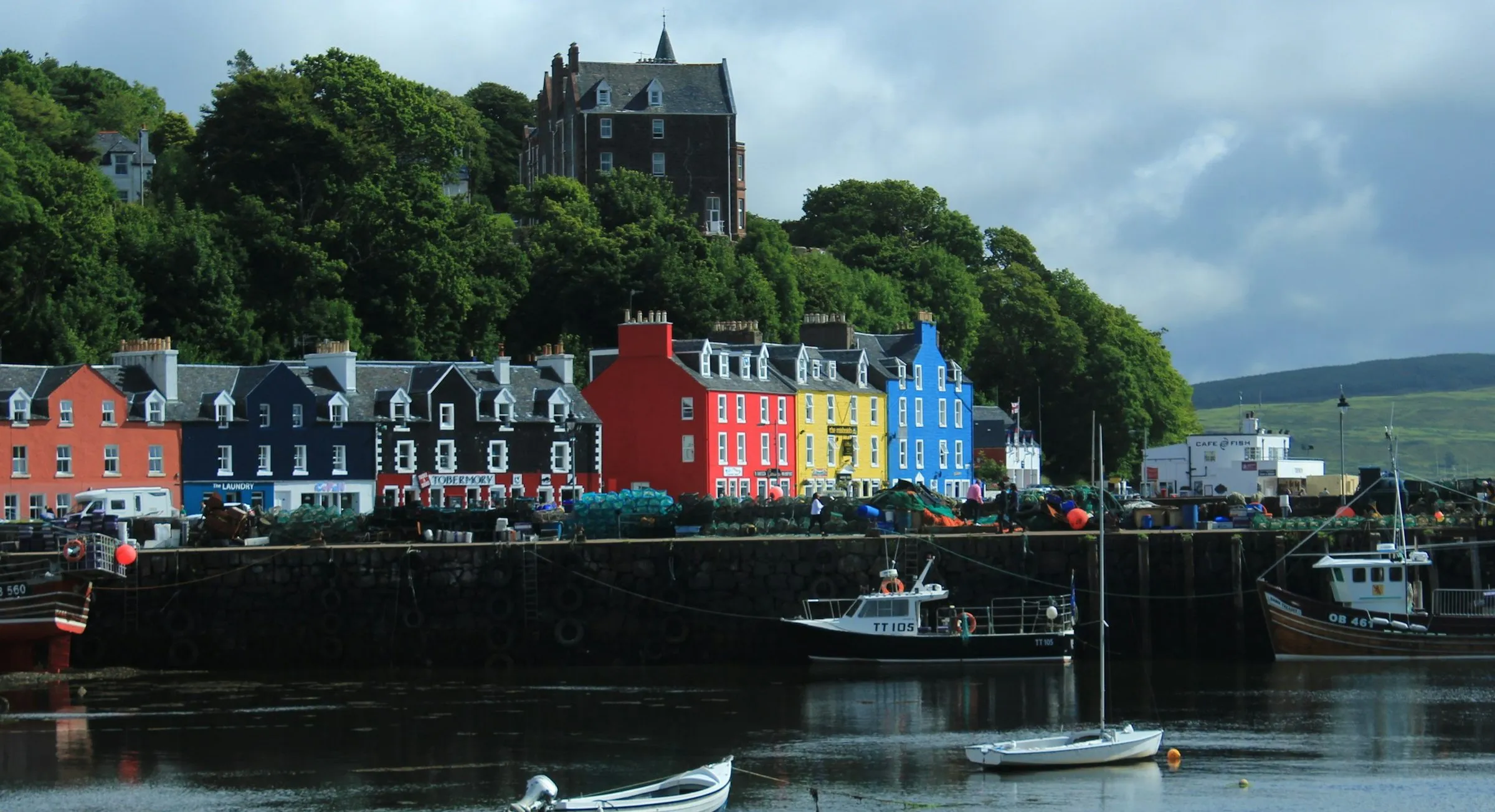
The painted fronts along Main Street are what everyone photographs. From 2002 to 2005 they were also Balamory, on children’s television, and a generation of British children still knows the town by that name.
The distillery at the end of the street has been making whisky since 1798, with interruptions.
To get here you take the ferry from Oban to Craignure, about 50 minutes, and then drive 34 kilometres up the island. The ferry is the thing to understand. Everything on Mull that was not grown or caught here came over on it.
In 1882 some Scottish fishermen on Lake Huron named their harbour after this one. That Tobermory has clearer water and 22 shipwrecks. This one has the whisky, and one wreck that has kept its gold to itself.
The rights to the Tobermory Cat were argued over from 2012 to 2015, as far as the sheriff court in Edinburgh. Three ginger cats had inspired it. None was consulted.
What stays open year-round?
More than you’d guess for a town of about 1,000. The grocery shops stay open, several pubs and restaurants keep going, and the distillery runs tours through the winter. Plenty else shuts from November to March, so phone before you walk down the hill for dinner.
What will winter ask of you?
Waterproofs, mostly. It rarely gets very cold, but about 2,100 mm of rain falls in a year, and in December the daylight is gone by four. The bigger question is the ferry. When the wind gets up the sailings are cancelled, and with them the deliveries and your appointment in Oban.
How close is the care you need?
The island’s hospital is at Craignure, 34 km away, with a small emergency department. Anything it can’t handle goes to Oban on the mainland. Since 2024 the hospital has had its own helipad, and the flight takes about six minutes. By road and ferry it takes a good deal longer, and only if the ferry is running.
Could you live without a car?
In town, yes, if you don’t mind a steep climb between the harbour and the houses above it. A bus runs to the ferry at Craignure five times a day and takes 50 minutes, though not on winter Sundays. For the rest of Mull you want a car and some nerve, because much of the road is single track with passing places.
What does a house cost?
The average sale was somewhere between £234,000 and £262,000 in 2025, depending on whose figures you use. There are not many houses, and some of them are second homes. Since April 2024 the council has charged those double council tax, which tells you how the island feels about it.
How long can you stay?
Six months at a time as a visitor. Canadians and Americans need an electronic travel authorisation before they fly, currently £16 and good for two years. Britain closed its retirement visa in 2008 and never replaced it. If you have a UK-born grandparent and a Commonwealth passport, look at the Ancestry visa, which runs five years and expects you to work.
